What Affects Refrigerator Repair in Long Beach
Long Beach has older Craftsman homes, mid-century neighborhoods and a busy port.
Long Beach, Lakewood, Downey, Norwalk, Whittier and their neighbors make up the dense southeast part of Los Angeles County. Water is hard throughout the area.
Many homes are older single-family houses with small kitchens and garage laundry.
What that means for your refrigerator: Long stretches of high temperatures make any refrigerator work harder, and parts that are already worn tend to fail during heat waves. Hard water leaves deposits that make parts work harder and wear out sooner.
Most homes in Long Beach get electricity from SCE. A refrigerator that misbehaves right after an outage or a flicker may have a damaged control board or relay, so note the timing.
Common Refrigerator Repairs in Long Beach Homes
Each section below covers one specific repair, the parts involved and the signs that point to it.
Refrigerator Water Leak Repair in Long Beach
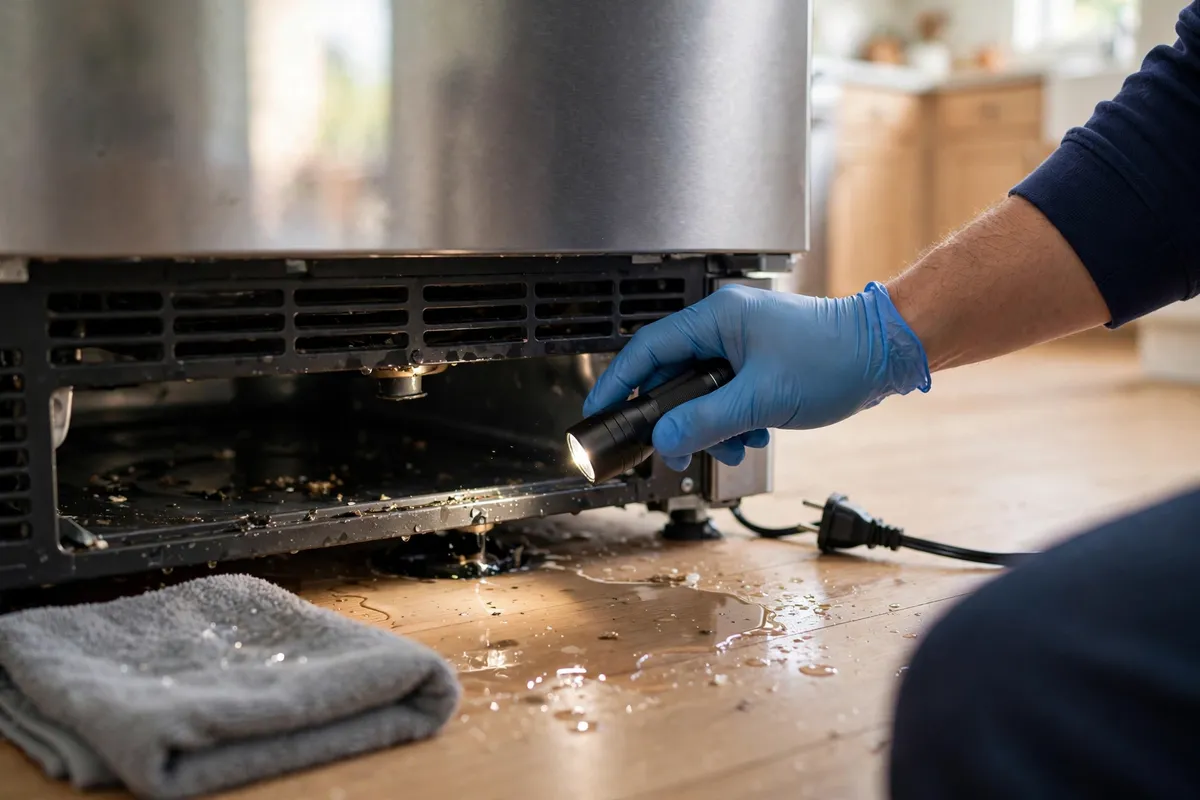
Leaks behind the unit often come from the ice maker's water connection. Moving a fridge can kink or crack an old plastic supply line. Small leaks soak into wood and laminate floors quietly. A misplaced drain pan can spill water each time the fridge defrosts. Puddles at the front can come from the water line to the dispenser or ice maker.
In homes in Long Beach and the Gateway Cities, this comes up often.
Try this first: Check behind the fridge for drips at the water line connection. Look inside the freezer for ice at the bottom back wall, which signals a blocked drain.
- Water under the crisper drawers
- Water pools under the crisper drawers
- Ice sheet on the freezer floor
Warm Refrigerator Repair in Long Beach
When the temperature sensor drifts, the board shuts the cooling off too early. Lights on but no running sound usually points to the start relay or the control board. Overpacking blocks the airflow paths that the cooling system depends on. Marginal parts tend to fail when kitchen temperatures climb. Refrigerant problems are possible but are normally the last thing a technician suspects.
Around Long Beach, this problem accounts for a good share of refrigerator calls.
Try this first: Clear a few inches around the vents inside the fridge and give it 24 hours to recover. Hold a hand near the vent inside the fridge to see whether cold air is moving.
- The fridge feels warm near the top shelf
- Freezer cold but fridge warm
- Condensation on shelves
Condenser Coil Cleaning and Fan Repair in Long Beach
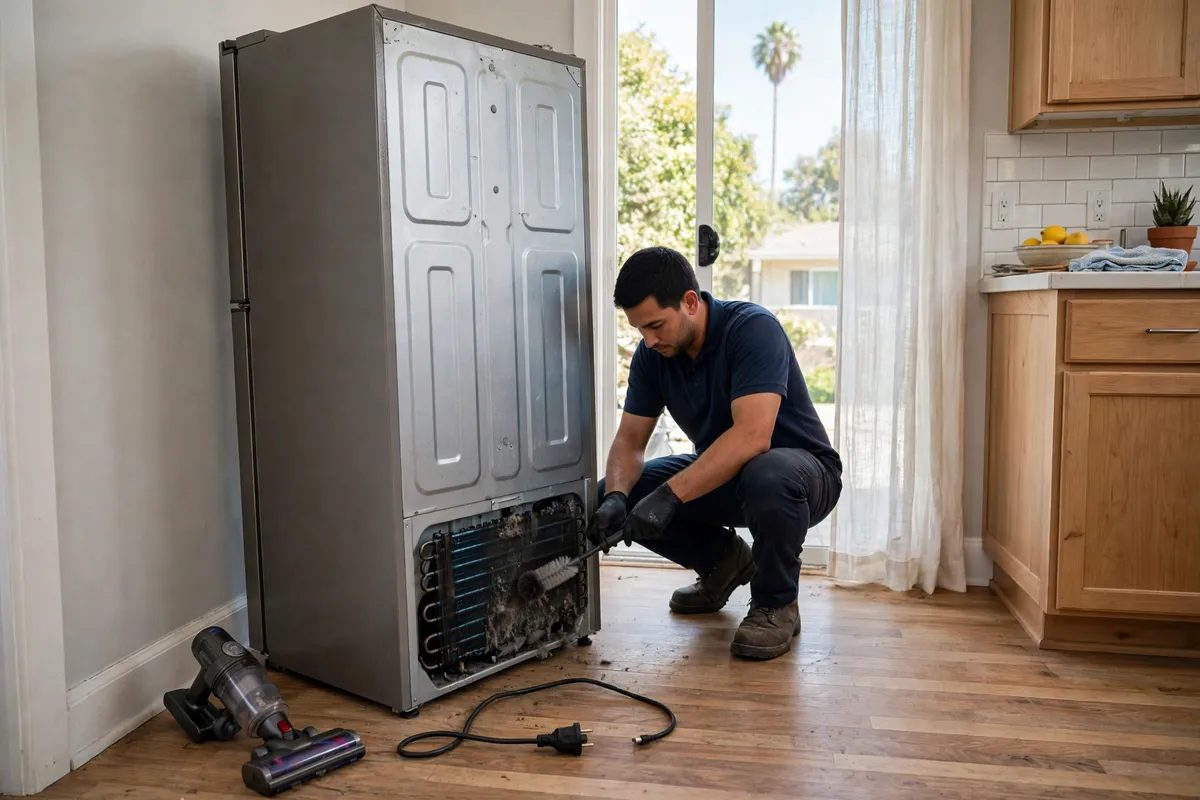
Grease from nearby cooking helps lint stick to the coils. If you hear the compressor but no fan, or feel very hot air at the bottom, the fan may have failed. A compressor that keeps tripping its overload is often a symptom of dirty coils. Fan motors often weaken over months, so cooling fades rather than stopping overnight. The condenser is the fridge's radiator; when it can't release heat, everything downstream works harder.
Easy checks for Long Beach homeowners: Notice any new buzzing near the kick plate when the compressor starts. Check that the condenser fan spins freely by hand once the power is off.
- Warm air blows out from under the front
- Very warm air at the bottom of the fridge
- The kick plate blows hot air
Evaporator Fan and Defrost Repair in Long Beach
A frost-covered back wall in the freezer, or a fan that gets noisier over time, points to the evaporator fan or the defrost system. A fan blade striking ice makes a distinctive chirp. Press the door switch to hear whether the freezer fan actually runs. When defrost parts fail, the decline is slow: cooling fades over days. A manual defrost buys time, not a repair.
Easy checks for Long Beach homeowners: Shine a light through the freezer vents to look for frost on the coil. Hold the door switch in with your finger to check whether the fan runs.
- Frost on the freezer's back wall
- Ice buildup around the fan
- Frost returns after defrosting
Refrigerator Ice Maker Repair in Long Beach
The fridge's inlet valve can partly clog with sediment and starve the ice maker. Clumped ice points to temperature swings in the freezer. Door-mounted ice makers in French-door fridges depend on a separate fan and seal. Many ice makers stop producing when the bin's shutoff arm is raised or a sensor thinks the bin is full. Air in the line after a filter swap usually clears after running a few glasses of water.
Try this first: Remove the bin and clear stuck ice from the chute. Replace the water filter if it's more than six months old.
- The ice maker makes a grinding sound
- No ice for more than a day
- Ice clumps together
Refrigerator Start Relay Repair in Long Beach
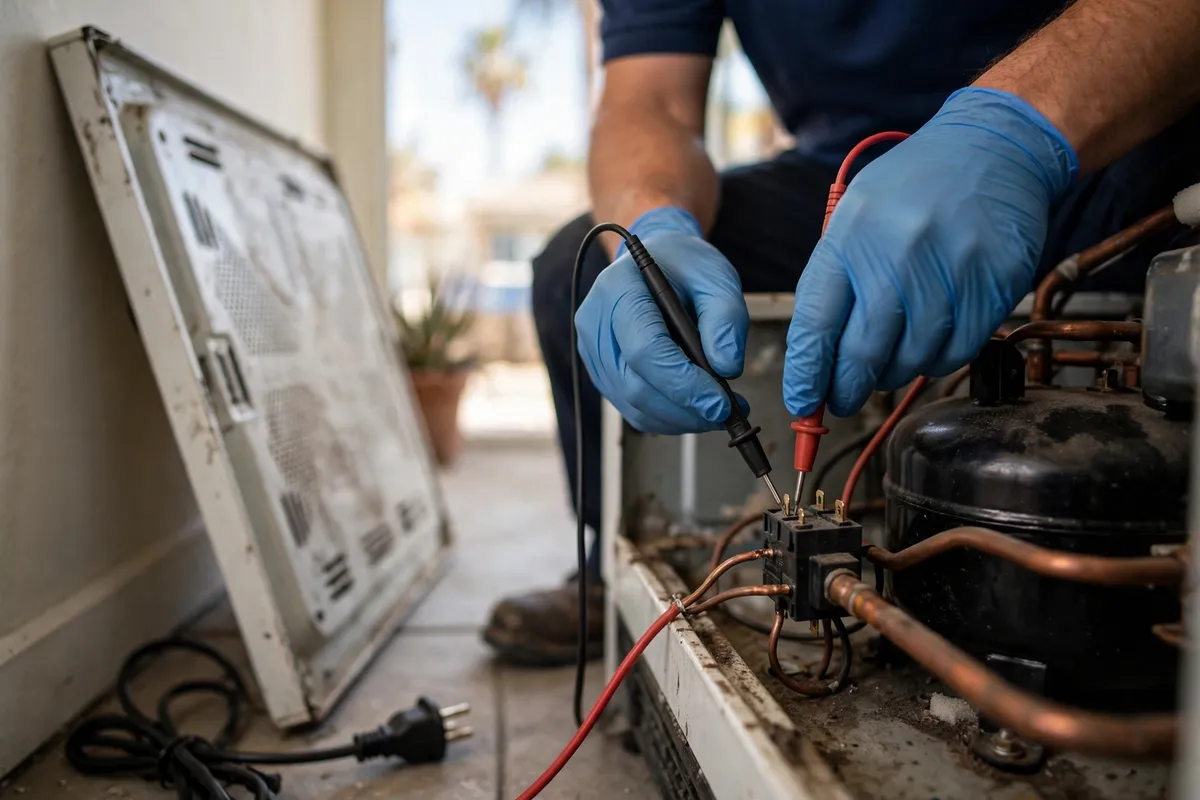
Power outages and surges can damage start relays and electronic control boards. A failed compressor on an older fridge often makes replacement the better value. A failed overload protector can mimic a dead compressor. Long, hot run times usually trace back to heat rejection problems. Extension cords and overloaded circuits can starve the compressor at startup.
What you can check yourself: Plug the fridge directly into the wall, not an extension cord or power strip. Clean the condenser coils before assuming the compressor is failing.
- Breaker trips when the fridge starts
- Burning smell near the compressor
- Compressor hums but doesn't start
Other refrigerator problems
Less common in Long Beach, but local pros fix these as well: garage refrigerator problems; door gasket replacement.
Quick Checks Before You Call
- Move perishables to a cooler.
- Listen for the compressor and fans.
- Check the temperature setting.
- Note whether the freezer is also warm.
How the Repair Usually Goes
- Describe the problem. Have the model number ready and explain what changed and when.
- Diagnosis. The technician checks the parts most likely to have failed.
- Estimate. Ask what the repair includes and how it compares with replacing the appliance.
- Repair and test. The part is replaced and the appliance is tested.
Long Beach Refrigerator Repair FAQ
Is it worth repairing a refrigerator in Long Beach?
It depends on the age and the part. Fans, relays, gaskets and defrost parts are usually worth fixing; sealed-system repairs on older fridges may not be. Summer heat in Long Beach and the Gateway Cities makes condenser coils and fans the first things to check when a refrigerator warms up, especially for a second fridge in the garage.
What should I have ready when I call about refrigerator repair in Long Beach?
The model number, which compartment is warm, how long it's been happening and any noises or error codes.
Why does my garage fridge stop working in winter?
Garage outlets are often on GFCI circuits that can trip and shut the fridge off unnoticed. Garage GFCI outlets trip easily, so check them if the fridge is warm.