What Affects Refrigerator Repair in Bell
Lakewood was built in the early 1950s as one of the first large planned postwar suburbs, and many homes date from that era. Water is hard throughout the area.
Many homes are older single-family houses with small kitchens and garage laundry.
What that means for your refrigerator: In hot spells, a refrigerator in a warm room or garage has less margin before it falls behind. With hard water, regular cleaning of filters and screens prevents many problems before they start.
Homes in Bell are generally on SCE service. A surge protector rated for appliances is an inexpensive way to protect a refrigerator's control board from the spikes that come with restored power.
Common Refrigerator Repairs in Bell Homes
Symptoms overlap, so it's worth skimming two or three sections before deciding which one matches your refrigerator.
Warm Refrigerator Repair in Bell
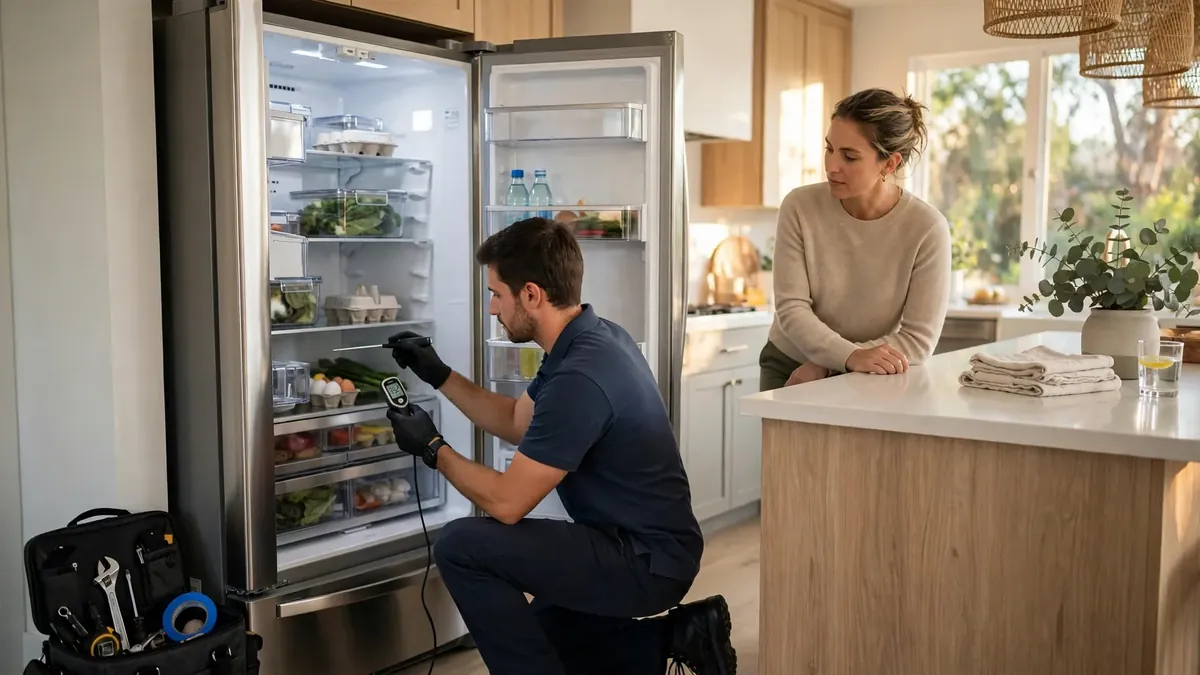
If the air damper sticks closed, cold air never reaches the lower compartment. Marginal parts tend to fail when kitchen temperatures climb. Overpacking blocks the airflow paths that the cooling system depends on. Above 40°F, bacteria multiply quickly, so time matters once the fridge warms. Telling a pro which compartment is warm, and since when, speeds up the diagnosis.
Pros serving Bell see this one regularly.
Quick things to rule out: Move items away from the vent at the top of the fresh-food section. Write down when the warming started and whether anything changed, like a move or a power outage.
- Water bottles sweat inside the fridge
- Freezer cold but fridge warm
- Compressor runs constantly
Condenser Coil Cleaning and Fan Repair in Bell
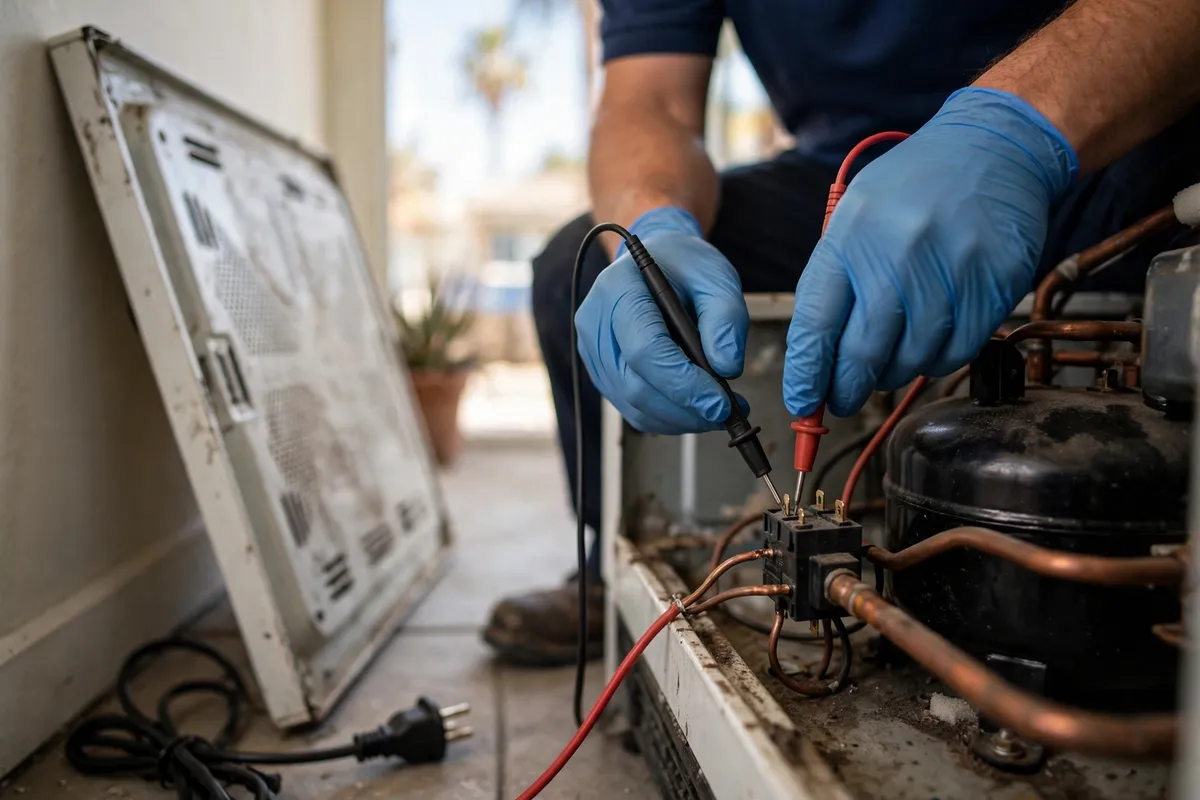
Coils behind the fridge collect grease in kitchens near the range. Shedding pets can blanket the coils in a matter of months. A slowing condenser fan reduces airflow long before it stops spinning. Less dust on the condenser means the fridge uses less power. Some models route condenser tubing through the side walls, so warm sides aren't always a problem.
In homes in Long Beach and the Gateway Cities, this comes up often.
Before booking a visit, check this: Leave at least an inch of space behind and above the fridge so heat can escape. Check that the condenser fan spins freely by hand once the power is off.
- The compressor area is hot to the touch
- The kick plate area is thick with dust
- The kick plate blows hot air
Noisy Refrigerator Fan Repair in Bell
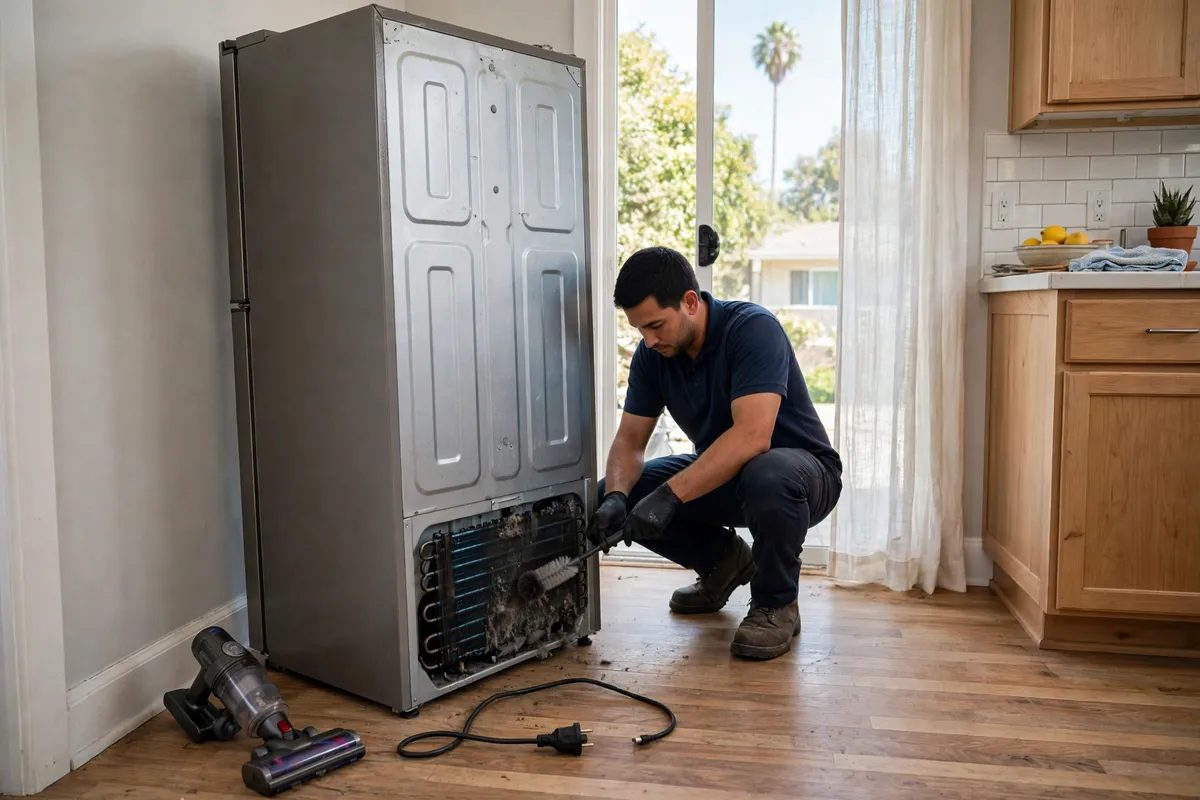
A fan blade striking ice makes a distinctive chirp. The evaporator fan usually stops when the freezer door opens, so test it with the door switch pressed. Melting the ice helps for a while, but the problem comes back. Some fridges use a control board to schedule defrost, and a board fault can stop it. Frost buildup from a failed defrost heater worsens a little each day.
What you can check yourself: Note whether the problem returns a week or two after a manual defrost. Look for a thick layer of frost on the back panel inside the freezer.
- Weak airflow from the freezer vents
- Chirping from the freezer
- Frost on the freezer's back wall
Refrigerator Water Leak Repair in Bell
Leaks behind the unit often come from the ice maker's water connection. Moving a fridge can kink or crack an old plastic supply line. If the drain pan underneath is out of position, defrost water ends up on the floor. Water under the fridge can warp flooring without ever pooling visibly. During each defrost cycle, melted frost runs down a small tube into a pan under the fridge, where it evaporates; a clog sends that water inside instead.
Worth checking in a few minutes: Flush the freezer's drain opening gently with warm water. Clear the defrost drain with warm water and a turkey baster if you can reach it.
- Water pools under the crisper drawers
- Puddle in front of the fridge
- Water under the crisper drawers
Ice Maker Repair in Bell
A sluggish inlet valve is a common reason for undersized cubes. If nothing happens at all, it may be the module or the arm being switched off. A bad-tasting or cloudy batch usually points to an old filter or stale ice. Clumped ice points to temperature swings in the freezer. A technician can test the inlet valve and module and tell you whether the module is cheaper to replace than to repair.
Worth checking in a few minutes: Run a few glasses of water through the dispenser after replacing the filter to clear air. Flush the line by dispensing two or three liters after a filter change.
- The ice maker makes a grinding sound
- Ice clumps together
- Water dispenses slowly
Refrigerator Start Relay Repair in Bell
A failed overload protector can mimic a dead compressor. A compressor that hums but never starts may be overheating or struggling against a failed relay. On older units, a compressor failure usually tips the decision toward replacement. When the compressor never rests, check the condenser side first. Variable-speed compressors depend on an inverter board, which is tested separately.
What you can check yourself: Feel whether the compressor area is unusually hot. Clean the condenser coils before assuming the compressor is failing.
- Lights dim when the fridge starts
- The compressor is too hot to touch
- Clicking from the back every few minutes
Other refrigerator problems
Pros serving Bell also handle these less common problems: garage refrigerator problems; door gasket replacement.
Quick Checks Before You Call
- Move perishables to a cooler.
- Find the model number inside the fridge.
- Listen for the compressor and fans.
- Check the temperature setting.
What to Expect From the Visit
- Describe the problem. Explain the symptoms, any error codes and the model number when you call.
- Diagnosis. The likely parts are checked one by one until the cause is confirmed.
- Estimate. Before work starts, ask for the total including parts and labor.
- Repair and test. The failed part is replaced and the appliance runs a full test.
Bell Refrigerator Repair FAQ
What temperature should my refrigerator be in Bell?
Aim for 37°F in the fresh-food section and 0°F in the freezer. An appliance thermometer in a glass of water gives a truer reading than the air. On the hottest days, a refrigerator in a warm kitchen or garage may run nonstop; clean coils and a working condenser fan make the difference.
How long can food stay in a warm refrigerator?
Perishable food shouldn't be held above 40°F for more than two hours.
Why does my garage fridge stop working in winter?
Some fridges include a garage heater kit that helps the thermostat run in cold weather. A nearly empty garage fridge loses cold quickly when opened.