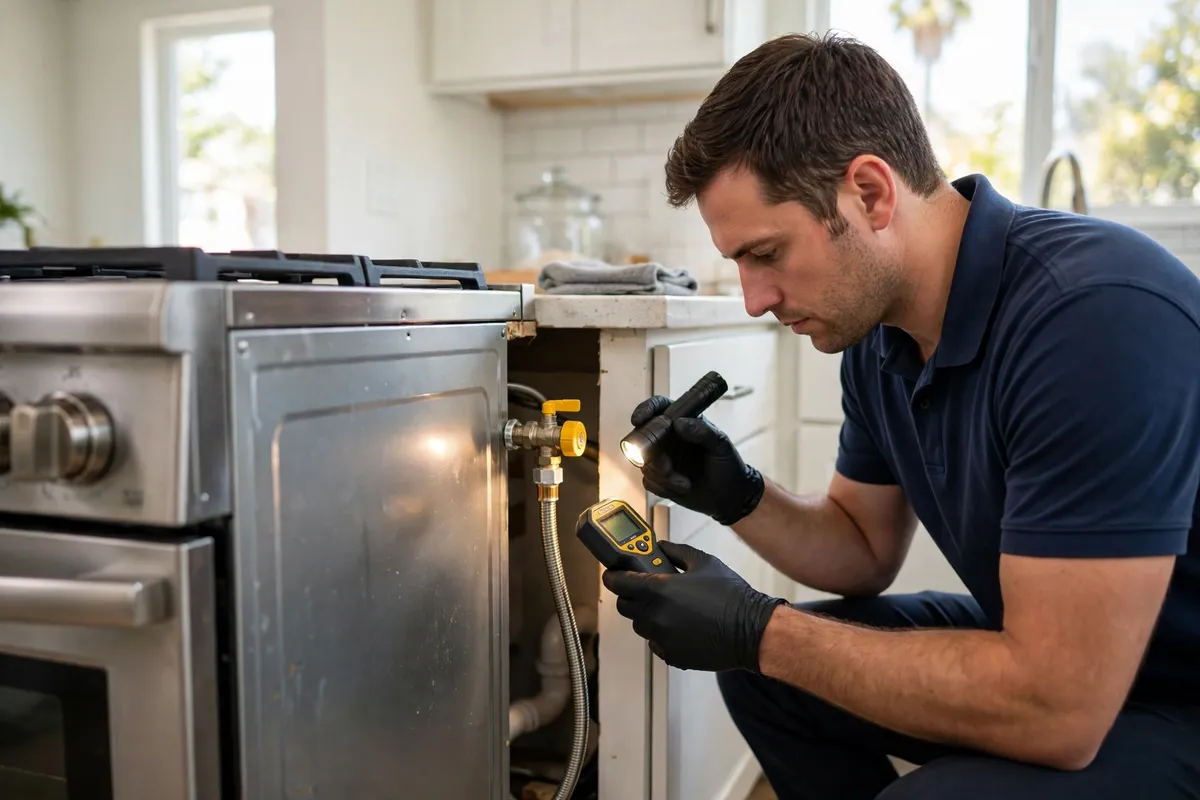
What Affects Stove Repair in Long Beach
Long Beach has older Craftsman homes, mid-century neighborhoods and a busy port.
Long Beach ranges from coastal neighborhoods near the harbor to older Craftsman areas inland. Water is hard throughout the area.
Many homes are older single-family houses with small kitchens and garage laundry.
Long Beach homes typically buy power from SCE. A brief flicker can reset a stove's clock or controls; if it won't come back to normal, a board or relay may have taken the hit.
Common Stove Repairs in Long Beach Homes
Symptoms overlap, so it's worth skimming two or three sections before deciding which one matches your stove.
Stove Burner Won't Light: Repair in Long Beach
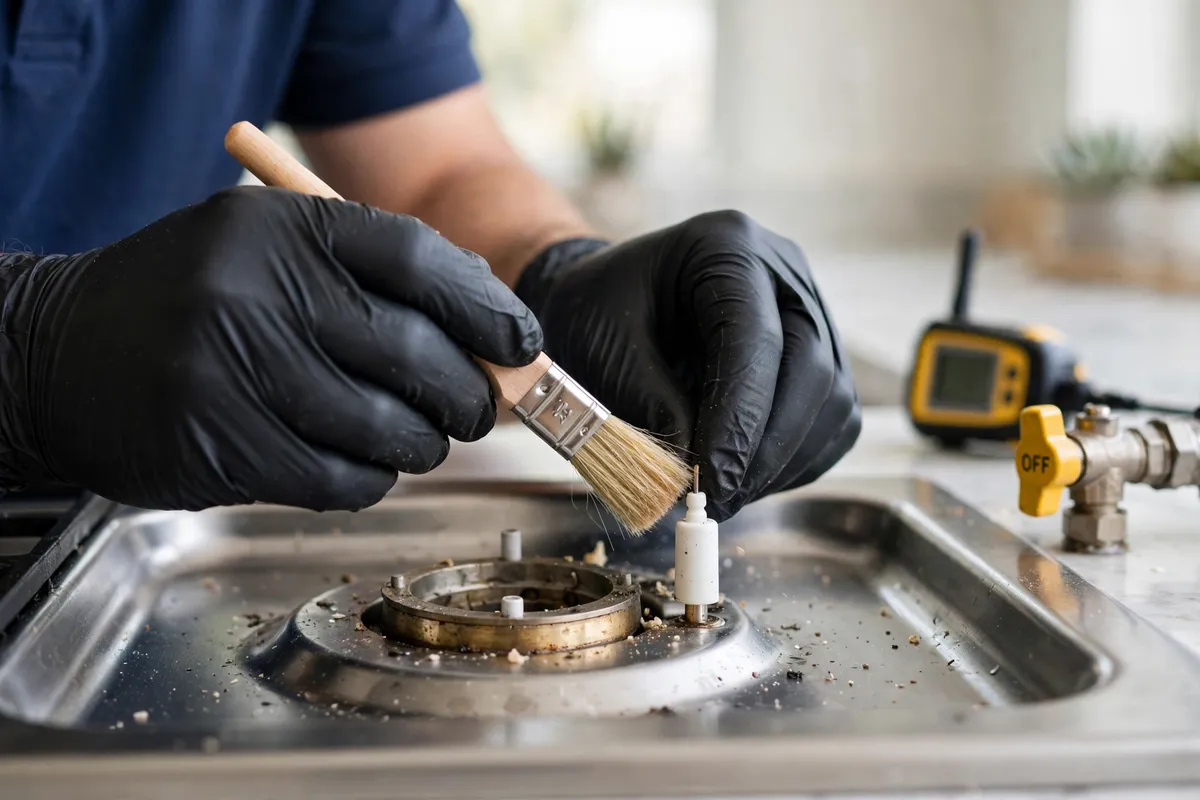
Clean, dry igniters spark reliably. The cap must sit flat for proper ignition. If no burners spark, the module may be at fault. Food spills clog burner ports and make the flame uneven. Burner caps must be seated correctly to light.
For a stove in Long Beach, this is a likely place to start.
Easy checks for Long Beach homeowners: Use a pin to clear clogged ports. Let spills dry fully before using the burner.
- Constant clicking
- Burner lights slowly
- Uneven flame
Gas Range Flame Problem Repair in Long Beach
Blue flames indicate proper combustion; yellow flames suggest a problem. Any smell of gas means stop, leave the home and call your gas utility or 911 from outside. Never ignore a gas smell. Incomplete combustion can produce carbon monoxide. A gas smell is a safety issue.
In Long Beach, this ranks among the most frequent stove problems.
Try this first: Leave the home and call the gas utility if you smell gas. Install a carbon monoxide detector nearby.
- Weak flame
- Flame too high or low
- Gas smell
Glass Cooktop Repair in Long Beach
Elements may fail. Non-magnetic pans won't heat. Induction cooktops need compatible pans. Stop using cracked glass. Cracked glass is a safety issue.
Easy checks for Long Beach homeowners: Stop using a cracked cooktop. Test cookware.
- Burner doesn't heat
- No heat
- Error code on induction
Coil Burner and Receptacle Repair in Long Beach
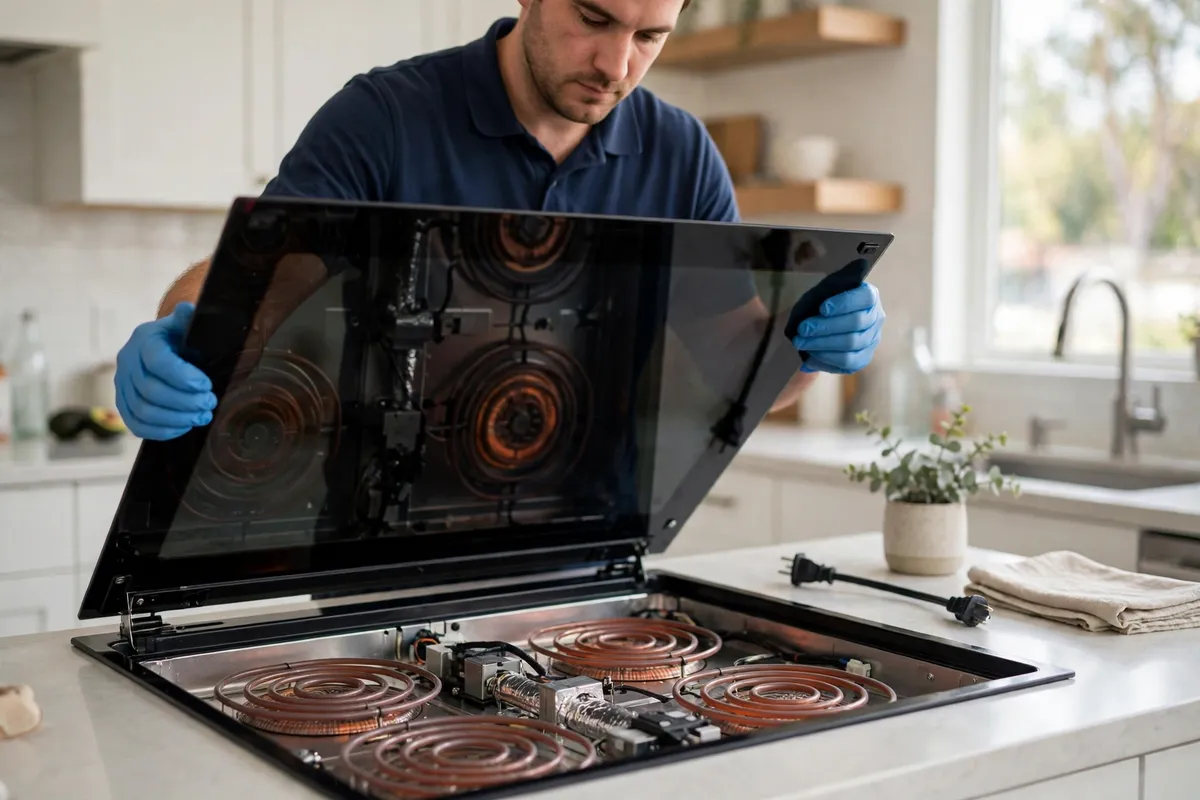
Arcing damages the receptacle. Trading coils is a simple test. Receptacles can burn out. Loose connections cause arcing and heat damage. Burned or loose receptacles are common and inexpensive.
Easy checks for Long Beach homeowners: Check for scorched receptacle terminals. Swap a working coil into the problem spot to test.
- Burned receptacle
- Sparks at the receptacle
- Burn marks
Range Control Knob Repair in Long Beach
Infinite switches regulate heat by cycling power. Knobs can strip and fail to turn the switch. Stuck switches cause overheating. Switches and knobs control burner heat. Knobs can strip and stop turning the switch.
A few safe steps to try: See if the burner only heats on high. Note heat levels.
- Knob loose
- Knob spins
- No control
Other stove problems
You may also run into these, which are less frequent around Long Beach: propane and natural gas conversions.
Before You Call: What to Check
- Find the model number.
- Note which burners are affected.
- Check whether burner caps are seated.
- Write down any error code.
How the Repair Usually Goes
- Describe the problem. Mention any noises, smells or error codes, plus the model number.
- Diagnosis. A technician tests the likely parts to find the cause.
- Estimate. Before work starts, ask for the total including parts and labor.
- Repair and test. After the repair, the appliance is run to confirm it works.
Long Beach Stove Repair FAQ
Can I use any pan on an induction cooktop?
Only magnetic pans work. If a magnet sticks to the bottom, the pan will heat.
Why are my flames tall and yellow after a conversion?
Wrong orifices cause dangerous flames. Mismatched orifices cause soot.
Why won't my gas burner light in Long Beach?
Clogged burner ports, a misaligned cap or a wet igniter are common causes. Local conditions vary, so describe the symptoms in detail.