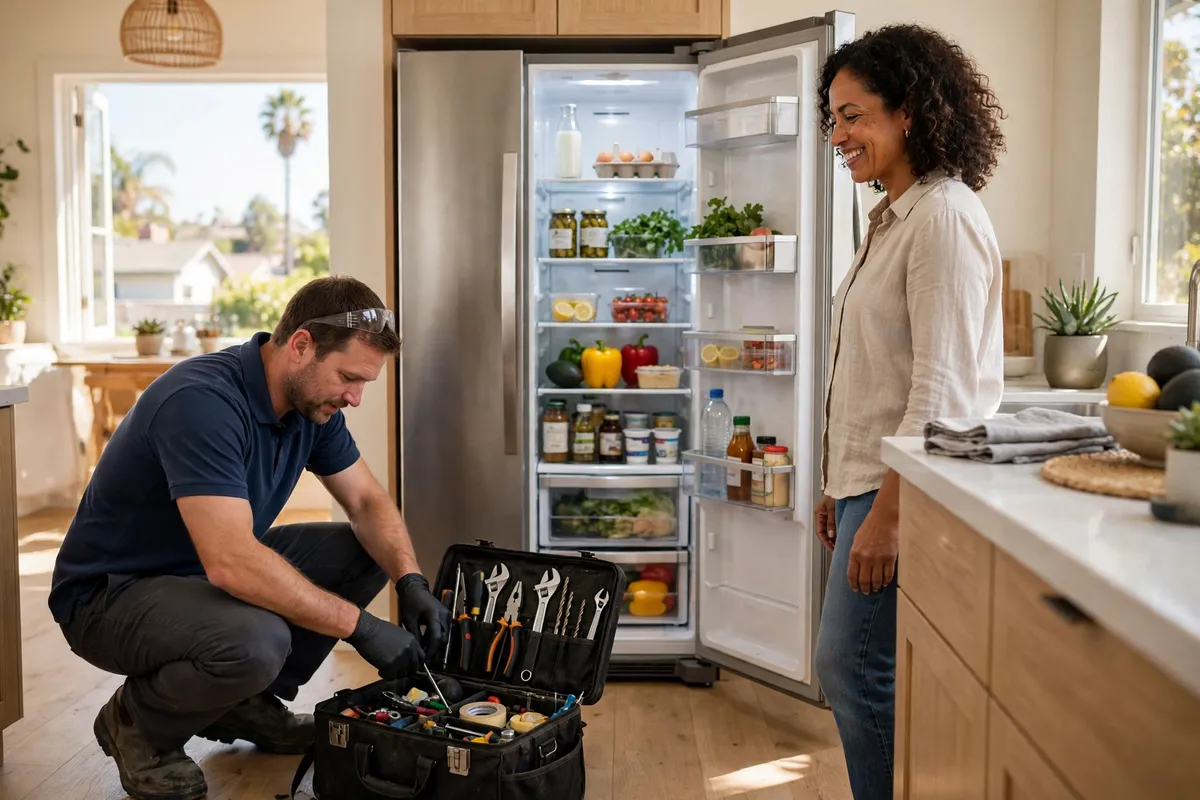
Local Conditions That Matter for Refrigerator Repair in Lakewood
Lakewood was built in the early 1950s as a planned suburb.
Water is hard throughout the area. Long Beach, Lakewood, Downey, Norwalk, Whittier and their neighbors make up the dense southeast part of Los Angeles County.
Long Beach ranges from coastal neighborhoods near the harbor to older Craftsman areas inland.
What that means for your refrigerator: Hot summers shorten the life of motors, fans and electronic boards, especially in appliances kept in garages or laundry rooms without air conditioning. With hard water, regular cleaning of filters and screens prevents many problems before they start.
With SCE as the usual electric provider in Lakewood, outages and voltage dips do happen. Before assuming a part failed, check the breaker and reset the refrigerator by unplugging it for a minute.
Refrigerator Problems Pros See in Lakewood
Read the section that matches your symptom; each one covers the cause, what to check and when to call.
Warm Refrigerator Repair in Lakewood
When the temperature sensor drifts, the board shuts the cooling off too early. Marginal parts tend to fail when kitchen temperatures climb. A packed fridge can't circulate air, so pockets of warmth form. Most warm fridges are fixed without touching the refrigerant at all. A fridge that cools at night but not in the afternoon is often struggling to reject heat.
Pros serving Lakewood see this one regularly.
Easy checks for Lakewood homeowners: Move items away from the vent at the top of the fresh-food section. Note any recent events such as an outage, a move or a cleaning that might have bumped a setting.
- Fresh-food section above 40°F
- Milk spoils before its date
- Condensation on shelves
Ice Maker Repair in Lakewood
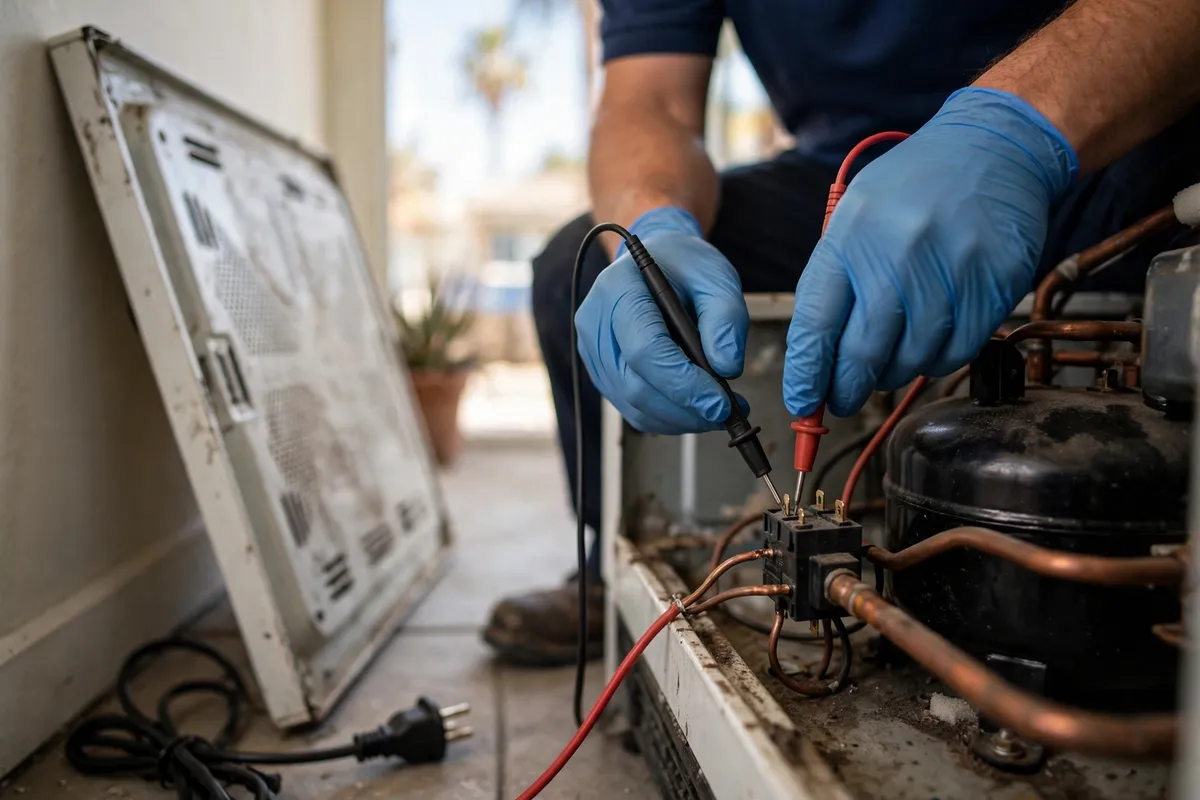
The fridge's inlet valve can partly clog with sediment and starve the ice maker. When cubes fuse together, the freezer has likely been warming and recooling. Many ice makers stop producing when the bin's shutoff arm is raised or a sensor thinks the bin is full. Ice makers in the door rely on a dedicated duct that can frost over. Low water pressure is like a weak garden hose: the mold never fills, so cubes come out small or hollow.
In homes in Long Beach and the Gateway Cities, this comes up often.
Before booking a visit, check this: Remove the bin and clear stuck ice from the chute. Empty the ice bin and break up any clumps blocking the auger.
- The ice bin is empty for days
- Water dispenses slowly
- No ice for more than a day
Refrigerator Water Leak Repair in Lakewood
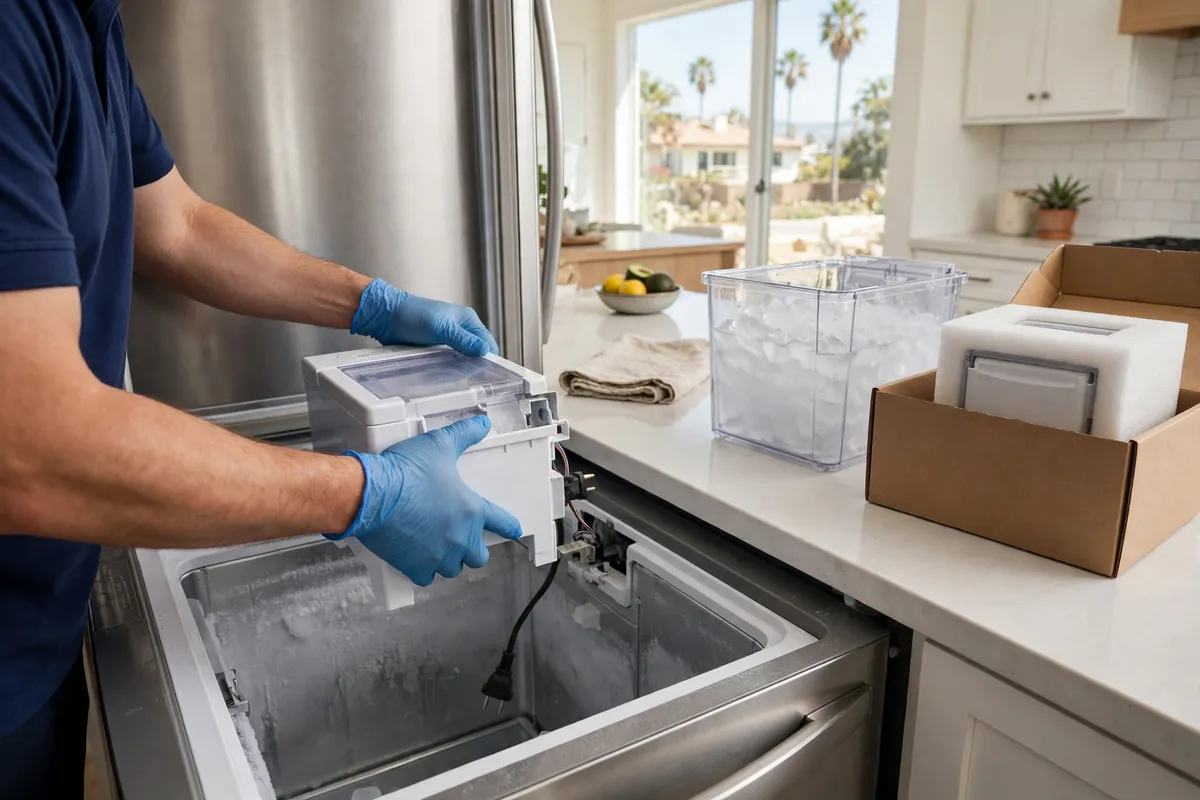
A worn compression fitting on the water line can drip slowly for weeks. Older plastic tubing tends to crack when the fridge is pulled out for cleaning. Small leaks soak into wood and laminate floors quietly. Drips after each use of the water dispenser point to its line or valve. A misplaced drain pan can spill water each time the fridge defrosts.
Before booking a visit, check this: Flush the freezer's drain opening gently with warm water. Clear the defrost drain with warm water and a turkey baster if you can reach it.
- Ice in the drain area
- Ice forms on the freezer floor
- Wet floor behind the fridge
Refrigerator Condenser Fan Repair in Lakewood
In kitchens, cooking grease mixes with dust and makes coils harder to clean. Warm side panels can be normal on fridges with built-in wall condensers. When heat can't escape, the compressor may trip its overload and cycle off. Clean coils mean shorter run times and lower energy use. A seized fan makes the compressor overheat and shut off on its thermal protector, which can look like an intermittent cooling problem.
What you can check yourself: Leave at least an inch of space behind and above the fridge so heat can escape. Look behind the unit for a matted layer of lint near the compressor compartment.
- The kick plate area is thick with dust
- Warm air blows out from under the front
- The fridge runs almost constantly
Refrigerator Start Relay Repair in Lakewood
Long, hot run times usually trace back to heat rejection problems. A failed overload protector can mimic a dead compressor. Extension cords and overloaded circuits can starve the compressor at startup. Variable-speed compressors depend on an inverter board, which is tested separately. A fridge that clicks but doesn't run is often one inexpensive part away from working again.
What you can check yourself: Note the interval between clicks from the back of the unit. Remove any extension cord and use a dedicated outlet.
- A humming that never turns into steady running
- Compressor hums but doesn't start
- Lights dim when the fridge starts
Evaporator Fan and Defrost Repair in Lakewood
Press the door switch to hear whether the freezer fan actually runs. If the evaporator fan stops, the freezer coil keeps getting cold but the fridge section warms up. If the defrost heater, thermostat or control fails, the coils ice over, airflow stops and the fridge warms even though the freezer stays cold. A clicking or chirping noise from the freezer often comes from a fan blade hitting ice. The evaporator fan is the fridge's circulation system; without it, cold air stays trapped in the freezer.
Before booking a visit, check this: Hold the door switch in with your finger to check whether the fan runs. Note whether the problem returns a week or two after a manual defrost.
- Fridge cools again after a manual defrost
- Squealing that changes when the freezer door opens
- Chirping from the freezer
Other refrigerator problems
A refrigerator can also need help with these, which are less frequent in Lakewood: garage refrigerator problems; door gasket replacement.
Before You Call: What to Check
- Look for frost on the freezer's back wall.
- Note which compartment is warm and since when.
- Check the temperature setting.
- Move perishables to a cooler.
What to Expect From the Visit
- Describe the problem. Have the model number ready and explain what changed and when.
- Diagnosis. The technician tests the parts most likely to cause your symptom, starting with the simplest.
- Estimate. Get the cost of parts and labor before saying yes to the repair.
- Repair and test. After the part is swapped, the technician runs the appliance to confirm the fix.
Lakewood Refrigerator Repair FAQ
Why does my garage fridge stop working in winter?
Garage GFCI outlets trip easily, so check them if the fridge is warm. A nearly empty garage fridge loses cold quickly when opened.
Is it worth repairing a refrigerator in Lakewood?
It depends on the age and the part. Fans, relays, gaskets and defrost parts are usually worth fixing; sealed-system repairs on older fridges may not be. Hard water shortens the life of the ice maker's inlet valve and fill tube and clogs refrigerator water filters faster, so ice and dispenser problems are common here.
Why is my fridge warm but the freezer cold?
That usually points to an airflow problem: a failed evaporator fan, a stuck damper or a defrost failure that has iced over the coil. It's rarely the compressor.