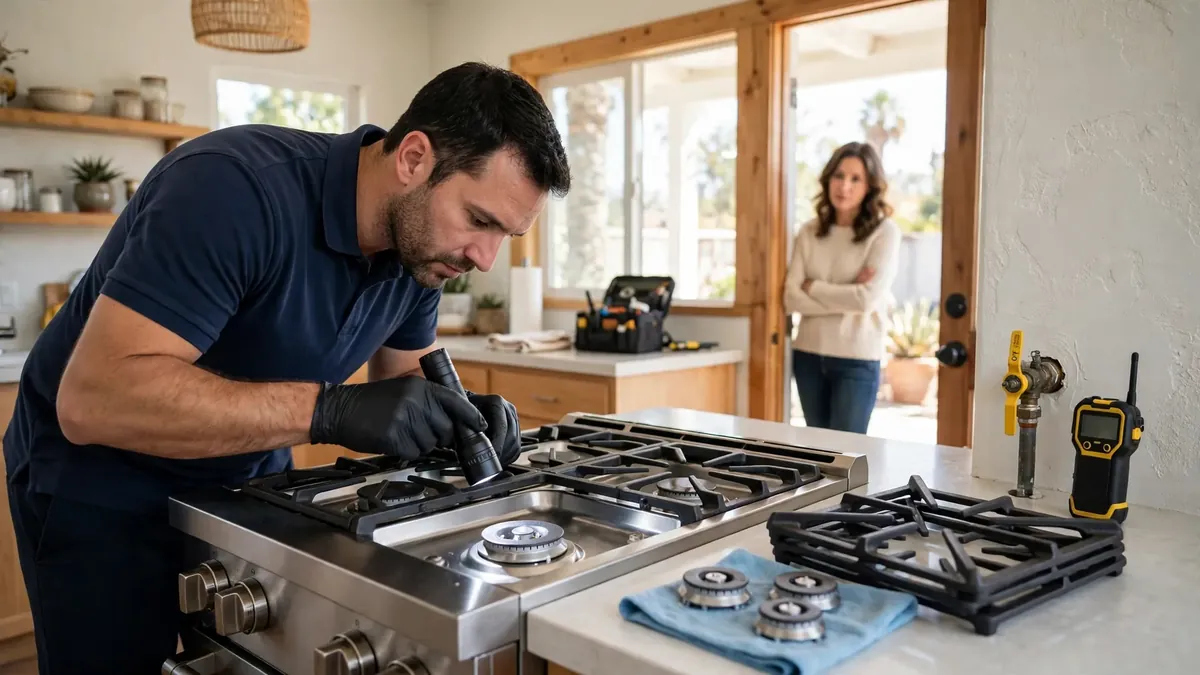
What Affects Stove Repair in Stanford
Stanford's campus housing and the surrounding neighborhoods include a mix of faculty homes, condos and apartments. Housing ranges from 1920s–1950s bungalows and ranch homes to large custom homes in Atherton, Portola Valley and Hillsborough-adjacent hills.
Most Peninsula cities buy water from the San Francisco Public Utilities Commission's Hetch Hetchy system, which is soft and low in minerals.
What that means for your stove: High-end and built-in models often use proprietary parts that may need to be ordered.
Electricity in Stanford typically comes through PG&E. When a stove acts strangely after a storm or a planned shutoff, the timing is a useful clue for whoever diagnoses it.
Write down the model and serial number from the label before you call; premium built-ins often need parts ordered by exact serial range.
Common Stove Repairs in Stanford Homes
Start with the first few sections; they cover the problems most often tied to conditions on the Peninsula.
Gas Burner Igniter Repair in Stanford
A dirty or wet igniter tip won't spark well. Clicking that won't stop usually means moisture or a faulty spark switch. Let the burner dry for a day before assuming a part has failed. If cleaning and drying don't help, the igniter, its wire or the spark module may need replacing. The cap must sit flat for proper ignition.
In homes on the Peninsula, this comes up often.
Try this first: Reseat the burner cap. Let spills dry fully before using the burner.
- No spark
- Constant clicking
- Burner lights slowly
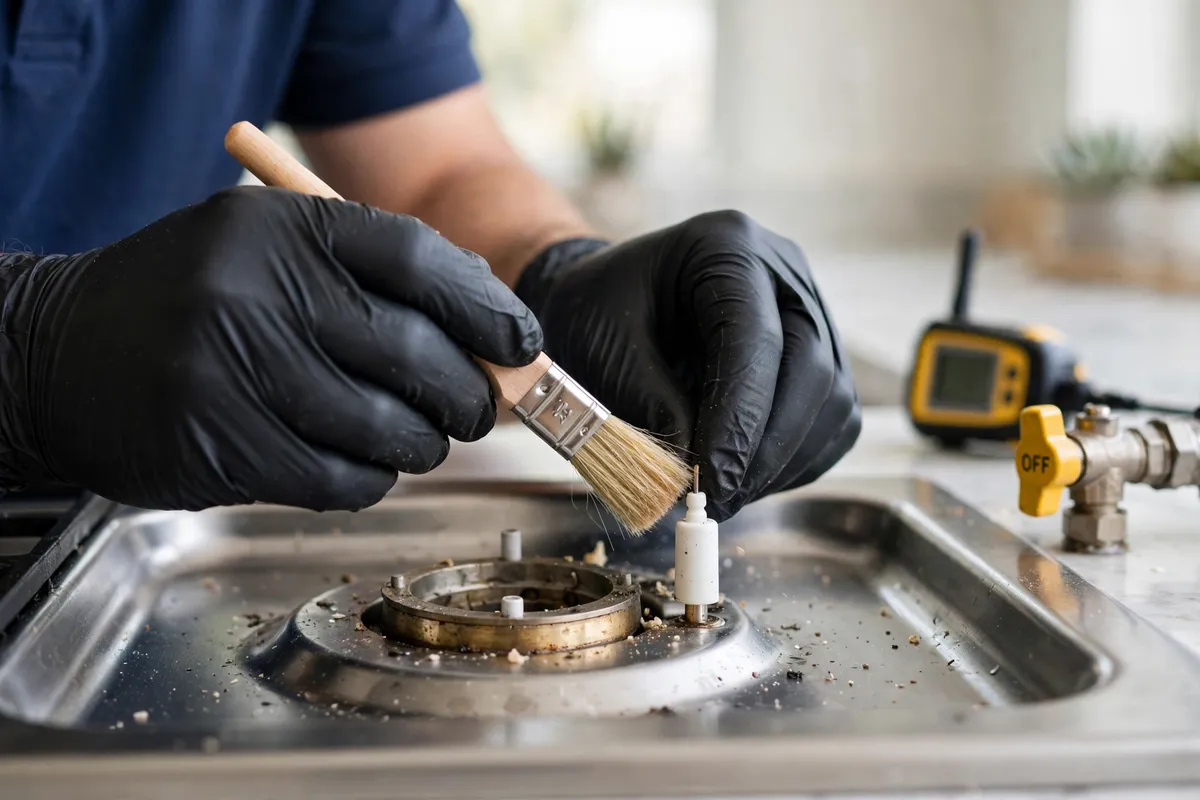
Gas Range Flame Problem Repair in Stanford
A gas smell near the range can come from an unlit burner, a loose connection or a leak. Yellow flames point to incomplete combustion. Never ignore a gas smell. CO risk rises with poor burning. A gas smell is a safety issue.
Pros serving Stanford see this one regularly.
Quick things to rule out: Keep a CO alarm in the home. Install a carbon monoxide detector nearby.
- Weak flame
- Soot on pans
- Yellow flame
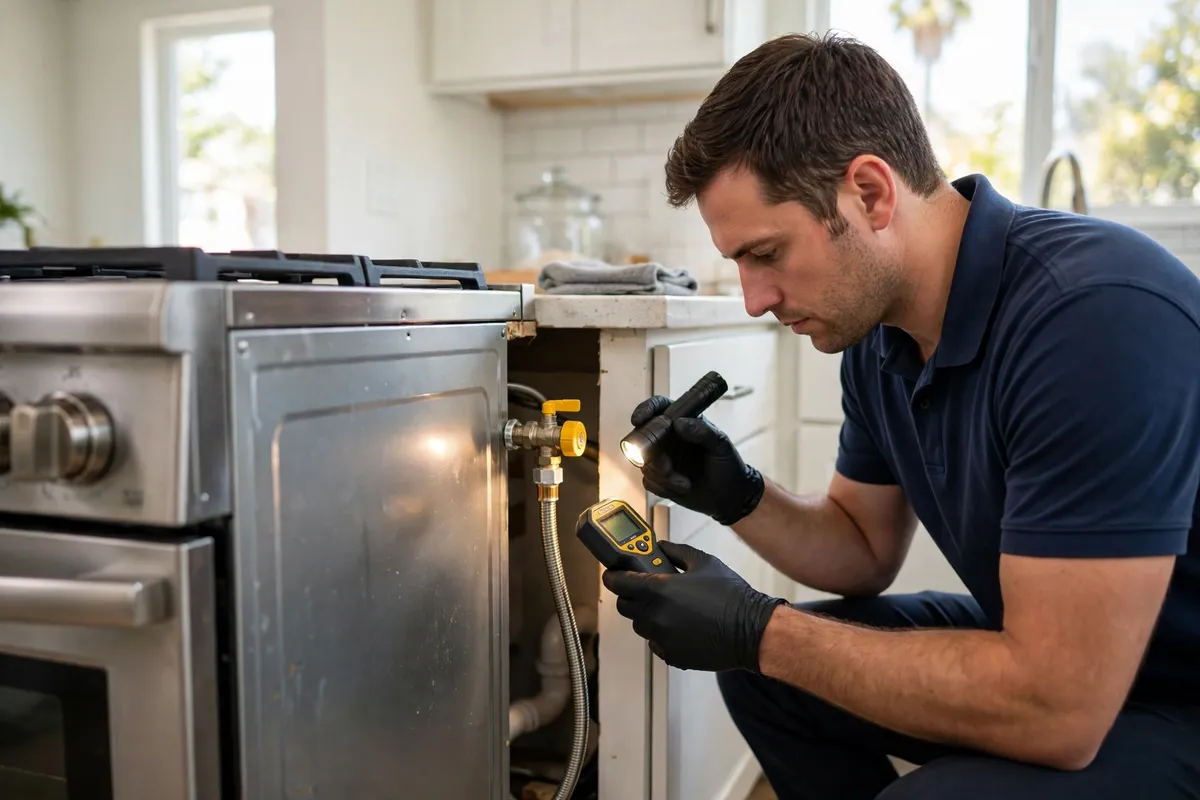
Induction Cooktop Repair in Stanford
Smooth-top cooktops hide their parts under the glass. Only magnetic cookware works on induction. Cracks can let liquids reach wiring. Burned-out elements stop heating. Stop using cracked glass.
Try this first: Stop using a cracked cooktop. Wipe spills quickly.
- Element doesn't heat
- Burner doesn't heat
- Cracked glass
Electric Stove Coil Element Repair in Stanford
Arcing damages the receptacle. Swapping coils between burners helps find the problem. Receptacles can burn out. Burned or loose receptacles are common and inexpensive. A burned receptacle can make the element heat intermittently.
What you can check yourself: Test by trading coils. Make sure the element is seated firmly.
- Burner heats only on high
- Burner heats intermittently
- Burn marks
Stove Burner Switch Repair in Stanford
Burners may stay on high. Knobs can strip and fail to turn the switch. Switches control heat levels. Replacing the switch is usually straightforward with the right part number. Infinite switches control how hot each burner gets.
What you can check yourself: Note if the burner only heats on high. Check whether the knob turns the shaft.
- No heat control
- Knob spins freely
- Burner won't turn off
Other stove problems
These come up less often around Stanford, and local pros handle them too: propane and natural gas conversions.
What to Note Before Calling
- If you smell gas, leave and call your gas utility first.
- Write down any error code.
- Find the model number.
- Note which burners are affected.
How the Repair Usually Goes
- Describe the problem. Describe the symptom, any error code and when it first appeared.
- Diagnosis. A pro confirms the cause by testing parts rather than guessing.
- Estimate. You get an estimate for parts and labor before work begins.
- Repair and test. Once the repair is done, the appliance is tested under normal use.
Stanford Stove Repair FAQ
What should I have ready when I call about stove repair in Stanford?
Whether it's gas, propane, electric or induction, and the model number.
Why does my stove burner keep clicking in Stanford?
Moisture, a misaligned cap or a faulty igniter or switch. Dual-fuel and induction ranges have their own control boards and sensors; have the model number ready.
Why are my flames tall and yellow after a conversion?
If a range was moved from a home on natural gas to one on propane, or the reverse, without a conversion, the flames can be too large or too weak. Regulators also need adjustment during conversion.