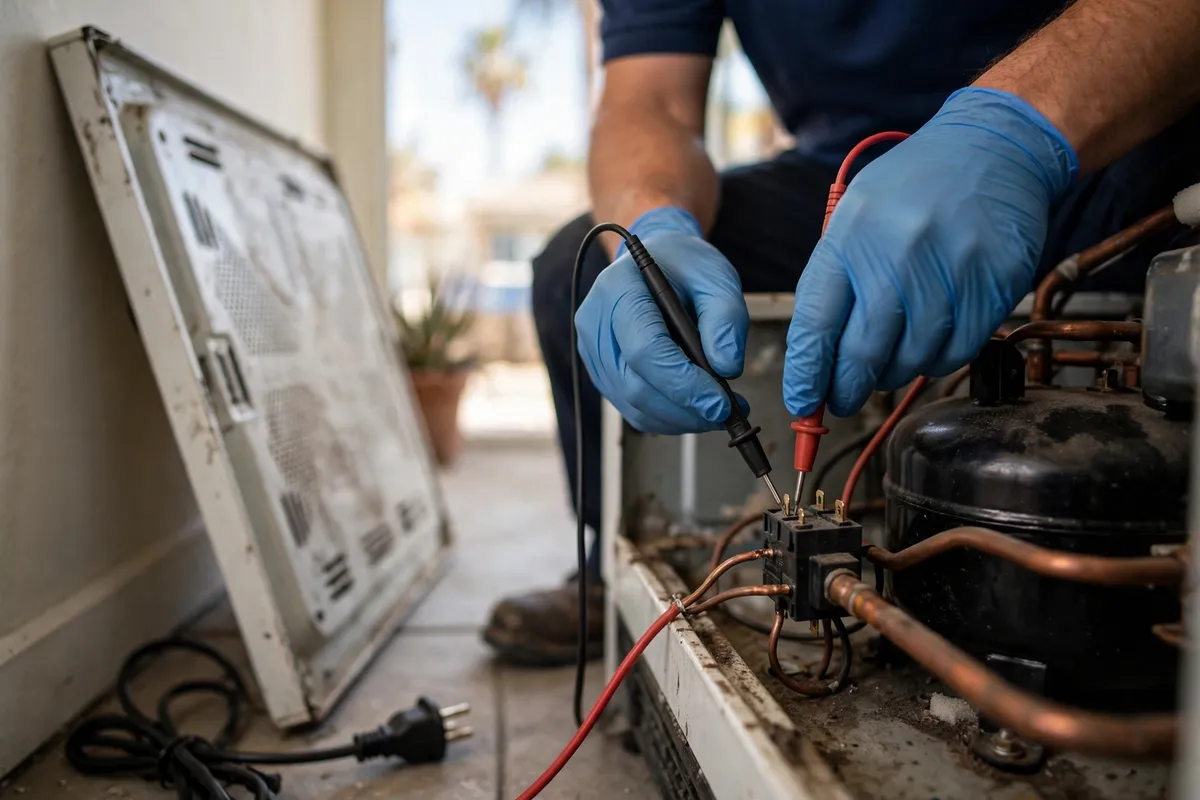
Local Conditions That Matter for Refrigerator Repair in Stanford
Many remodels in the area have moved toward all-electric kitchens, so induction cooktops and heat-pump dryers turn up more often than in other parts of the state. Most Peninsula cities buy water from the San Francisco Public Utilities Commission's Hetch Hetchy system, which is soft and low in minerals.
Stanford's campus housing and the surrounding neighborhoods include a mix of faculty homes, condos and apartments.
What that means for your refrigerator: High-end and built-in models often use proprietary parts that may need to be ordered. Because local water is soft, over-sudsing and residue are more common than mineral buildup.
PG&E serves most of Stanford. Tripped breakers and GFCI outlets are easy to overlook, so check both before deciding your refrigerator has a failed part.
If you have a built-in refrigerator, keep the top grille vents clear; built-in units breathe through the front, not the back.
The Refrigerator Repairs Most Often Needed in Stanford
Read the section that matches your symptom; each one covers the cause, what to check and when to call.
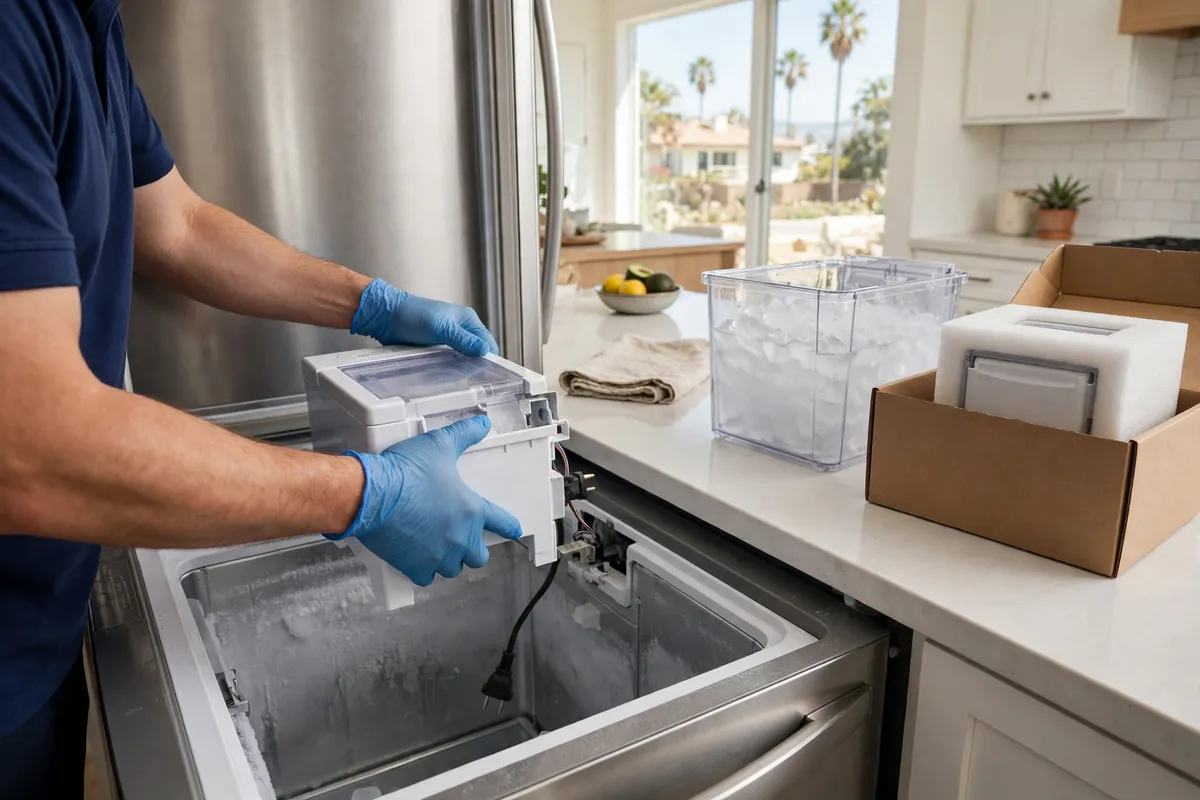
Refrigerator Ice Maker Repair in Stanford
A sluggish inlet valve is a common reason for undersized cubes. Clumped ice points to temperature swings in the freezer. After a filter change, trapped air can make the dispenser sputter. If the bin-full sensor is blocked by ice, production pauses. Stale-tasting cubes are usually a filter or storage issue, not a broken part.
If you're in Stanford, start your troubleshooting here.
Before booking a visit, check this: Run a few glasses of water through the dispenser after replacing the filter to clear air. Check that the shutoff valve behind the fridge is fully open and the line isn't kinked.
- The dispenser sputters
- Ice cubes are small or hollow
- Water dispenses slowly
Refrigerator Not Cooling? Repair in Stanford
A stuck damper door keeps freezer air from flowing into the refrigerator section. Marginal parts tend to fail when kitchen temperatures climb. When the temperature sensor drifts, the board shuts the cooling off too early. Too much food against the vents chokes off circulation inside the box. A fridge that cools at night but not in the afternoon is often struggling to reject heat.
In homes on the Peninsula, this comes up often.
Easy checks for Stanford homeowners: Move items away from the vent at the top of the fresh-food section. Write down when the warming started and whether anything changed, like a move or a power outage.
- Compressor runs constantly
- The freezer is fine but the fridge is warm
- The fridge feels warm near the top shelf
Leaking Refrigerator Repair in Stanford
A worn compression fitting on the water line can drip slowly for weeks. Plastic water lines can become brittle and split, especially after the fridge is moved. Food bits and slime build up in the defrost drain over time. A dislodged pan under the fridge turns normal defrost water into a puddle. Puddles at the front can come from the water line to the dispenser or ice maker.
A few safe steps to try: Flush the freezer's drain opening gently with warm water. Shut the valve feeding the ice maker until the leak is fixed.
- A damp floor appears after the ice maker runs
- Puddle in front of the fridge
- Water pools under the crisper drawers
Refrigerator Door Gasket Replacement in Stanford
Mild heat sometimes relaxes a creased gasket enough to seal again. Every gap in the gasket adds run time and energy use. Dark spots in the gasket are usually mildew rather than damage. Gasket replacement is one of the more affordable fridge repairs. If the fridge tilts forward, the doors drift open instead of closing.
A few safe steps to try: Clean the gasket with warm soapy water; sticky residue can keep it from seating. Check that the fridge leans slightly back so the doors swing closed.
- Condensation forms around the door edge
- Condensation on the gasket
- Fridge runs constantly
Noisy Refrigerator Fan Repair in Stanford
A fan blade striking ice makes a distinctive chirp. A control board that skips defrost causes the same frost buildup as a failed heater. Replacing the fan motor or defrost parts usually costs far less than a sealed-system repair, and a technician can test the heater, thermostat and control board to find which part failed. A manual defrost buys time, not a repair. A clicking or chirping noise from the freezer often comes from a fan blade hitting ice.
Quick things to rule out: Track whether cooling fades again after melting the frost. Hold the door switch in with your finger to check whether the fan runs.
- Clicking or buzzing from the freezer
- The fridge warms but the freezer stays cold
- Squealing that changes when the freezer door opens
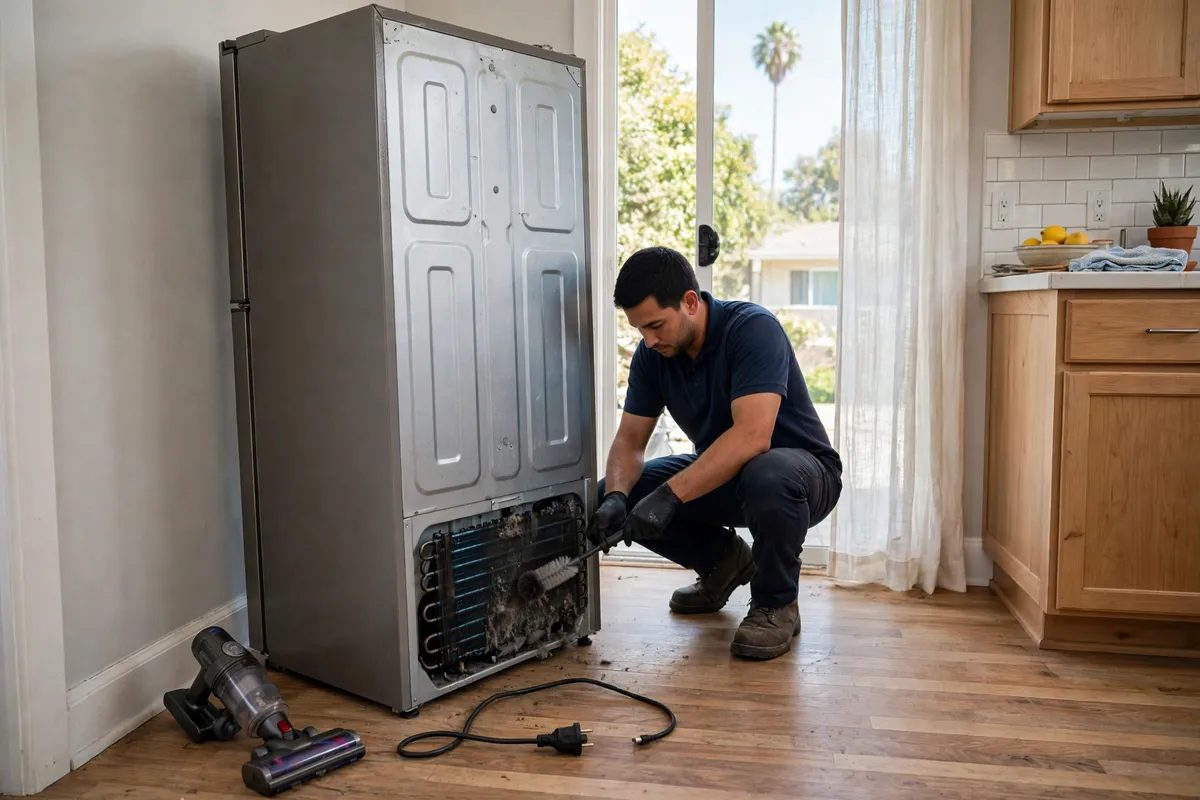
Condenser Coil Cleaning and Fan Repair in Stanford
Fan motors often weaken over months, so cooling fades rather than stopping overnight. Clean coils won't fix a failed part, but they often turn a fridge that barely keeps up into one that cools normally again. On models with coils underneath, the fan that pulls air across them can stall on built-up lint. Some models route condenser tubing through the side walls, so warm sides aren't always a problem. Pet hair is one of the fastest ways to clog a condenser.
Easy checks for Stanford homeowners: Make sure the back of the fridge isn't pressed against the wall. Notice any new buzzing near the kick plate when the compressor starts.
- The compressor area is hot to the touch
- Fridge cools at night but not in the afternoon
- The kick plate blows hot air
Other refrigerator problems
These come up less often around Stanford, and local pros handle them too: garage refrigerator problems; compressor and start relay diagnosis.
Before You Call: What to Check
- Find the model number inside the fridge.
- Check the temperature setting.
- Listen for the compressor and fans.
- Look for frost on the freezer's back wall.
How the Repair Usually Goes
- Describe the problem. Mention any noises, smells or error codes, plus the model number.
- Diagnosis. The technician checks the parts most likely to have failed.
- Estimate. Before work starts, ask for the total including parts and labor.
- Repair and test. The part is replaced and the appliance is tested.
Stanford Refrigerator Repair FAQ
How long can food stay in a warm refrigerator?
Perishable food shouldn't be held above 40°F for more than two hours.
Why does my garage fridge stop working in winter?
A garage kit adds a small heater near the thermostat so the fridge runs in winter. Sunlight hitting the fridge raises its workload noticeably.
Is it worth repairing a refrigerator in Stanford?
It depends on the age and the part. Fans, relays, gaskets and defrost parts are usually worth fixing; sealed-system repairs on older fridges may not be. Water here is relatively soft, so scale is less likely to be the cause; wear, clogs and electrical faults are more common culprits.