Local Conditions That Matter for Washer Repair in Stanford
Stanford's campus housing and the surrounding neighborhoods include a mix of faculty homes, condos and apartments. Most Peninsula cities buy water from the San Francisco Public Utilities Commission's Hetch Hetchy system, which is soft and low in minerals.
Housing ranges from 1920s–1950s bungalows and ranch homes to large custom homes in Atherton, Portola Valley and Hillsborough-adjacent hills.
What that means for your washer: Because local water is soft, over-sudsing and residue are more common than mineral buildup.
Stanford households are mostly served by PG&E. After an outage, give the washer a few minutes to restart on its own; if it doesn't, a tripped breaker or a damaged board are the usual suspects.
The Washer Repairs Most Often Needed in Stanford
The problems below are ranked for Stanford homes, with the most likely ones first and troubleshooting tips for each.
Washer Not Draining? Repair in Stanford
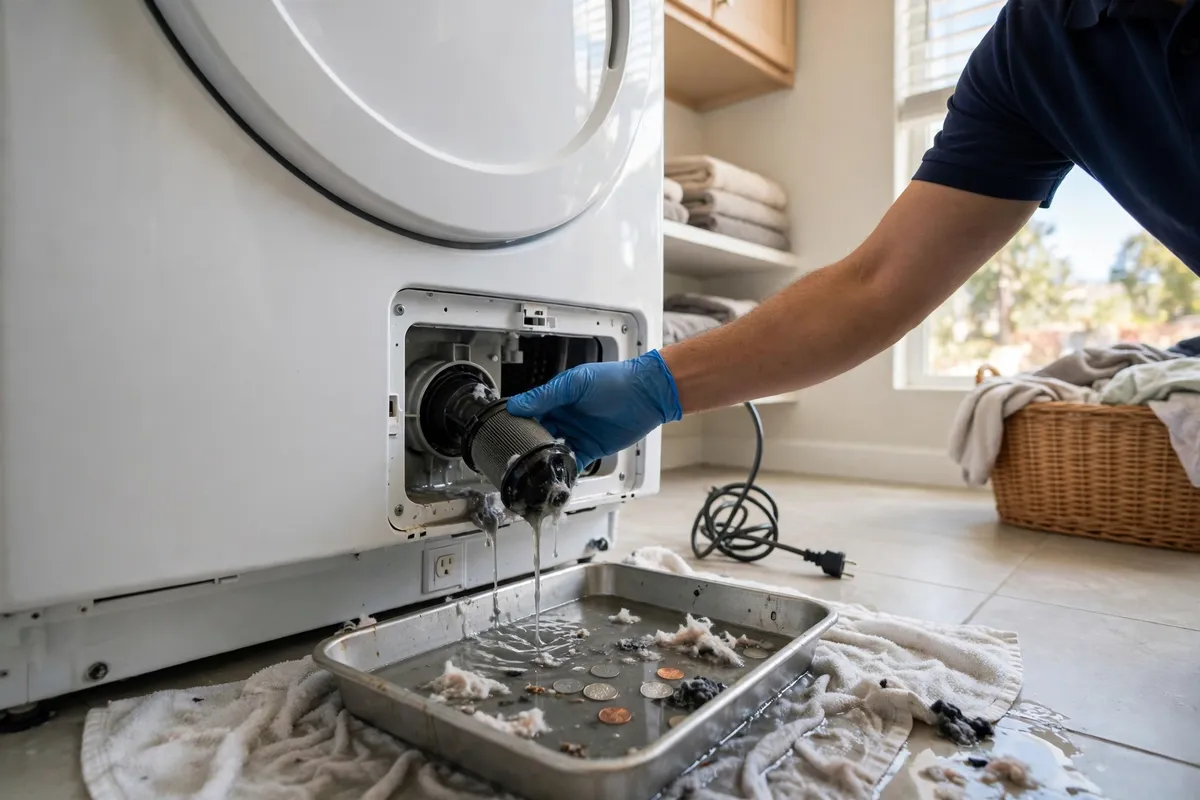
Years of lint and soap scum can partly block the drain hose. A technician can replace it and check the hose. When something hard lodges in the pump, it may hum without pumping. The drain hose should only go a few inches into the standpipe, or draining suffers. Wet clothes at the end of a cycle often trace back to a drain problem, not the motor.
If you're in Stanford, start your troubleshooting here.
Worth checking in a few minutes: Listen for the pump running during the drain cycle. Check that the drain hose isn't pushed more than a few inches into the standpipe.
- Clothes are soaking wet after the cycle
- Water stays in the drum
- Error code
Washer Not Spinning? Repair in Stanford
A broken lid switch tells the washer the lid is open, so spin never starts. A washer won't spin if it can't drain first. Slipping belts reduce spin speed and leave clothes wetter. Worn tub bearings make a roaring noise and can drag on the spin. Top-loaders often have a lid switch; front-loaders have a door lock.
In homes on the Peninsula, this comes up often.
What you can check yourself: Listen for a click from the lid switch when closing the lid. Redistribute the load and run a spin cycle.
- Washer hums
- Agitator doesn't move
- Clothes drip after the final spin
Washer Leak Repair in Stanford
Sharp items in pockets can tear the door seal. Leaks that show up only when draining point to the pump or its hoses. A worn tub seal can drip into the cabinet unseen. Leaks often come from inlet hoses, the door boot or the drain pump. Over-sudsing pushes foam out of vents and seals.
Before booking a visit, check this: Measure detergent instead of eyeballing it. Inspect the door boot for tears or debris.
- Damp floor after cycles
- Foam around the door
- Drips at the door
Washer Won't Start: Repair in Stanford
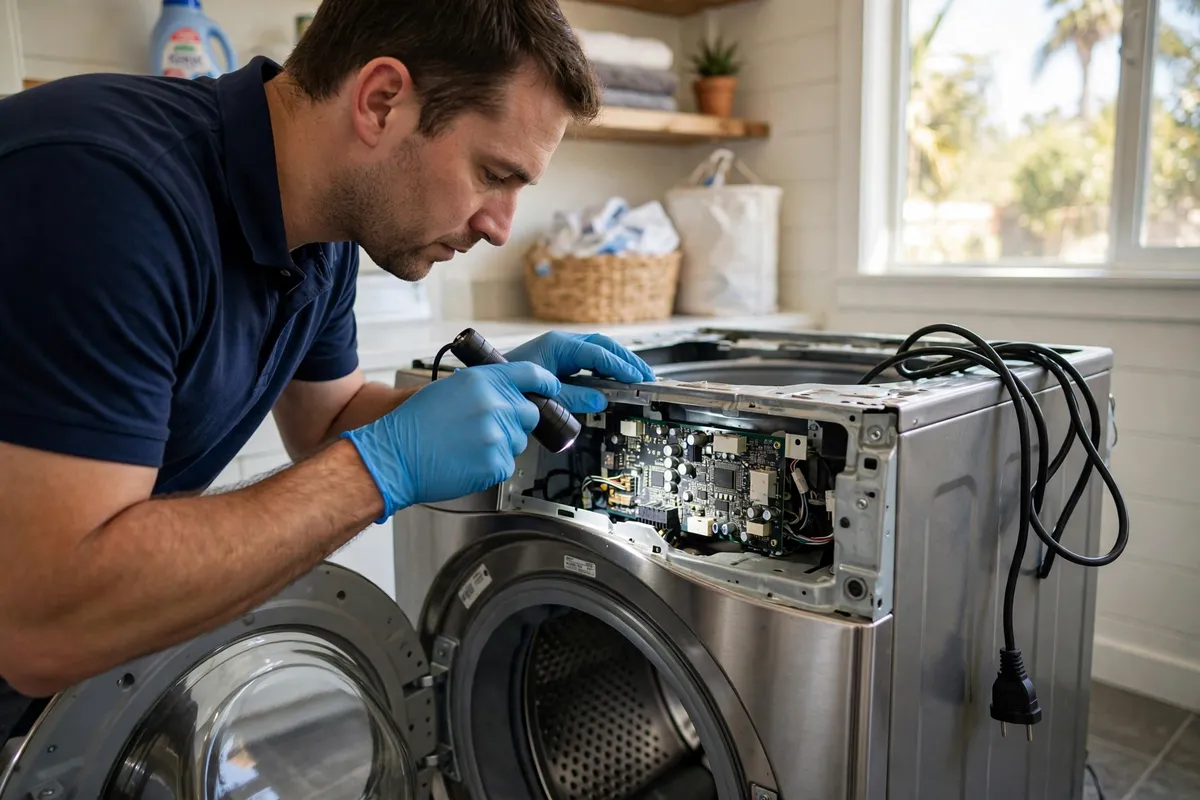
When the door lock fails, the washer may beep and refuse to start. Error codes point to specific faults and help a technician bring the right part. A door lock that won't engage stops the cycle before it begins. Power surges can damage control boards. Error codes point to specific faults on most modern washers.
Worth checking in a few minutes: Check the breaker and plug. Make sure no lock or delay setting is active.
- Nothing happens when you press start
- Error code on display
- Display blank
Smelly Front-Load Washer Repair in Stanford
Cold washes and too much fabric softener make buildup worse. Leaving the door closed between loads keeps moisture inside. A damaged seal leaks most with bigger loads. The gasket's folds are a perfect hiding place for moisture and lint. Most washers can get a replacement gasket.
Easy checks for Stanford homeowners: Run a cleaning cycle monthly. Run a hot cleaning cycle with washer cleaner once a month.
- Water at the door
- Clothes smell musty after washing
- Slimy residue in the folds
Other washer problems
A washer can also need help with these, which are less frequent in Stanford: washer not filling; shaking and noisy washer.
What to Note Before Calling
- Write down any error code.
- Note where water appears.
- Find the model number.
- Note any error codes.
How the Repair Usually Goes
- Describe the problem. Mention any noises, smells or error codes, plus the model number.
- Diagnosis. A pro confirms the cause by testing parts rather than guessing.
- Estimate. You get an estimate for parts and labor before work begins.
- Repair and test. After the part is swapped, the technician runs the appliance to confirm the fix.
Stanford Washer Repair FAQ
Why won't my washer fill with water?
Screens where the hoses connect catch grit from the water supply and can clog. If only hot or only cold water comes in, one side of the valve has likely failed.
Why won't my washer drain in Stanford?
Most often it's a clogged pump filter or a kinked drain hose; a failed pump is next. Water here is relatively soft, so scale is less likely to be the cause; wear, clogs and electrical faults are more common culprits.
Why does my front-load washer smell?
Moisture and residue in the door gasket and drain filter cause mildew.