Local Conditions That Matter for Stove Repair in Menlo Park
Menlo Park ranges from older homes near downtown to mid-century neighborhoods and new apartments near its tech campus.
Stanford's campus housing and the surrounding neighborhoods include a mix of faculty homes, condos and apartments. Many remodels in the area have moved toward all-electric kitchens, so induction cooktops and heat-pump dryers turn up more often than in other parts of the state.
Most Peninsula cities buy water from the San Francisco Public Utilities Commission's Hetch Hetchy system, which is soft and low in minerals.
What that means for your stove: High-end and built-in models often use proprietary parts that may need to be ordered.
Homes in Menlo Park are generally on PG&E service. A surge protector rated for appliances is an inexpensive way to protect a stove's control board from the spikes that come with restored power.
Write down the model and serial number from the label before you call; premium built-ins often need parts ordered by exact serial range.
Stove Problems Pros See in Menlo Park
Read the section that matches your symptom; each one covers the cause, what to check and when to call.
Induction Cooktop Repair in Menlo Park
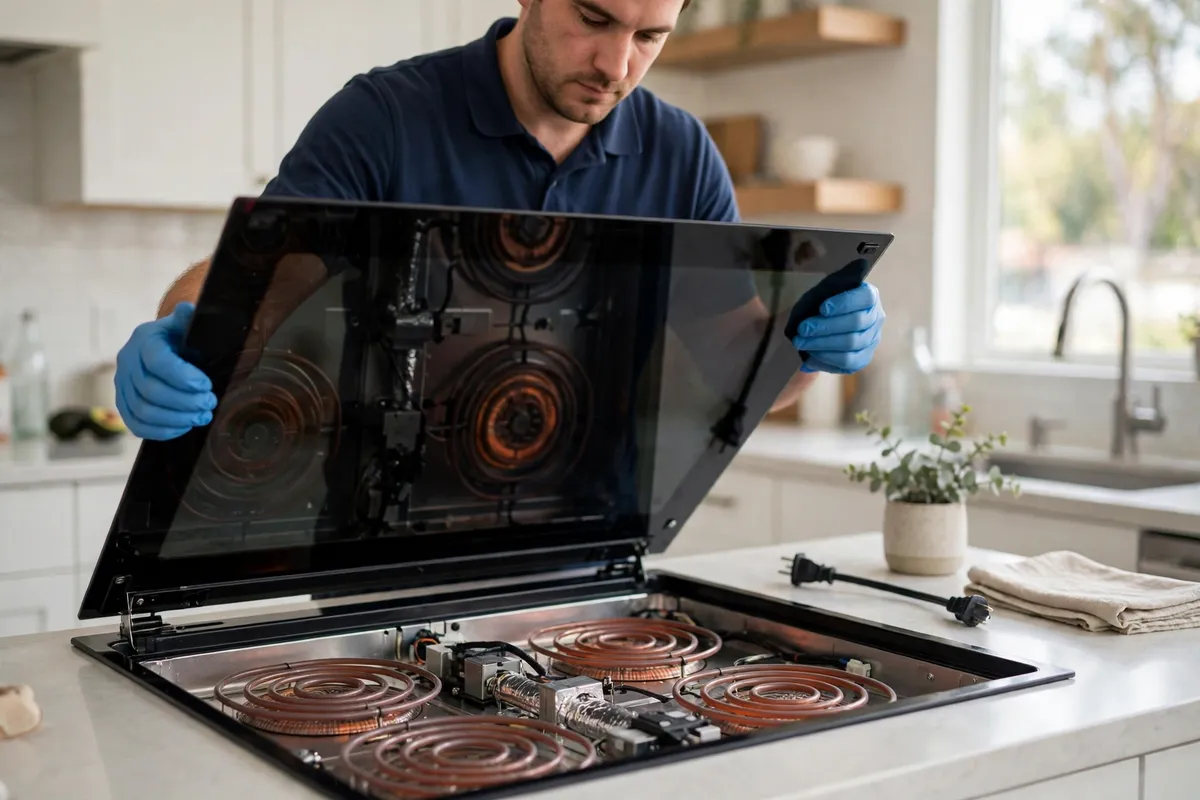
Burned-out elements stop heating. Induction needs magnetic pans. Stop using cracked glass. Induction cooktops need compatible pans. Cracks in glass cooktops are a safety concern.
Pros serving Menlo Park see this one regularly.
Easy checks for Menlo Park homeowners: Wipe spills quickly. Clean spills promptly.
- Burner stays on
- Burner doesn't heat
- Cracked glass
Stove Burner Won't Light: Repair in Menlo Park
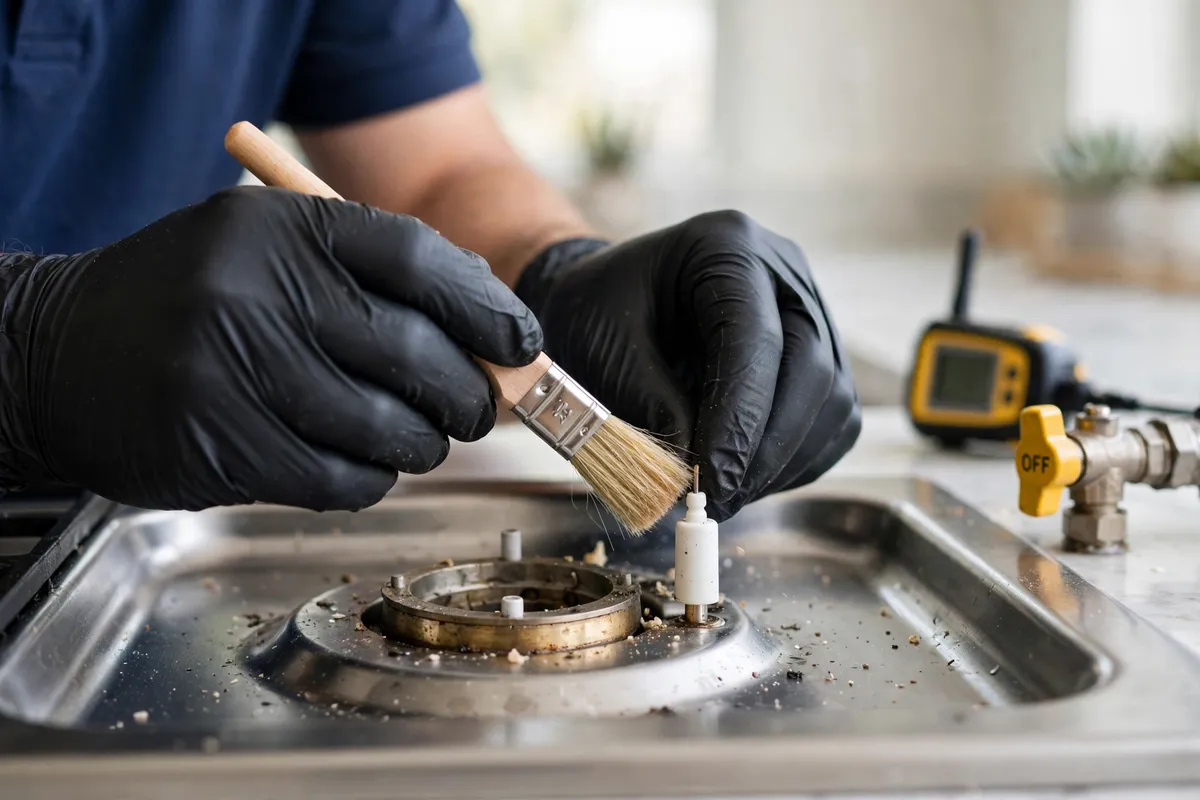
Clean, dry igniters spark reliably. Misaligned caps cause uneven flames. Moisture can make igniters click continuously. A failed spark module affects every burner. Sealed gas burners have small ports that clog easily with boil-overs.
In homes on the Peninsula, this comes up often.
Quick things to rule out: Make sure burner caps are seated properly. Use a pin to clear clogged ports.
- Burner won't light
- Burner clicks but won't light
- No spark
Gas Stove Repair and Leak Checks in Menlo Park
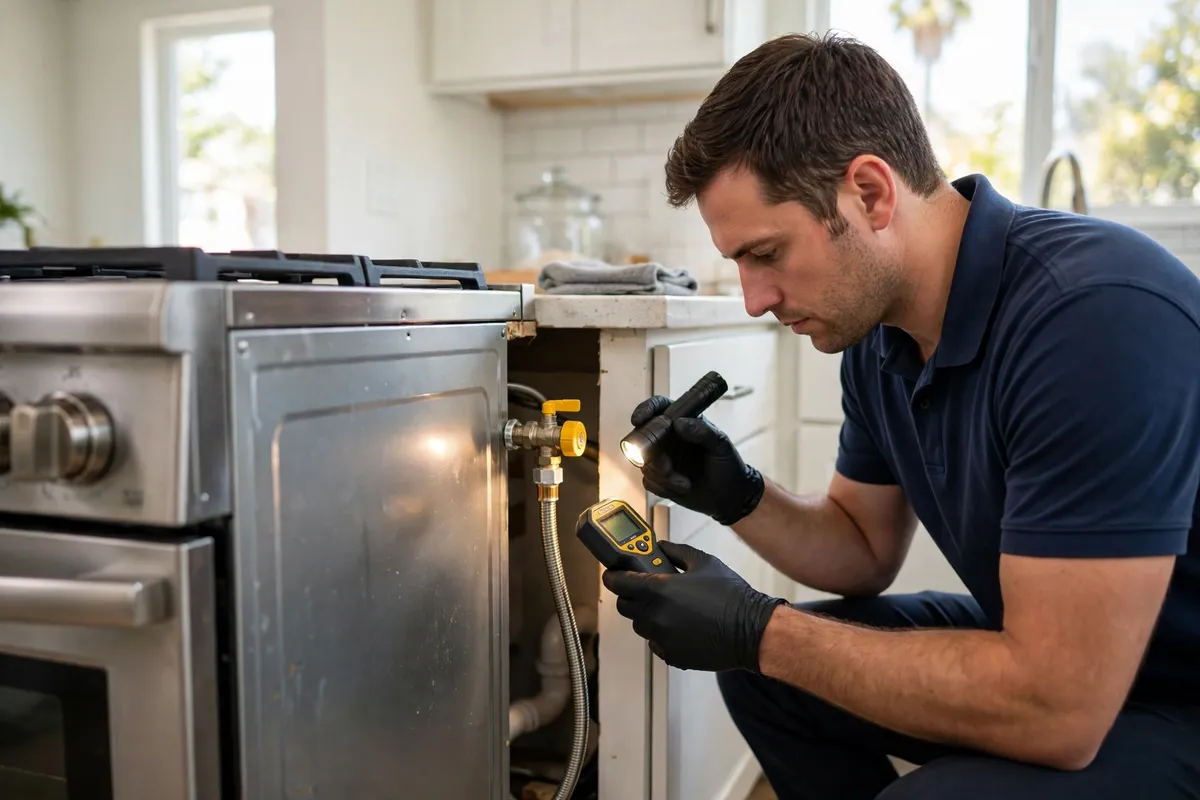
Gas burner flames tell you a lot. Yellow flames point to incomplete combustion. Incomplete combustion can produce carbon monoxide. Never ignore a gas smell. A gas smell is a safety issue.
Easy checks for Menlo Park homeowners: Clean ports to improve flame color. Clean burners to restore a blue flame.
- Yellow flame
- Hissing
- Soot on pans
Electric Stove Coil Element Repair in Menlo Park
Loose connections cause arcing. Trading coils is a simple test. Burned receptacles cause poor contact. A burned receptacle can make the element heat intermittently. Swapping elements between burners helps find the fault.
Try this first: Check for scorched terminals. Make sure coils are seated.
- Coil doesn't heat
- Element loose
- Sparks
Range Control Knob Repair in Menlo Park
Stuck switches cause overheating. Stripped knobs spin freely. A failed switch affects heat control. Knobs can strip and stop turning the switch. A failed switch can leave a burner on high or off.
Worth checking in a few minutes: Shut off power. Note heat levels.
- No control
- Burner stuck on high
- Knob spins
Other stove problems
Pros serving Menlo Park also handle these less common problems: propane and natural gas conversions.
Before You Call: What to Check
- Note whether it's gas, electric, glass or induction.
- Clean and dry the burners.
- Find the model number.
- Check whether burner caps are seated.
What to Expect From the Visit
- Describe the problem. Have the model number ready and explain what changed and when.
- Diagnosis. A technician tests the likely parts to find the cause.
- Estimate. You should get a clear estimate for the repair before approving it.
- Repair and test. The repair is finished with a test cycle to make sure the symptom is gone.
Menlo Park Stove Repair FAQ
Why does my igniter keep clicking?
Moisture from a spill or a faulty spark switch is the usual cause. Let spills dry fully before using the burner.
Why won't my gas burner light in Menlo Park?
Clogged burner ports, a misaligned cap or a wet igniter are common causes. Dual-fuel and induction ranges have their own control boards and sensors; have the model number ready.
Why are my flames tall and yellow after a conversion?
Propane needs smaller orifices than natural gas. A qualified technician should handle conversions.