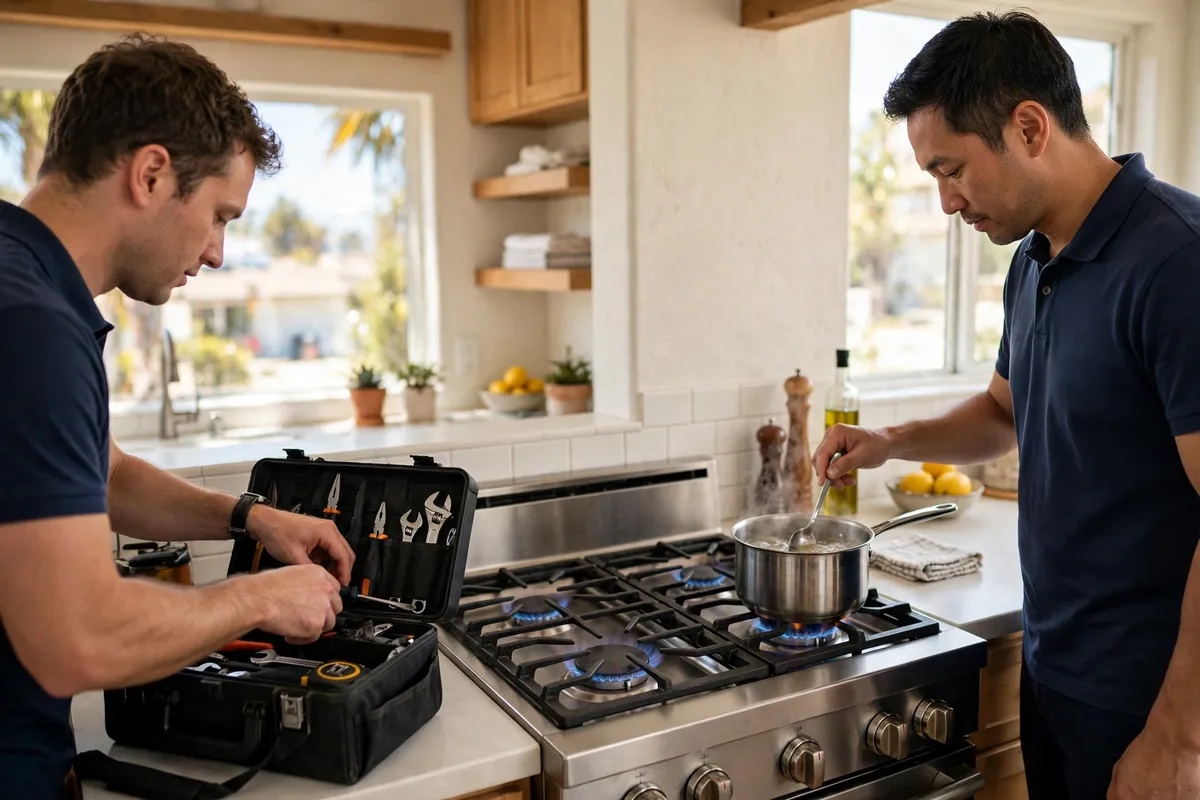
Local Conditions That Matter for Stove Repair in San Francisco
San Francisco's laundry is often in garages or basements of Victorian and Edwardian buildings, and many apartments share coin-op machines.
Street parking and steep hills mean a technician may need to carry tools and parts a fair distance, so mentioning stairs or access when you call helps with scheduling. A large share of homes are Victorian, Edwardian and 1920s–1940s row houses and flats, where laundry often sits in a garage or basement-level room with long, twisting dryer vent runs.
Fog rolls in off the Pacific most summer afternoons here, and the damp marine air keeps humidity high in laundry rooms and garages that don't get much sun.
What that means for your stove: In older houses, flexible gas connectors and shutoff valves may be decades old and worth inspecting. Damp coastal air slows anything that relies on drying or ventilation and speeds corrosion on exposed metal.
With PG&E as the usual electric provider in San Francisco, outages and voltage dips do happen. Before assuming a part failed, check the breaker and reset the stove by unplugging it for a minute.
Stove Problems Pros See in San Francisco
Start with the first few sections; they cover the problems most often tied to conditions in San Francisco and the northern Peninsula.
Electric Stove Coil Element Repair in San Francisco
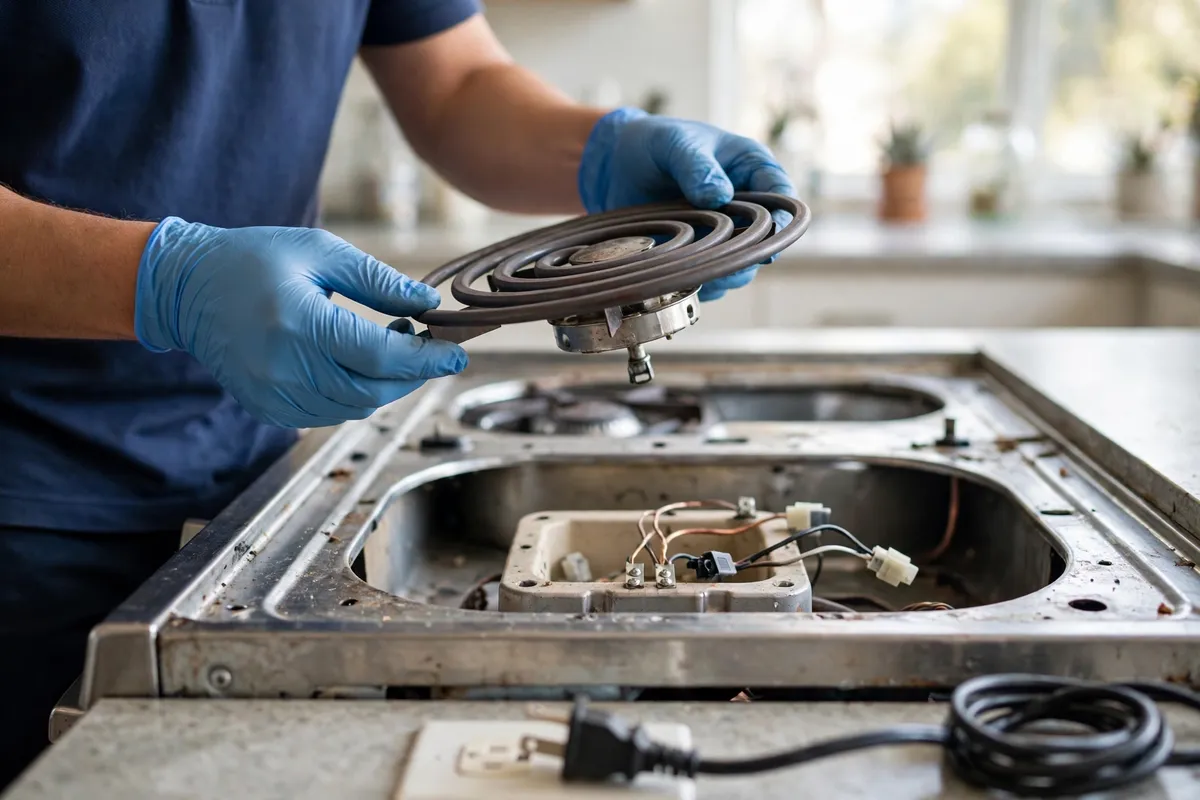
Arcing damages the receptacle. Receptacles can burn out. Swap coils to test. Loose connections cause arcing and heat damage. A burned receptacle can make the element heat intermittently.
Pros serving San Francisco see this one regularly.
Try this first: Check for scorched terminals. Look for burn marks.
- Sparking at receptacle
- Coil doesn't heat
- Burn marks
Stove Burner Won't Light: Repair in San Francisco
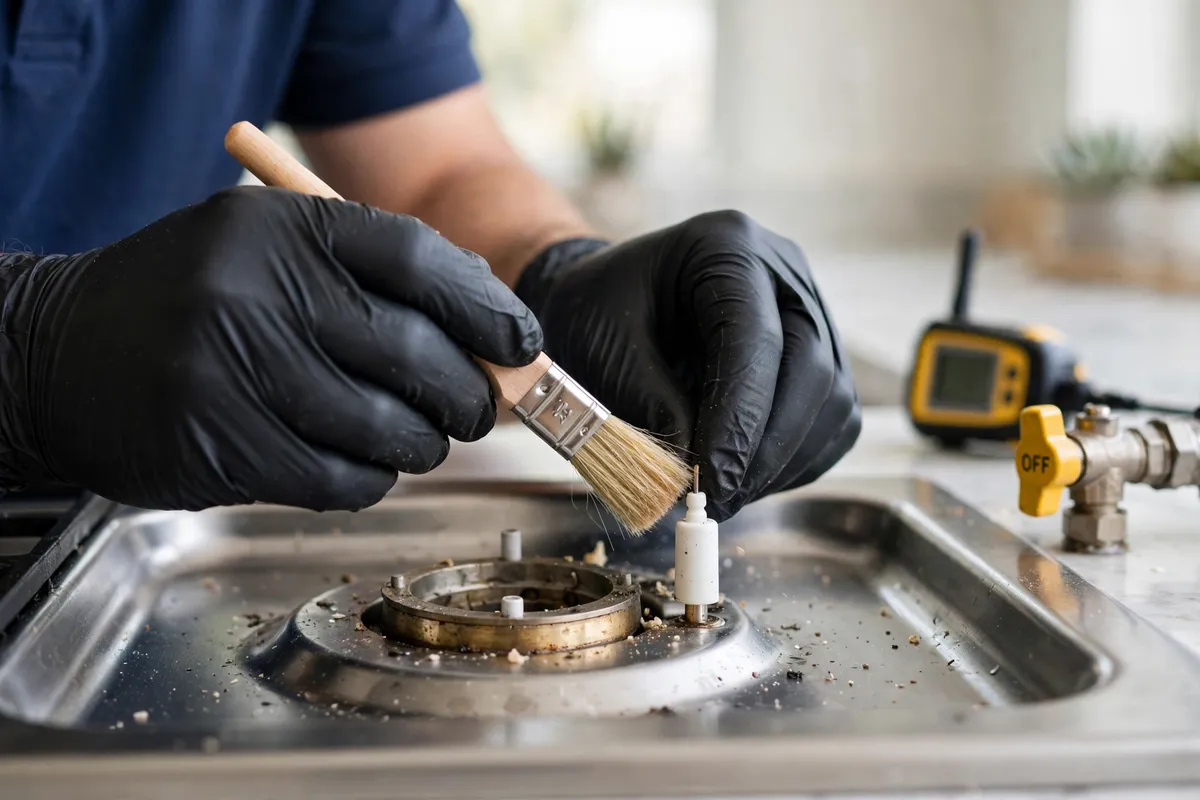
Clean, dry igniters spark reliably. Misaligned caps cause uneven flames. Moisture can make igniters click continuously. Spark modules can fail and stop sparking on all burners. Boil-overs can block the tiny ports in a sealed burner.
In homes in San Francisco and the northern Peninsula, this comes up often.
Try this first: Reseat the burner cap. Let spills dry fully before using the burner.
- Burner lights slowly
- Uneven flame
- Burner won't light
Gas Range Flame Problem Repair in San Francisco
Blue flames indicate proper combustion; yellow flames suggest a problem. Incomplete combustion can produce carbon monoxide. Never ignore a gas smell. A gas smell is a safety issue. A blue flame means clean burning; yellow means something's off.
Try this first: Keep a CO alarm in the home. Clean ports to improve flame color.
- Gas smell
- Weak flame
- Yellow flame
Induction Cooktop Repair in San Francisco
Elements may fail. Non-magnetic pans won't heat. Stop using cracked glass. Induction cooktops need compatible pans. Cracked glass is a safety issue.
Try this first: Test cookware. Clean spills promptly.
- Error code on induction
- Glass crack
- Burner stays on
Range Control Knob Repair in San Francisco
Stuck switches cause overheating. Stripped knobs spin freely. Infinite switches regulate heat by cycling power. Infinite switches control how hot each burner gets. A failed switch can leave a burner on high or off.
Quick things to rule out: Note if the burner only heats on high. Test the knob.
- Clicking switch
- No control
- Knob spins
Other stove problems
Pros serving San Francisco also handle these less common problems: propane and natural gas conversions.
Before You Call: What to Check
- Write down any error code.
- Find the model number.
- Clean and dry the burners.
- Check whether burner caps are seated.
What to Expect From the Visit
- Describe the problem. Share what the appliance is doing, when it started and the model number.
- Diagnosis. A pro confirms the cause by testing parts rather than guessing.
- Estimate. Get the cost of parts and labor before saying yes to the repair.
- Repair and test. After the part is swapped, the technician runs the appliance to confirm the fix.
San Francisco Stove Repair FAQ
Why does my stove burner keep clicking in San Francisco?
Moisture, a misaligned cap or a faulty igniter or switch. In older houses, flexible gas connectors and shutoff valves may be decades old and worth inspecting.
Can I use any pan on an induction cooktop?
Only magnetic pans work. If a magnet sticks to the bottom, the pan will heat.
Why are my flames tall and yellow after a conversion?
Incorrect orifices cause tall yellow flames. Propane and natural gas need different burner orifices and regulator settings.