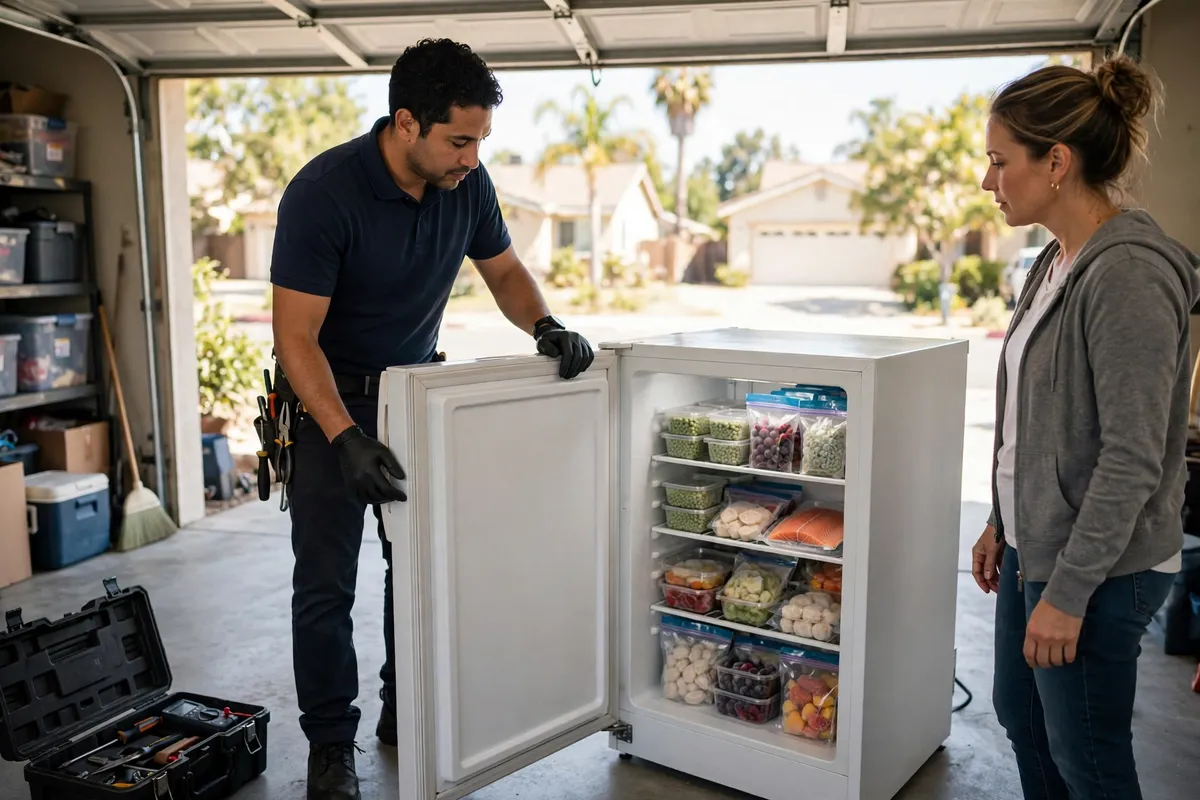
Local Conditions That Matter for Freezer Repair in San Francisco
San Francisco's laundry is often in garages or basements of Victorian and Edwardian buildings, and many apartments share coin-op machines.
Water here comes largely from the Hetch Hetchy system in Yosemite and is very soft, so scale buildup in dishwashers and ice makers is rarely the culprit it is in Southern California. Daly City and the northern Peninsula sit right in the fog belt, and many homes from the 1940s and '50s were built as tight rows of single-family houses with ground-floor garages.
Kitchens in older flats are often compact, which is why slim 18-inch dishwashers, apartment-size ranges and over-the-range microwaves are common.
What that means for your freezer: Coastal moisture can corrode connectors slowly, causing intermittent faults that are hard to pin down.
Most homes in San Francisco get electricity from PG&E. A freezer that misbehaves right after an outage or a flicker may have a damaged control board or relay, so note the timing.
The Freezer Repairs Most Often Needed in San Francisco
Not every problem needs a technician, so each section starts with what's going on and what you can rule out yourself.
Freezer Frost Buildup Repair in San Francisco
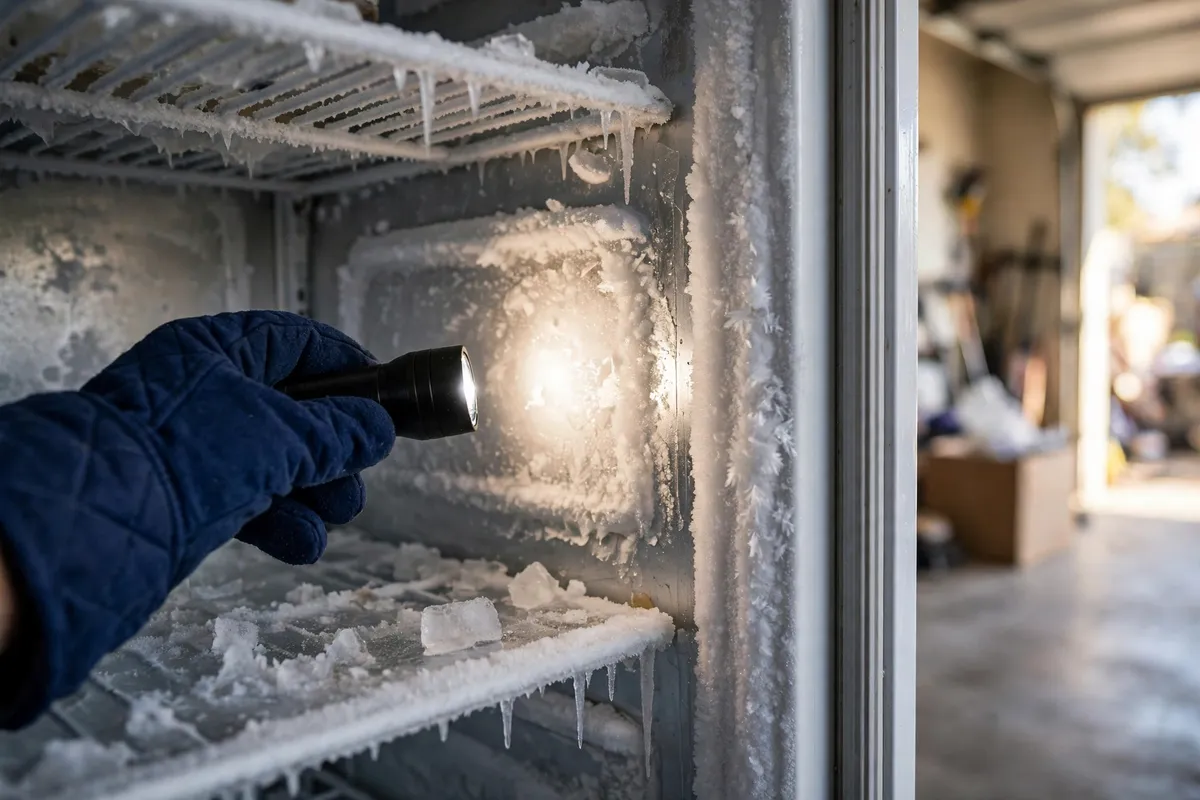
Loosely wrapped food releases moisture that turns into frost. Heavy frost wastes energy and crowds food. In humid months, each door opening adds more frost. Using sharp tools to chip ice can puncture the cooling lines. When a frost-free freezer frosts up, the defrost cycle has likely stopped.
In homes in San Francisco and the northern Peninsula, this comes up often.
Safe checks before you call: Defrost manual freezers when frost gets thick. Check the door seal for gaps.
- Ice on food packages
- The door doesn't close because of ice
- Thick frost on walls or shelves
Freezer Door Seal Replacement in San Francisco
A lid that sits crooked leaves a gap along one side. A new gasket typically restores a good seal. Damaged seals drive up energy use. A small leak lets in humid air all day, which becomes frost. Chest freezer lids can warp or have hinges that don't hold them flat.
If you're in San Francisco, start your troubleshooting here.
What you can check yourself: Check that the lid or door closes evenly with no visible gap. Check whether the freezer is level.
- Seal tears or cracks
- Frost along one edge
- Lid sits unevenly
Warm Freezer Repair in San Francisco
Uprights warm faster with frequent door openings than chest models do. A worn start relay keeps the compressor from running long enough to cool. A warm freezer with a silent compressor points to power, controls or the relay. Chest freezers shed heat through their outer walls, which need clearance. A freezer that's too full can't circulate air, while one that's nearly empty loses cold quickly when opened; somewhere in between works best.
Easy checks for San Francisco homeowners: Check the temperature setting and aim for 0°F. Avoid adding large amounts of unfrozen food at once.
- Items refreeze with ice crystals
- Food softening
- Freezer above 10°F
Defrost System Repair in San Francisco
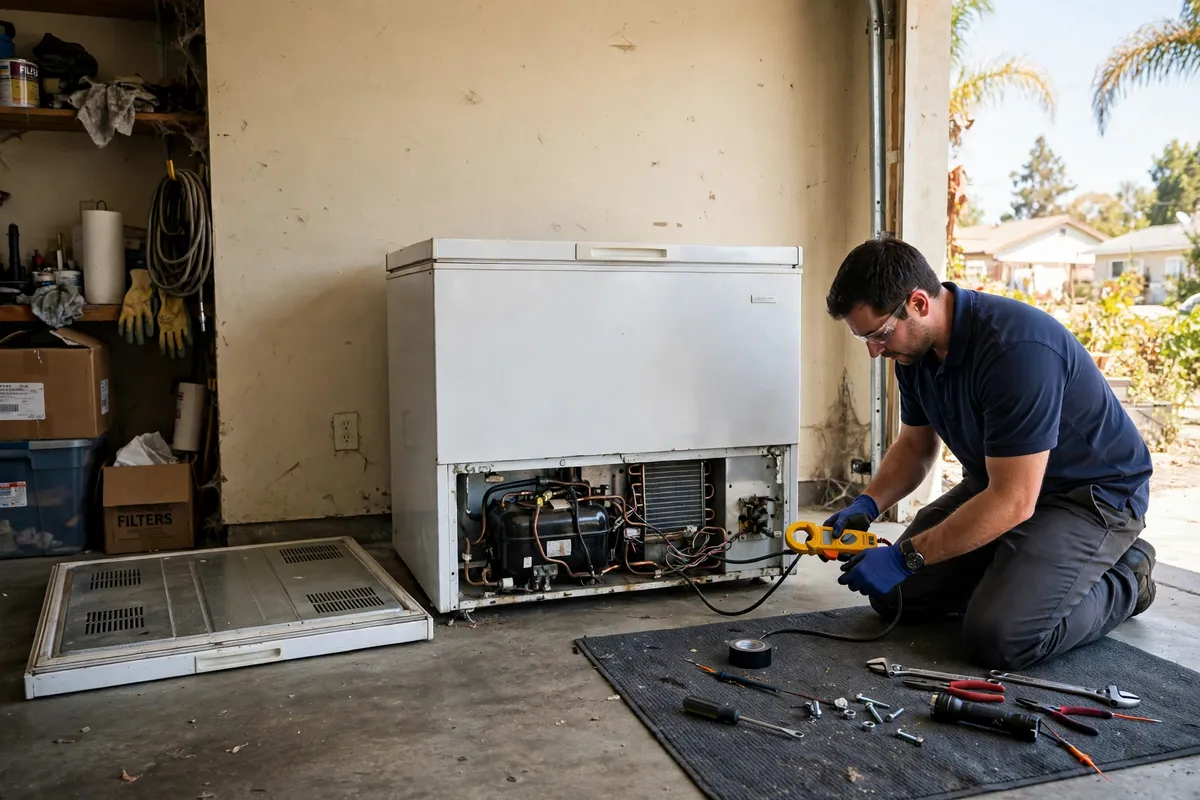
Most freezers defrost several times a day for short periods. A heater that tests open with a meter needs replacing. Without a part replacement, defrost trouble returns within weeks. A technician tests each part with a meter to find the failure. A defrost thermostat or timer controls when the heater runs.
Try this first: Look for frost on the back panel inside the freezer. Check the drain under the freezer floor for ice.
- Warming over several days
- Water pooling after defrost
- The freezer warms gradually
Freezer Thermostat Replacement in San Francisco
Older freezers use a capillary bulb thermostat that can fail with age. Electronic models read temperature through thermistors. Testing tells a technician which one has failed. When the thermostat fails closed, the freezer never rests. The thermostat or control board tells the compressor when to run.
Before booking a visit, check this: Note any error codes on digital panels. Check the display for error codes.
- Food frozen solid or thawing
- Freezer runs nonstop
- The freezer never cycles off
Other freezer problems
You may also run into these, which are less frequent around San Francisco: garage and outbuilding freezers; freezer problems after a power outage.
Before You Call: What to Check
- Listen for the compressor running.
- Note any recent outages.
- Find the model number.
- Keep the door closed.
How the Repair Usually Goes
- Describe the problem. Describe the symptom, any error code and when it first appeared.
- Diagnosis. The technician tests the parts most likely to cause your symptom, starting with the simplest.
- Estimate. You get an estimate for parts and labor before work begins.
- Repair and test. After the part is swapped, the technician runs the appliance to confirm the fix.
San Francisco Freezer Repair FAQ
How long will food stay frozen if my freezer stops in San Francisco?
A full freezer usually holds about 48 hours with the door closed; a half-full one about 24. Salt air and marine humidity corrode metal parts and connectors over time, which is why rust on hinges, screws and terminals shows up earlier near the coast.
Why does my garage freezer thaw?
Garage freezers face heat in summer and cold in winter. Chest models tend to hold up better in garages.
Why won't my chest freezer get cold?
Common causes include a failed start relay, thermostat, dirty coils or a compressor problem.