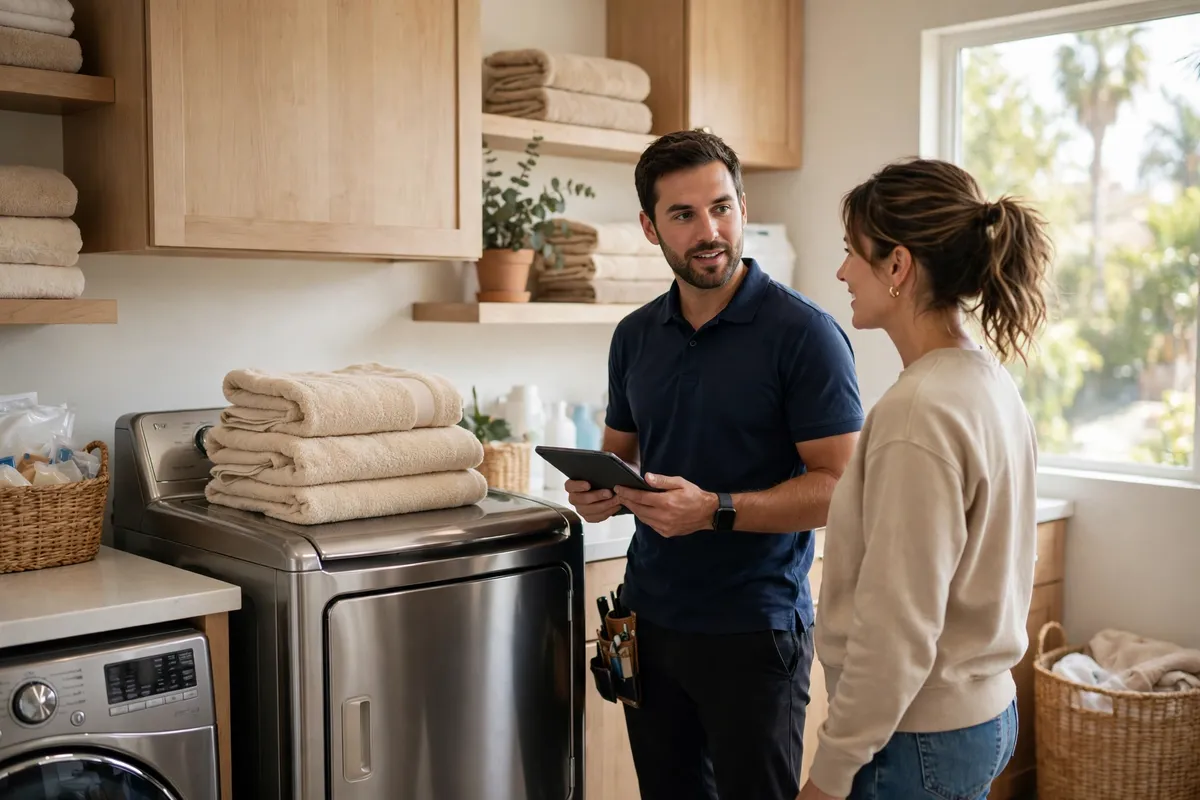
What Affects Dryer Repair in San Francisco
San Francisco's laundry is often in garages or basements of Victorian and Edwardian buildings, and many apartments share coin-op machines.
Kitchens in older flats are often compact, which is why slim 18-inch dishwashers, apartment-size ranges and over-the-range microwaves are common. Water here comes largely from the Hetch Hetchy system in Yosemite and is very soft, so scale buildup in dishwashers and ice makers is rarely the culprit it is in Southern California.
A large share of homes are Victorian, Edwardian and 1920s–1940s row houses and flats, where laundry often sits in a garage or basement-level room with long, twisting dryer vent runs.
What that means for your dryer: Salty, damp coastal air speeds corrosion on electrical contacts, screws and metal panels. Older plumbing and wiring can contribute to appliance problems, so it helps to mention the home's age.
PG&E supplies power to most of San Francisco. Power surges when service returns can damage a dryer's electronics, so tell the technician if the trouble began after an outage.
Run the dryer's lint screen under water once a month; fabric-softener film builds up faster in damp fog-belt laundry rooms.
Dryer Problems Pros See in San Francisco
Start with the first few sections; they cover the problems most often tied to conditions in San Francisco and the northern Peninsula.
Dryer Vent and Airflow Repair in San Francisco
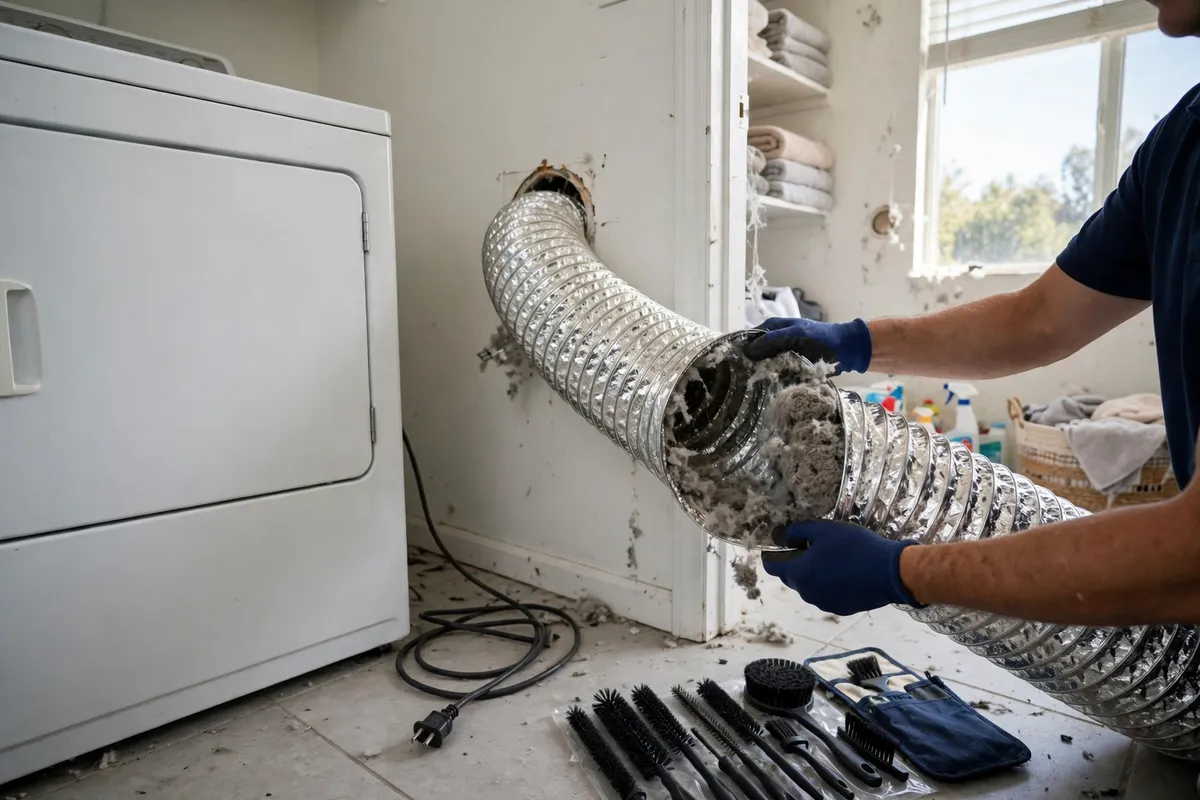
Flexible foil ducts collect lint in their ridges. Every bend in a vent run reduces airflow. Restricted airflow overheats the heater and safety parts. Birds and rodents sometimes nest in outdoor vent hoods. Every bend, sag or crushed section traps lint and slows airflow.
In San Francisco, this ranks among the most frequent dryer problems.
Safe checks before you call: Clean the lint screen after every load. Brush out the lint screen housing with a vent brush.
- The vent flap doesn't open
- Burning smell
- Outside flap doesn't open
Dryer Not Heating? Repair in San Francisco
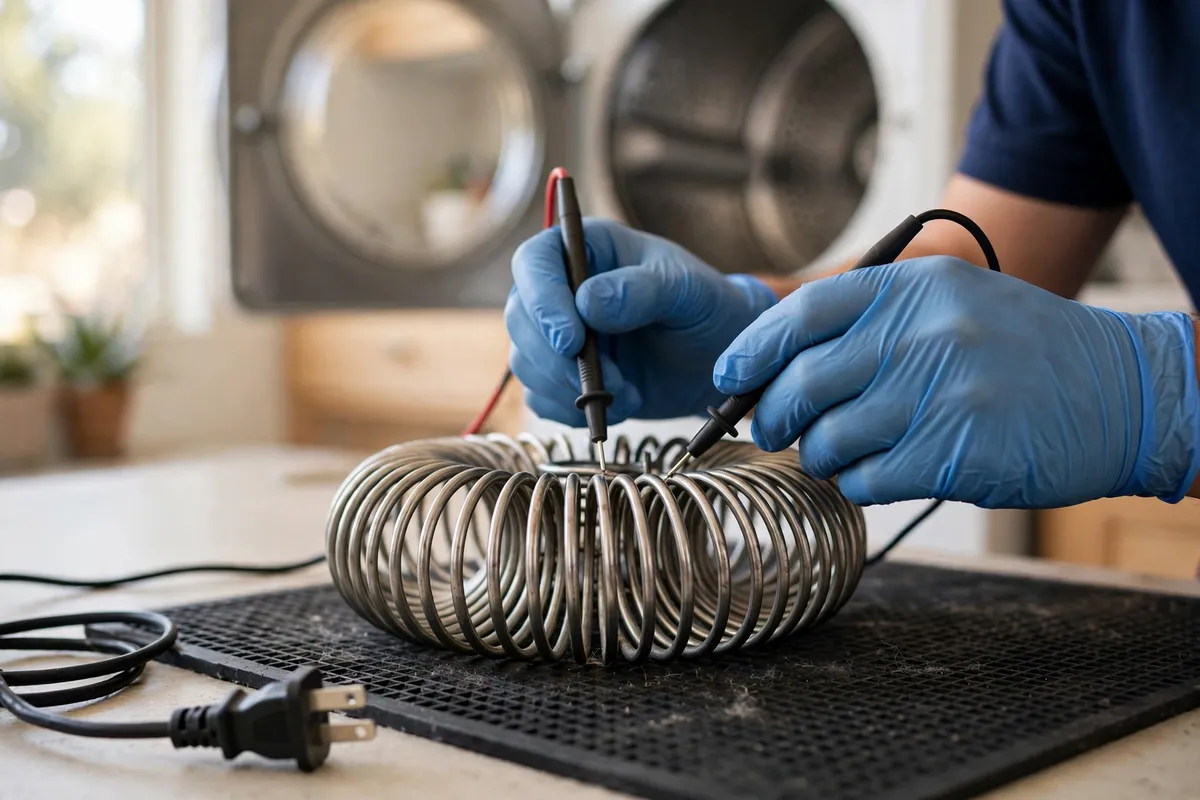
A failed cycling thermostat keeps the heater from turning on. An element that sags and touches metal can trip the circuit. Long dry times often come before a complete loss of heat. Electric dryers need 240 volts to heat but can tumble on 120. On gas dryers, it's often the igniter or the gas valve coils.
Pros serving San Francisco see this one regularly.
Quick things to rule out: Dry smaller loads to rule out overloading. Make sure the gas valve behind the dryer is open (gas).
- Clothes still damp after a cycle
- The outside vent blows cool air
- Thermal fuse keeps blowing
Dryer Drum Belt Replacement in San Francisco
Belts and rollers age at a similar pace. A worn belt can slip and make the drum turn slowly or unevenly. A broken belt lets the motor run without turning the drum. Belt replacement is usually a modest repair. Belts wear faster when the drum is overloaded.
A few safe steps to try: Listen for the motor running when the drum doesn't move. Unplug the dryer and turn the drum by hand.
- Drum turns freely by hand
- Burning rubber smell
- The drum turns too easily
Dryer Door Switch and Start Repair in San Francisco
A faulty timer may prevent startup. Power surges can damage control boards. Check the vent if the thermal fuse fails. A failing motor may hum but not spin. Worn start buttons sometimes stop working.
Easy checks for San Francisco homeowners: Try another cycle setting. Check that the door closes fully.
- Door switch feels loose
- Nothing happens
- Door switch doesn't click
Dryer Drum Roller and Idler Repair in San Francisco
The sound tells a lot. A rattle may be debris in the blower housing. Worn rollers thump with each drum turn. Idler pulleys squeal as their bearings wear. Thumping often comes from worn drum rollers.
Safe checks before you call: Make sure the dryer sits level on the floor. Check that the dryer is level.
- Rattle in the cabinet
- Squealing
- Squeal at start
Other dryer problems
A dryer can also need help with these, which are less frequent in San Francisco: gas dryer igniter and valve repair; timer and moisture sensor repair.
What to Note Before Calling
- Note whether it's a gas or electric dryer.
- Clean the lint screen.
- Note whether the drum turns.
- Check the outside vent flap.
How the Repair Usually Goes
- Describe the problem. Tell them what the appliance is doing, when it started and the model number from the label.
- Diagnosis. A technician tests the likely parts to find the cause.
- Estimate. You should get a clear estimate for the repair before approving it.
- Repair and test. After the part is swapped, the technician runs the appliance to confirm the fix.
San Francisco Dryer Repair FAQ
Why does my dryer take so long in San Francisco?
A clogged or crushed vent is the most common cause. Damp coastal air makes dryers work longer, and a partly clogged vent turns that into overheating and blown thermal fuses.
Why won't my gas dryer heat?
The igniter is like a pilot light that only turns on when needed. A faulty flame sensor can stop the gas valve from opening.
Is a burning smell from my dryer dangerous?
Yes. Stop using it and have the vent and dryer checked.