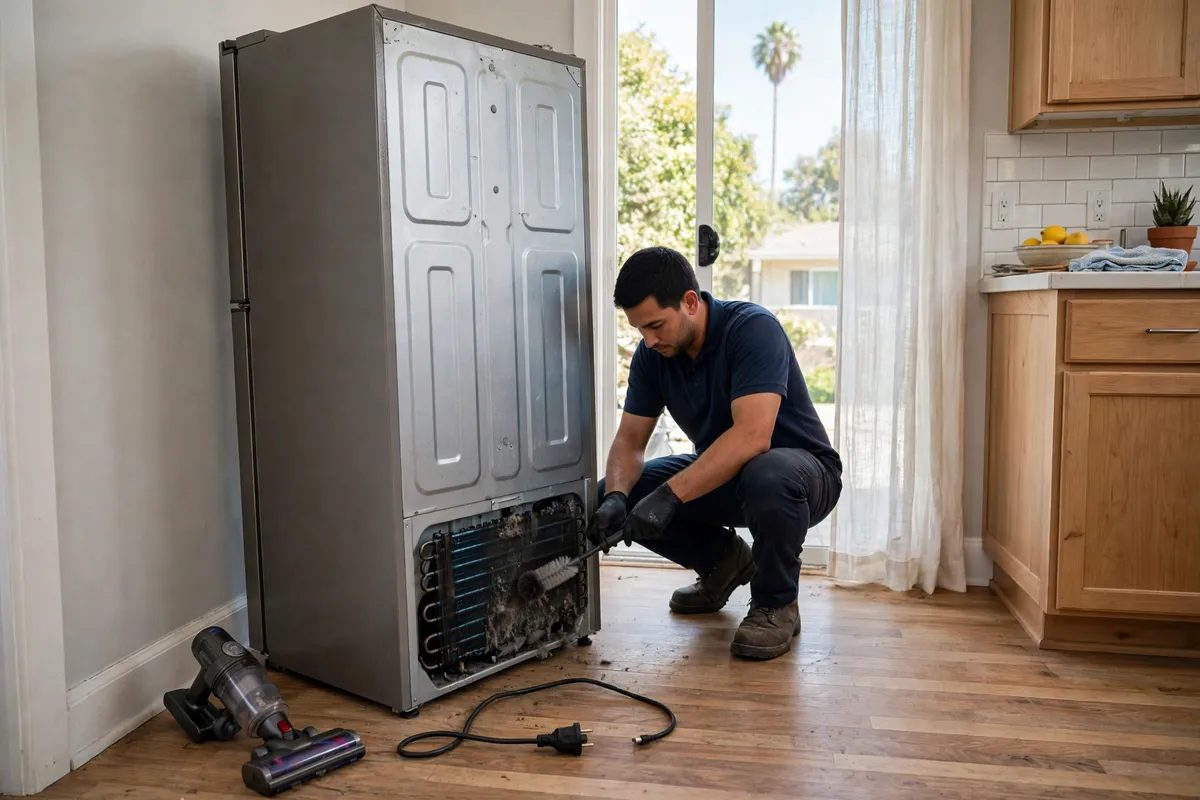
Local Conditions That Matter for Refrigerator Repair in South San Francisco
South San Francisco has mid-century homes on its hillsides and newer apartments near its biotech campuses.
Street parking and steep hills mean a technician may need to carry tools and parts a fair distance, so mentioning stairs or access when you call helps with scheduling. Kitchens in older flats are often compact, which is why slim 18-inch dishwashers, apartment-size ranges and over-the-range microwaves are common.
Fog rolls in off the Pacific most summer afternoons here, and the damp marine air keeps humidity high in laundry rooms and garages that don't get much sun.
What that means for your refrigerator: Salt air and marine humidity corrode metal parts and connectors over time, which is why rust on hinges, screws and terminals shows up earlier near the coast. Soft water means scale is rarely the culprit, so mechanical and electrical causes come first in diagnosis.
Homes in South San Francisco are generally on PG&E service. A surge protector rated for appliances is an inexpensive way to protect a refrigerator's control board from the spikes that come with restored power.
If your refrigerator sits against an exterior wall in an unheated garage, check that the garage doesn't drop below the temperature the manual allows.
The Refrigerator Repairs Most Often Needed in South San Francisco
Each section below covers one specific repair, the parts involved and the signs that point to it.
Refrigerator Not Cooling? Repair in South San Francisco
When the temperature sensor drifts, the board shuts the cooling off too early. Marginal parts tend to fail when kitchen temperatures climb. A packed fridge can't circulate air, so pockets of warmth form. Above 40°F, bacteria multiply quickly, so time matters once the fridge warms. Lights on but no running sound usually points to the start relay or the control board.
In homes in San Francisco and the northern Peninsula, this comes up often.
Before booking a visit, check this: Put an appliance thermometer in a glass of water on the middle shelf; it gives a truer reading than the air. Note any recent events such as an outage, a move or a cleaning that might have bumped a setting.
- The back of the fridge feels unusually hot
- Milk spoils before its date
- Drinks never feel properly cold
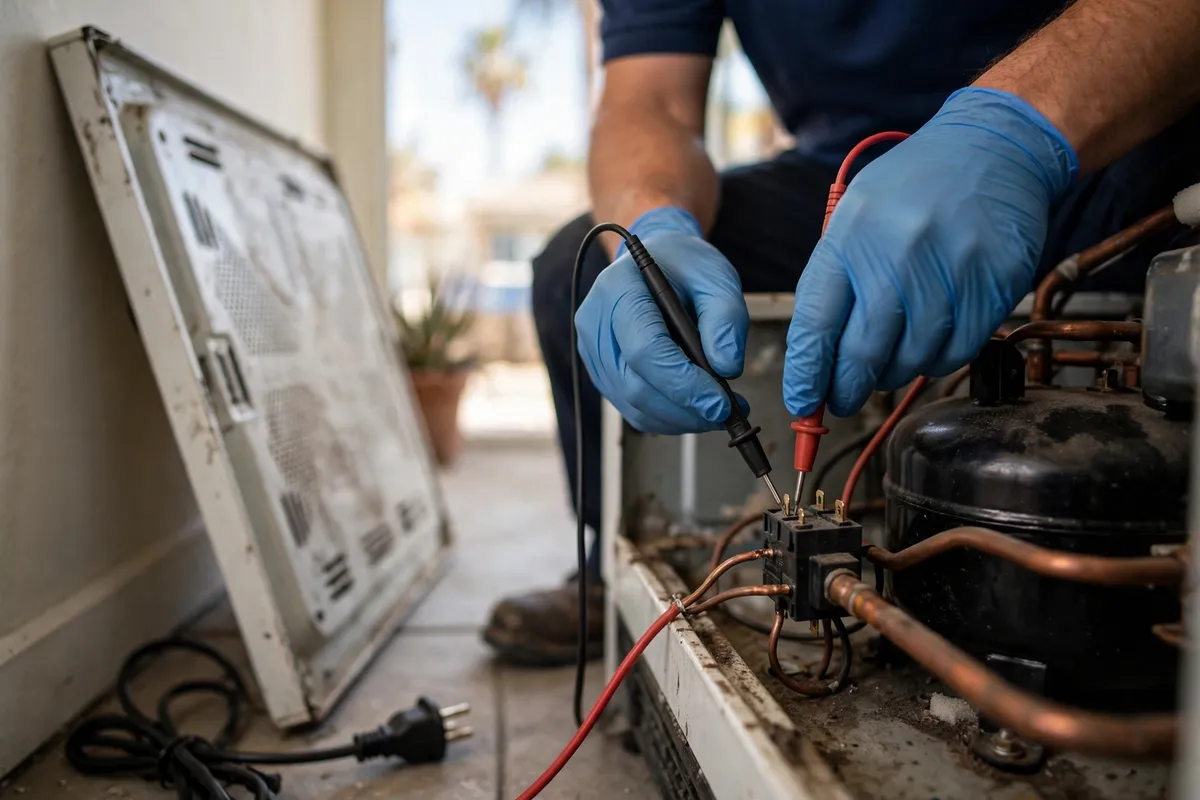
Refrigerator Ice Maker Repair in South San Francisco
If the bin-full sensor is blocked by ice, production pauses. On French-door models, the ice compartment has its own seal and airflow that can fail. Small, hollow or misshapen cubes usually point to low water pressure or a filter due for replacement. Off-tasting ice often comes from an overdue filter or ice that has sat too long. Clumped ice points to temperature swings in the freezer.
Pros serving South San Francisco see this one regularly.
Before booking a visit, check this: Replace the water filter if it's more than six months old. Empty the ice bin and break up any clumps blocking the auger.
- Ice clumped into one block
- Ice clumps together
- Water dispenses slowly
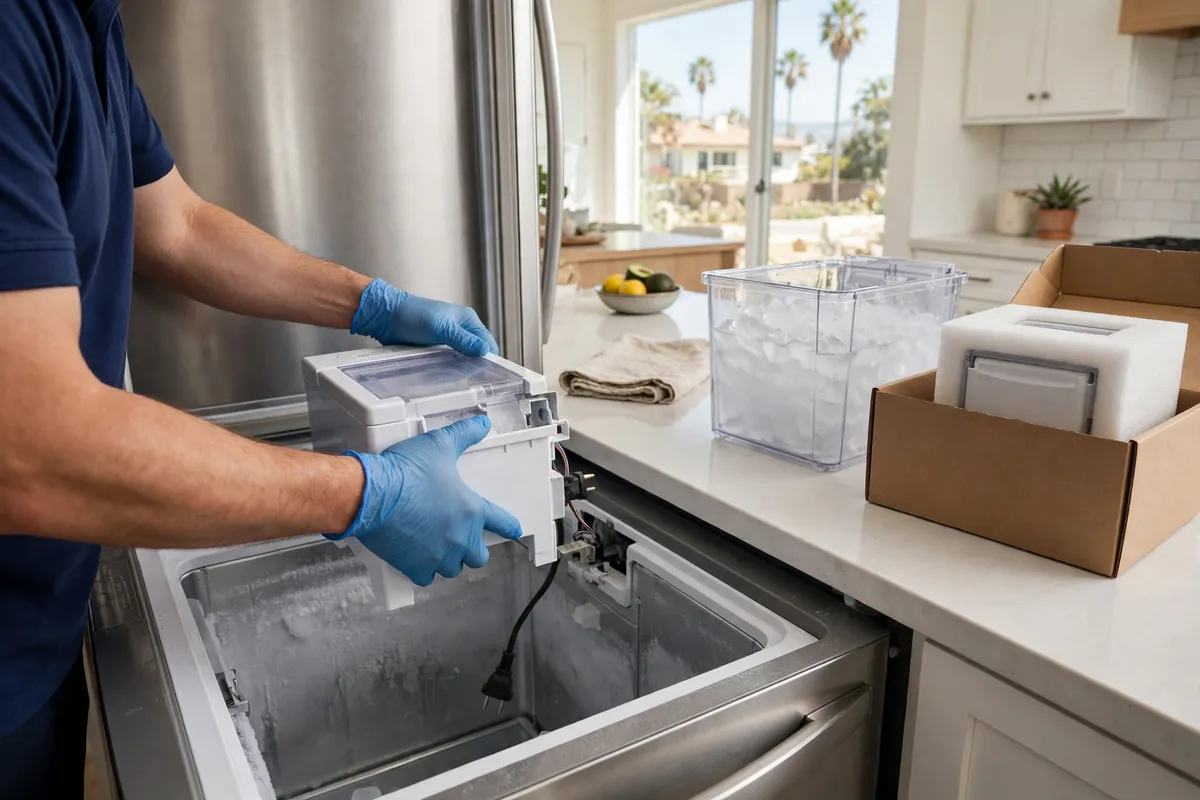
Leaking Refrigerator Repair in South San Francisco
Food bits and slime build up in the defrost drain over time. Moving a fridge can kink or crack an old plastic supply line. If the puddle shows up right after getting water, suspect the dispenser plumbing. A slow leak can damage flooring and subfloor long before you notice a puddle. Water on the floor at the front often comes from the drain; water at the back is more often the supply line.
Worth checking in a few minutes: Look inside the freezer for ice at the bottom back wall, which signals a blocked drain. Clear the defrost drain with warm water and a turkey baster if you can reach it.
- Water pools under the crisper drawers
- Ice forms on the freezer floor
- Dripping after using the dispenser
Refrigerator Door Seal Repair in South San Francisco
A warm hair dryer on low can soften a stiff gasket so it seats again, if done gently. Even a small gap acts like a window left open a crack, letting humid air in all day. Leaky seals cost money every hour the fridge runs. Gasket folds trap moisture, so mildew appears in humid homes. Gasket replacement is one of the more affordable fridge repairs.
Quick things to rule out: Adjust the front leveling legs so the doors close on their own. Shine a flashlight inside the closed door at night and look for light leaking out.
- Dollar bill slides out easily
- Mildew in the gasket folds
- Frost builds up near the door
Noisy Refrigerator Fan Repair in South San Francisco
Ice on the fan shroud can make a loud scraping or chirping sound. A manual defrost buys time, not a repair. Frost buildup from a failed defrost heater worsens a little each day. When the defrost system fails, frost builds on the evaporator coil until it blocks airflow completely. Replacing the fan motor or defrost parts usually costs far less than a sealed-system repair, and a technician can test the heater, thermostat and control board to find which part failed.
Safe checks before you call: Track whether cooling fades again after melting the frost. Press and hold the freezer door switch and listen for the fan.
- Fridge cools again after a manual defrost
- Weak airflow from the freezer vents
- Frost returns after defrosting
Refrigerator Compressor and Start Relay Repair in South San Francisco
Power outages and surges can damage start relays and electronic control boards. A compressor that hums but never starts may be overheating or struggling against a failed relay. An overload protector can fail and stop the compressor even when the compressor is healthy. A compressor needs full voltage to start, which a long extension cord may not provide. A compressor that clicks on and off every few minutes often has a failing start relay rather than a failed compressor.
Quick things to rule out: Time how long the fridge clicks off before trying to restart. Note the interval between clicks from the back of the unit.
- Lights dim when the fridge starts
- Compressor hums but doesn't start
- Breaker trips when the fridge starts
Other refrigerator problems
Pros serving South San Francisco also handle these less common problems: condenser coil and fan service; garage refrigerator problems.
Before You Call: What to Check
- Find the model number inside the fridge.
- Look for frost on the freezer's back wall.
- Listen for the compressor and fans.
- Check whether the condenser fan near the compressor is spinning.
How the Repair Usually Goes
- Describe the problem. Have the model number ready and explain what changed and when.
- Diagnosis. A pro confirms the cause by testing parts rather than guessing.
- Estimate. Ask for the total cost including parts and labor before approving the repair.
- Repair and test. After the part is swapped, the technician runs the appliance to confirm the fix.
South San Francisco Refrigerator Repair FAQ
How long can food stay in a warm refrigerator?
Perishable food shouldn't be held above 40°F for more than two hours.
Is it worth repairing a refrigerator in South San Francisco?
It depends on the age and the part. Fans, relays, gaskets and defrost parts are usually worth fixing; sealed-system repairs on older fridges may not be. Water here is relatively soft, so scale is less likely to be the cause; wear, clogs and electrical faults are more common culprits.
How do I know if the condenser fan is the problem?
Grease from nearby cooking helps lint stick to the coils. A slowing condenser fan reduces airflow long before it stops spinning.