What Affects Refrigerator Repair in Glendora
The San Gabriel Valley runs from Pasadena east to Pomona, with hot summers that often pass 100°F. Santa Ana winds blow through the valley in fall and winter.
Water is hard across most of the valley.
What that means for your refrigerator: In hot spells, a refrigerator in a warm room or garage has less margin before it falls behind. Hard water leaves deposits that make parts work harder and wear out sooner.
Most homes in Glendora get electricity from SCE. A refrigerator that misbehaves right after an outage or a flicker may have a damaged control board or relay, so note the timing.
Clean refrigerator coils before summer heat.
Common Refrigerator Repairs in Glendora Homes
Symptoms overlap, so it's worth skimming two or three sections before deciding which one matches your refrigerator.
Warm Refrigerator Repair in Glendora
A stuck damper door keeps freezer air from flowing into the refrigerator section. Think of a refrigerator as a heat pump: it doesn't make cold, it moves heat out of the box and releases it through the coils underneath or behind. Too much food against the vents chokes off circulation inside the box. Food packed against the rear wall can block the vents that carry cold air down from the freezer. Marginal parts tend to fail when kitchen temperatures climb.
If you're in Glendora, start your troubleshooting here.
Worth checking in a few minutes: Move items away from the vent at the top of the fresh-food section. Feel the air coming from the freezer vent; weak or warm air narrows the fault to the fan or defrost system.
- Compressor runs constantly
- Butter feels soft on the door shelf
- Drinks never feel properly cold
Refrigerator Ice Maker Repair in Glendora
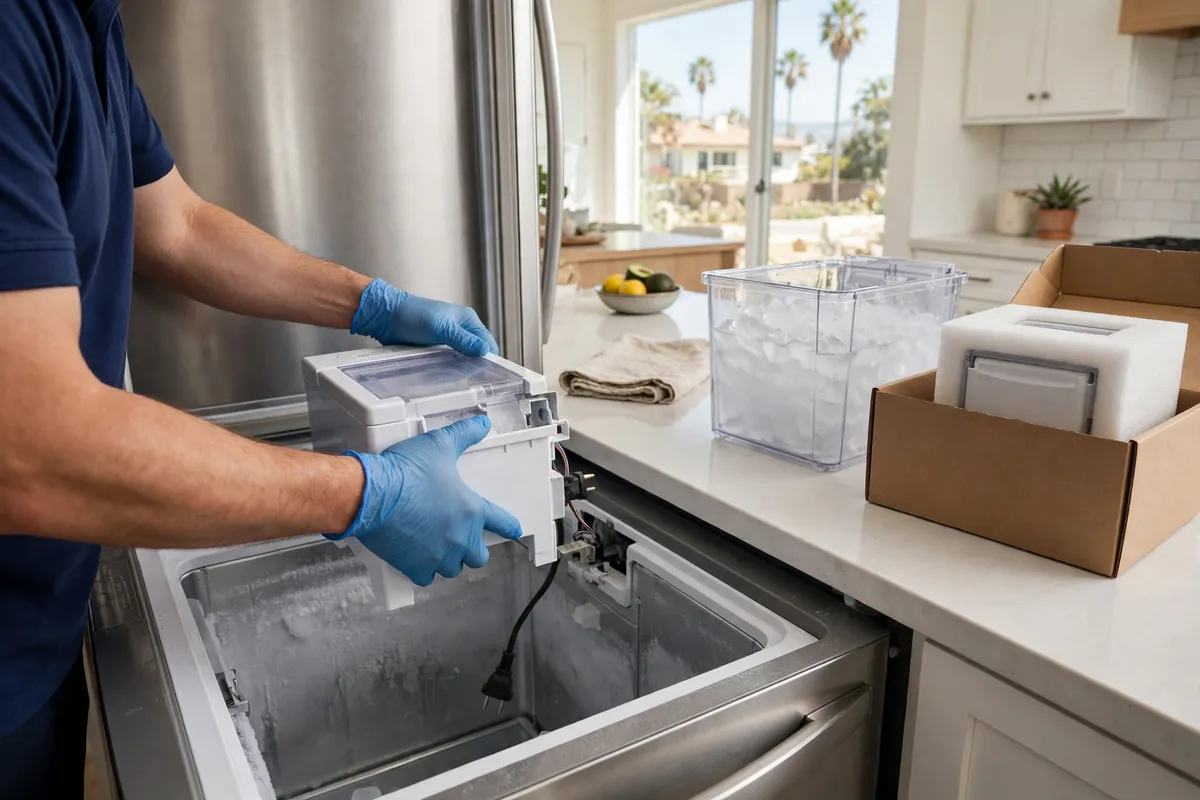
A water inlet valve that's weak or clogged reduces the fill and leads to small cubes. Low water pressure is like a weak garden hose: the mold never fills, so cubes come out small or hollow. Door-mounted ice makers in French-door fridges depend on a separate fan and seal. Stale-tasting cubes are usually a filter or storage issue, not a broken part. After a filter change, trapped air can make the dispenser sputter.
Pros serving Glendora see this one regularly.
Try this first: Make sure the ice maker's arm or switch is in the on position. Check the freezer temperature; the ice maker needs the freezer near 0°F.
- Ice clumps together
- Buzzing from the back with no water flowing
- Ice clumped into one block
Refrigerator Water Leak Repair in Glendora
Food bits and slime build up in the defrost drain over time. Older plastic tubing tends to crack when the fridge is pulled out for cleaning. A misplaced drain pan can spill water each time the fridge defrosts. Puddles at the front can come from the water line to the dispenser or ice maker. If the puddle shows up right after getting water, suspect the dispenser plumbing.
Safe checks before you call: Shut the valve feeding the ice maker until the leak is fixed. Check behind the fridge for drips at the water line connection.
- A damp floor appears after the ice maker runs
- Wet spots behind the fridge
- Water under the crisper drawers
Refrigerator Condenser Fan Repair in Glendora
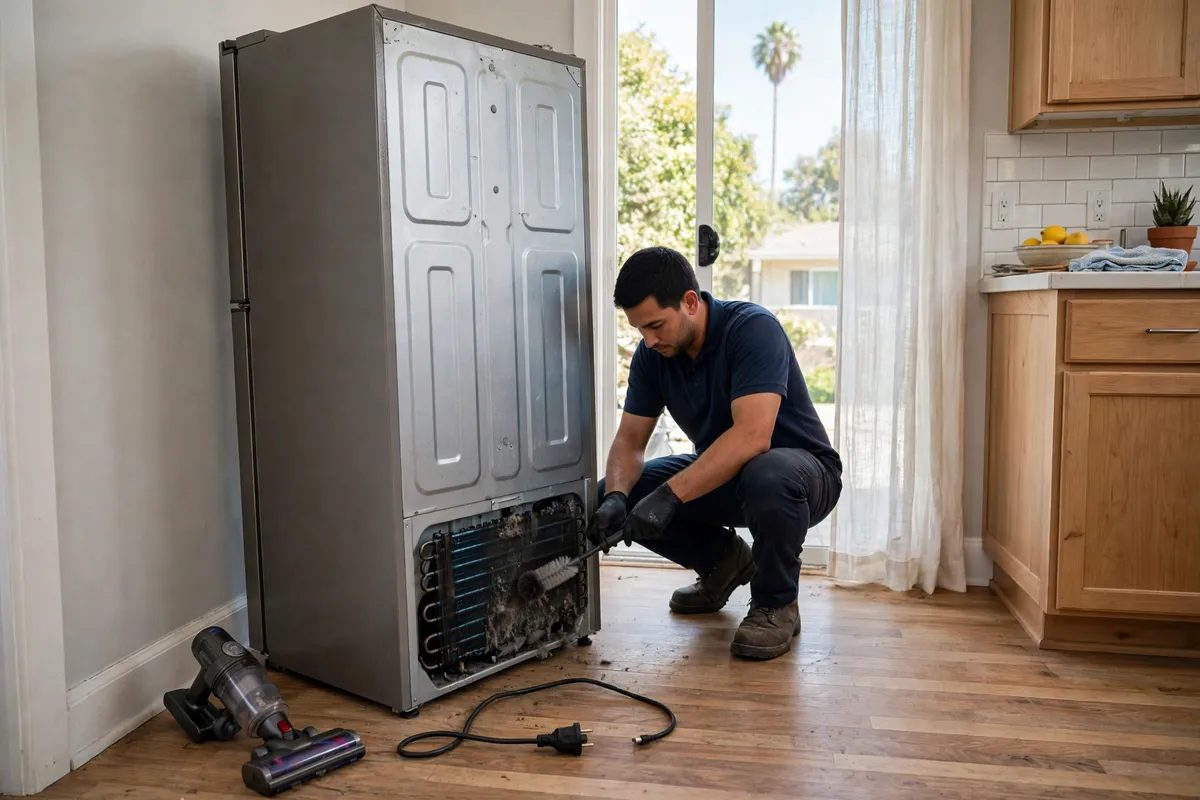
Grease from nearby cooking helps lint stick to the coils. A hot exterior on the sides of some fridges is normal, because the coils run through the cabinet walls. Homes with dogs or cats tend to need coil cleaning twice as often. On models with coils underneath, the fan that pulls air across them can stall on built-up lint. Cleaning the coils and replacing a failed fan motor are among the least expensive refrigerator repairs.
A few safe steps to try: Leave at least an inch of space behind and above the fridge so heat can escape. Look behind the unit for a matted layer of lint near the compressor compartment.
- Warm air blows out from under the front
- Very warm air at the bottom of the fridge
- Thick dust on the bottom grille
Refrigerator Start Relay Repair in Glendora
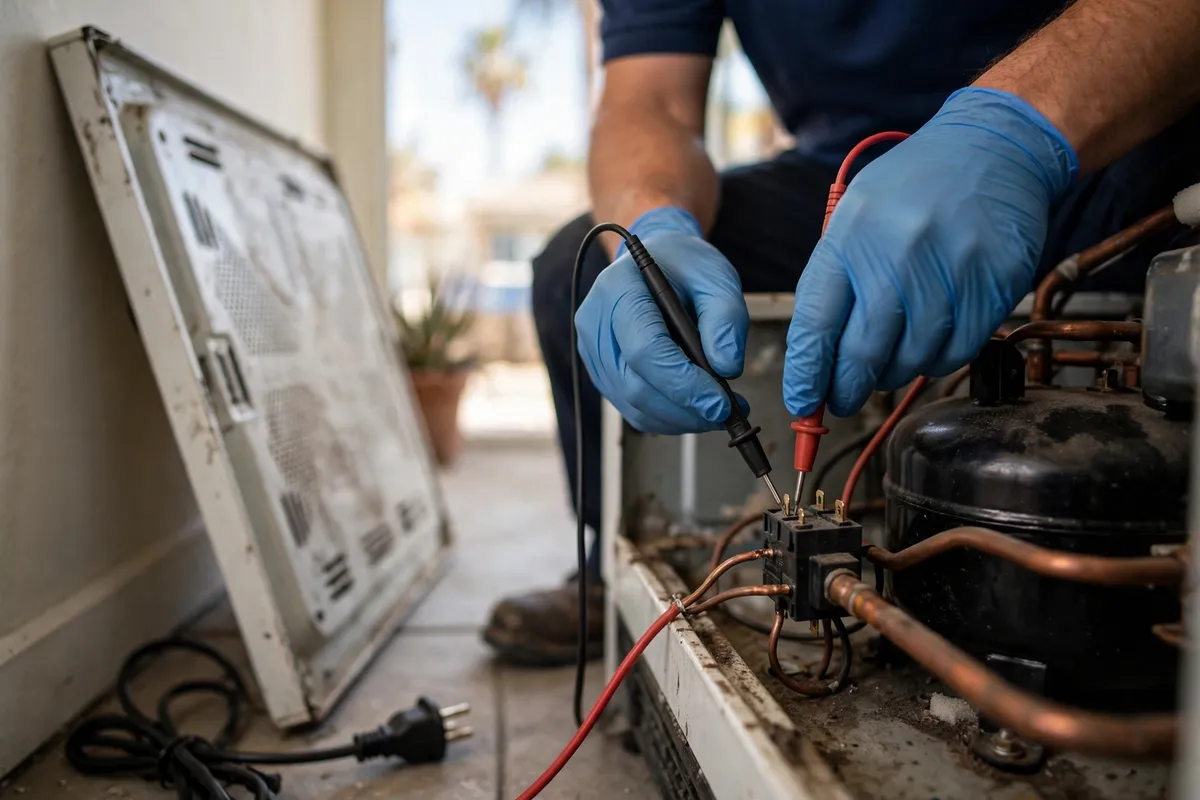
When the compressor never rests, check the condenser side first. A failed overload protector can mimic a dead compressor. Newer inverter fridges add a control board between power and the compressor. Relays are inexpensive compared with compressors, so testing the relay first can save a lot. A failed compressor on an older fridge often makes replacement the better value.
Try this first: Feel whether the compressor area is unusually hot. Remove any extension cord and use a dedicated outlet.
- Clicking every few minutes from the back
- Compressor hums but doesn't start
- Breaker trips when the fridge starts
Noisy Refrigerator Fan Repair in Glendora
A fan blade striking ice makes a distinctive chirp. Melting the ice helps for a while, but the problem comes back. The evaporator fan usually stops when the freezer door opens, so test it with the door switch pressed. A control board that skips defrost causes the same frost buildup as a failed heater. A clicking or chirping noise from the freezer often comes from a fan blade hitting ice.
Quick things to rule out: Open the freezer and listen; the fan should run when the door switch is pressed in. Look for a thick layer of frost on the back panel inside the freezer.
- Weak airflow from the freezer vents
- Chirping from the freezer
- Fresh-food section warming slowly
Other refrigerator problems
These come up less often around Glendora, and local pros handle them too: garage refrigerator problems; door gasket replacement.
Quick Checks Before You Call
- Check whether the condenser fan near the compressor is spinning.
- Check that the doors close and seal fully.
- Note which compartment is warm and since when.
- Listen for the compressor and fans.
What to Expect From the Visit
- Describe the problem. Describe the symptom, any error code and when it first appeared.
- Diagnosis. The technician checks the parts most likely to have failed.
- Estimate. Before work starts, ask for the total including parts and labor.
- Repair and test. After the repair, the appliance is run to confirm it works.
Glendora Refrigerator Repair FAQ
Is it worth repairing a refrigerator in Glendora?
It depends on the age and the part. Fans, relays, gaskets and defrost parts are usually worth fixing; sealed-system repairs on older fridges may not be. On the hottest days, a refrigerator in a warm kitchen or garage may run nonstop; clean coils and a working condenser fan make the difference.
How long can food stay in a warm refrigerator?
Perishable food shouldn't be held above 40°F for more than two hours.
Why does my garage fridge stop working in winter?
Rodents like the warm space around a garage compressor. A sunny garage wall can push the fridge past its design limits.