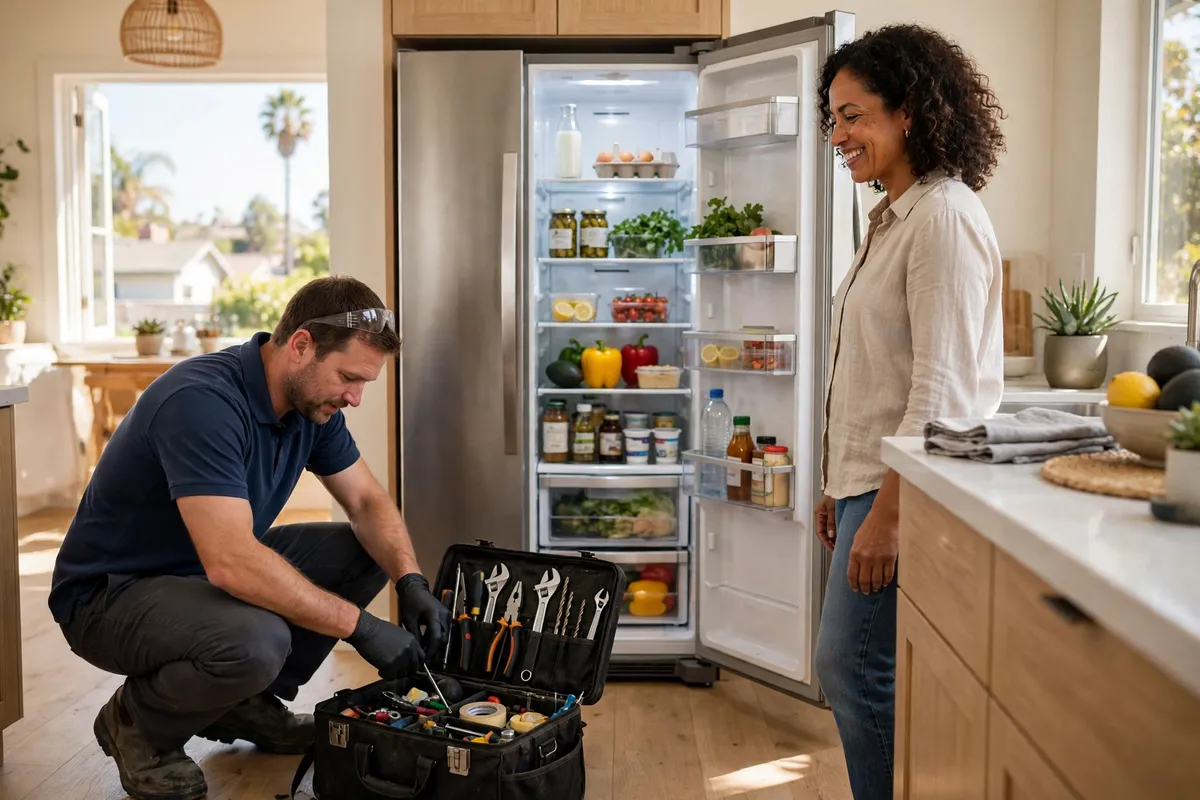
Local Conditions That Matter for Refrigerator Repair in West Covina
Santa Ana winds blow through the valley in fall and winter. Water is hard across most of the valley.
Pasadena runs its own utility, Pasadena Water and Power, and Azusa has Azusa Light & Water; most other cities are on SCE.
What that means for your refrigerator: Hot summers shorten the life of motors, fans and electronic boards, especially in appliances kept in garages or laundry rooms without air conditioning. Scale from hard water builds up in the refrigerator's water valve and ice maker; changing the filter on schedule helps.
If you're on SCE service in West Covina and the refrigerator acts up after a storm, unplug it for a minute and plug it back in before assuming a part has failed.
Clean refrigerator coils before summer heat.
The Refrigerator Repairs Most Often Needed in West Covina
The problems below are ranked for West Covina homes, with the most likely ones first and troubleshooting tips for each.
Refrigerator Not Cooling? Repair in West Covina
When the temperature sensor drifts, the board shuts the cooling off too early. Marginal parts tend to fail when kitchen temperatures climb. Overpacking blocks the airflow paths that the cooling system depends on. Refrigerant problems are possible but are normally the last thing a technician suspects. Food packed against the rear wall can block the vents that carry cold air down from the freezer.
In homes in the San Gabriel Valley, this comes up often.
Quick things to rule out: Move items away from the vent at the top of the fresh-food section. Listen near the back for the condenser fan and the compressor's hum; silence from both points to power or controls.
- Compressor runs constantly
- The back of the fridge feels unusually hot
- Clicking every few minutes from the back
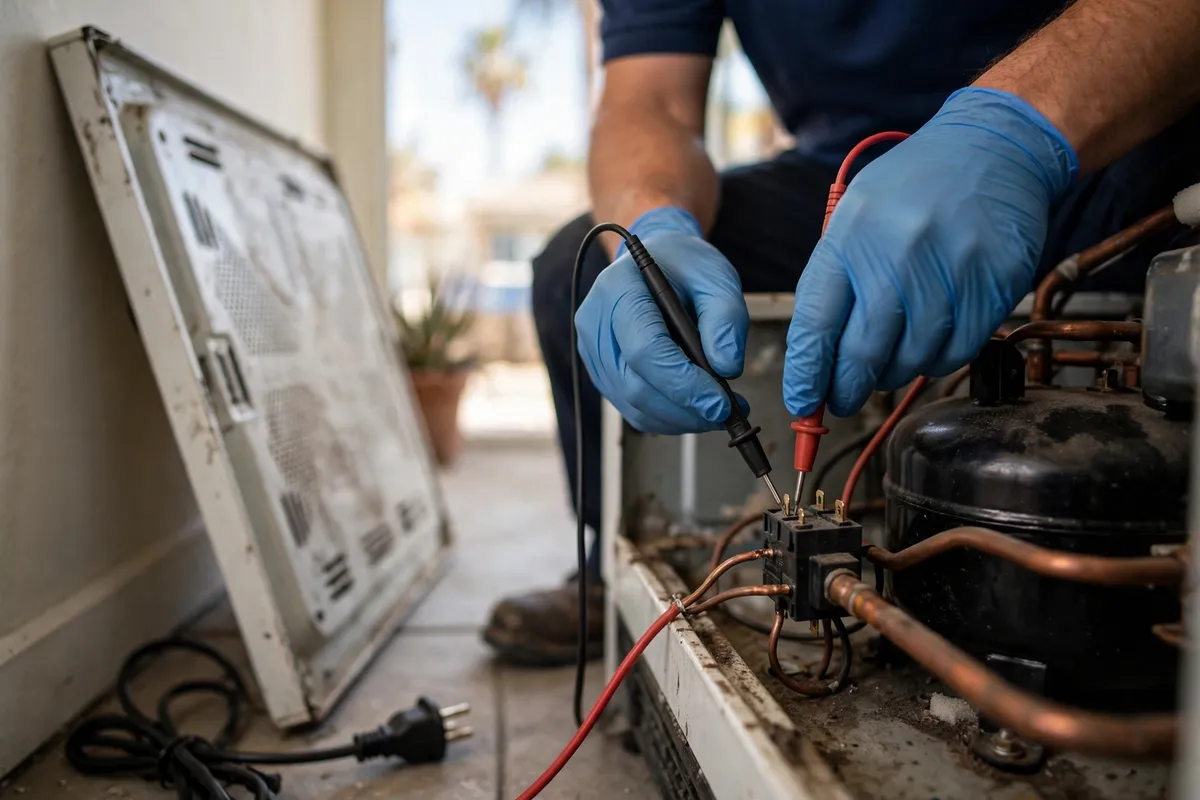
Refrigerator Water Leak Repair in West Covina
A cracked fill tube or loose fitting on the ice maker can drip behind the fridge. Water under the fridge can warp flooring without ever pooling visibly. Older plastic tubing tends to crack when the fridge is pulled out for cleaning. If the drain pan underneath is out of position, defrost water ends up on the floor. Puddles at the front can come from the water line to the dispenser or ice maker.
Pros serving West Covina see this one regularly.
A few safe steps to try: Flush the freezer's drain opening gently with warm water. Shut the valve feeding the ice maker until the leak is fixed.
- Water under the crisper drawers
- Ice forms on the freezer floor
- Water dripping from the dispenser
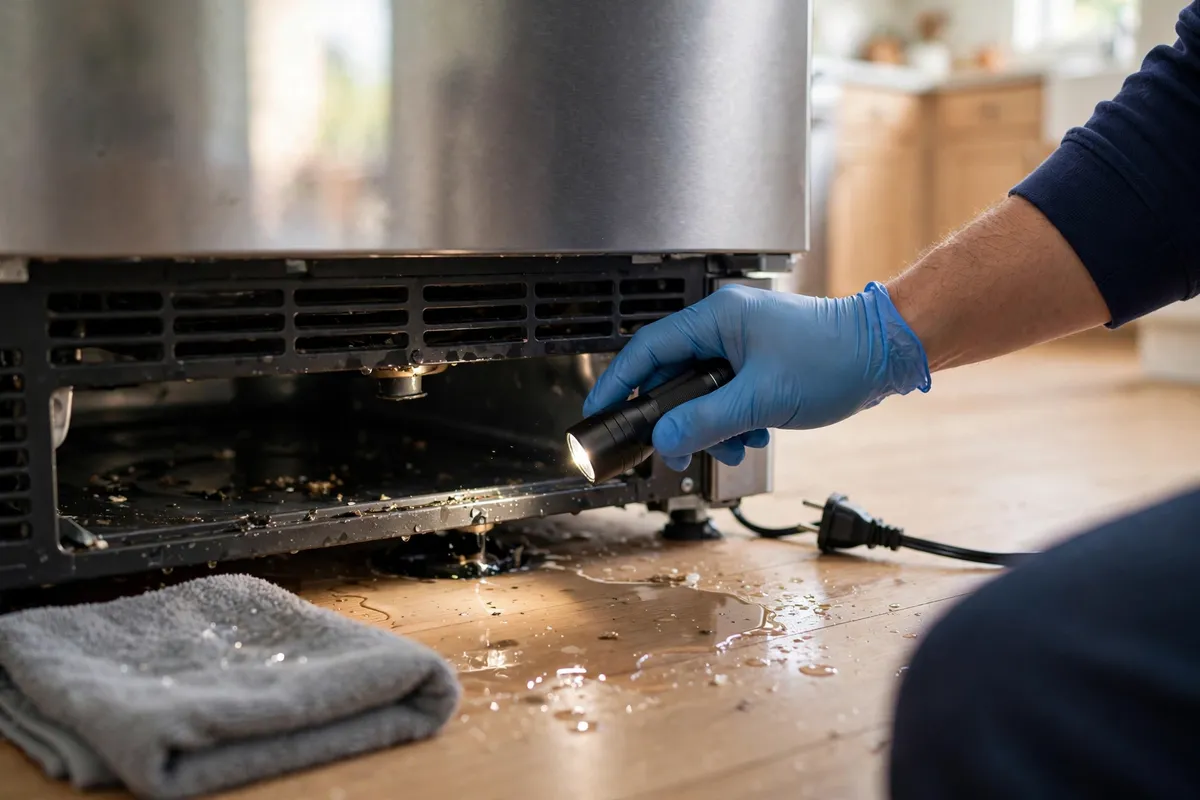
Ice Maker Repair in West Covina
Many ice makers stop producing when the bin's shutoff arm is raised or a sensor thinks the bin is full. Clumped ice points to temperature swings in the freezer. Air in the line after a filter swap usually clears after running a few glasses of water. On French-door models, the ice compartment has its own seal and airflow that can fail. Low water pressure is like a weak garden hose: the mold never fills, so cubes come out small or hollow.
Try this first: Make sure the ice maker's arm or switch is in the on position. Look for ice blocking the fill tube at the back of the ice maker.
- The ice bin is empty for days
- No ice for more than a day
- Water dispenser works but no ice
Noisy Refrigerator Fan Repair in West Covina
A fan blade striking ice makes a distinctive chirp. A clicking or chirping noise from the freezer often comes from a fan blade hitting ice. Manual defrosting is a temporary fix; the frost returns if the defrost part isn't replaced. On newer models, the main board times the defrost cycle. Press the door switch to hear whether the freezer fan actually runs.
A few safe steps to try: Press and hold the freezer door switch and listen for the fan. Look behind the freezer's rear panel vents for a white wall of frost.
- Fridge cools again after a manual defrost
- Frost on the freezer's back wall
- Chirping from the freezer
Refrigerator Condenser Fan Repair in West Covina
Grease from nearby cooking helps lint stick to the coils. When heat can't escape, the compressor may trip its overload and cycle off. Less dust on the condenser means the fridge uses less power. Fan motors often weaken over months, so cooling fades rather than stopping overnight. Shedding pets can blanket the coils in a matter of months.
Worth checking in a few minutes: Listen for a rattle or scraping from the fan area at the bottom back. Leave at least an inch of space behind and above the fridge so heat can escape.
- Fridge cools at night but not in the afternoon
- The kick plate blows hot air
- Thick dust on the bottom grille
Refrigerator Start Relay Repair in West Covina
A compressor running hot and long is often the result of dirty coils or a failed condenser fan. On older units, a compressor failure usually tips the decision toward replacement. An overload protector can fail and stop the compressor even when the compressor is healthy. Extension cords and overloaded circuits can starve the compressor at startup. Newer inverter fridges add a control board between power and the compressor.
Quick things to rule out: Clean the condenser coils before assuming the compressor is failing. Plug the fridge directly into the wall, not an extension cord or power strip.
- Clicking from the back every few minutes
- Lights dim when the fridge starts
- Burning smell near the compressor
Other refrigerator problems
Less common in West Covina, but local pros fix these as well: garage refrigerator problems; door gasket replacement.
Quick Checks Before You Call
- Listen for the compressor and fans.
- Check whether the condenser fan near the compressor is spinning.
- Check the temperature setting.
- Note which compartment is warm and since when.
What to Expect From the Visit
- Describe the problem. Have the model number ready and explain what changed and when.
- Diagnosis. The technician tests the parts most likely to cause your symptom, starting with the simplest.
- Estimate. You get an estimate for parts and labor before work begins.
- Repair and test. After the repair, the appliance is run to confirm it works.
West Covina Refrigerator Repair FAQ
Can I keep a regular fridge in the garage?
In cold weather, the fridge's thermostat senses the cool garage and stops running, so the freezer warms. Nests and chewed wires show up more often in garage fridges.
What temperature should my refrigerator be in West Covina?
Aim for 37°F in the fresh-food section and 0°F in the freezer. An appliance thermometer in a glass of water gives a truer reading than the air. Summer heat in the San Gabriel Valley makes condenser coils and fans the first things to check when a refrigerator warms up, especially for a second fridge in the garage.
What should I have ready when I call about refrigerator repair in West Covina?
The model number, which compartment is warm, how long it's been happening and any noises or error codes.