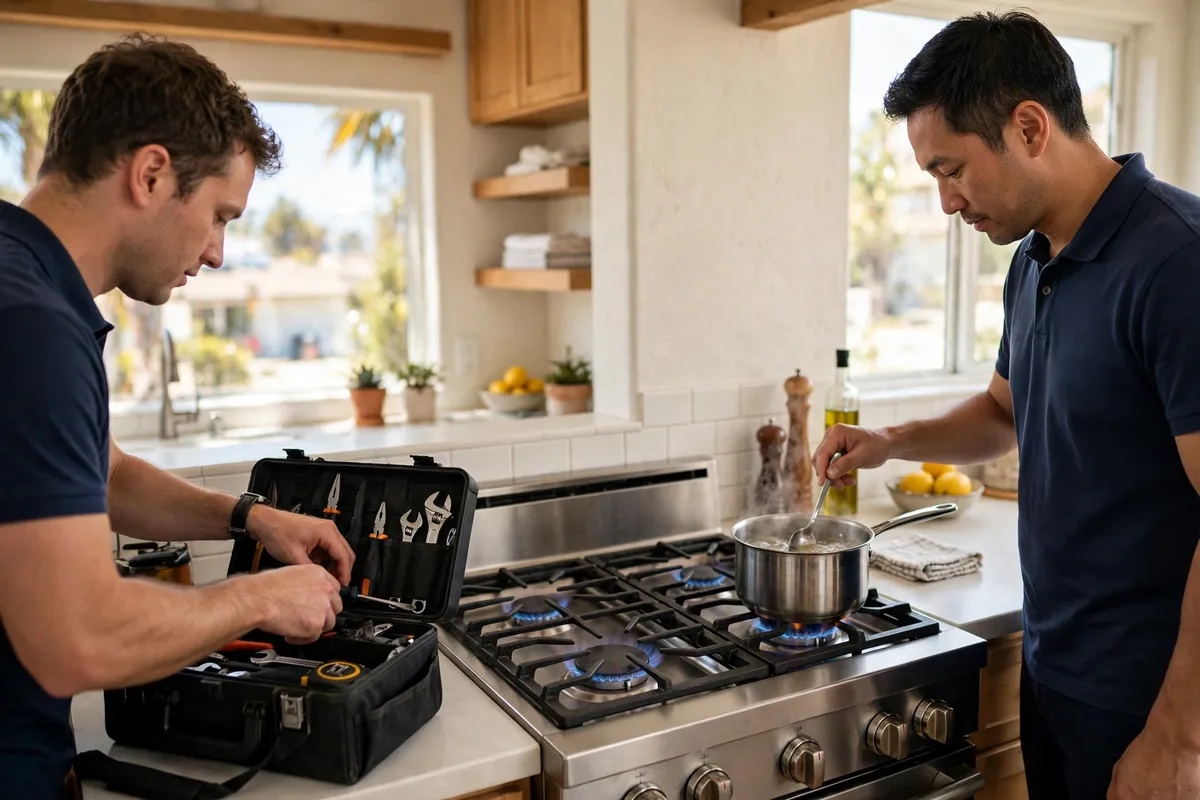
Local Conditions That Matter for Stove Repair in San Pablo
The 1991 Oakland Hills firestorm destroyed thousands of homes, and the hills neighborhoods were largely rebuilt in the 1990s. Hayward, San Leandro and Castro Valley have many postwar homes from the 1940s to the 1960s with garage laundry setups.
Older homes often have appliance circuits that predate today's loads, which can show up as tripped breakers when a dryer or range is replaced.
What that means for your stove: In older houses, appliance problems are sometimes tied to the house itself: undersized circuits, long or crushed vents, or older plumbing connections.
San Pablo homes typically buy power from PG&E. A brief flicker can reset a stove's clock or controls; if it won't come back to normal, a board or relay may have taken the hit.
Common Stove Repairs in San Pablo Homes
Each section explains what's happening inside the stove, a few safe checks to try first, and the signs that point to that problem.
Electric Stove Coil Element Repair in San Pablo
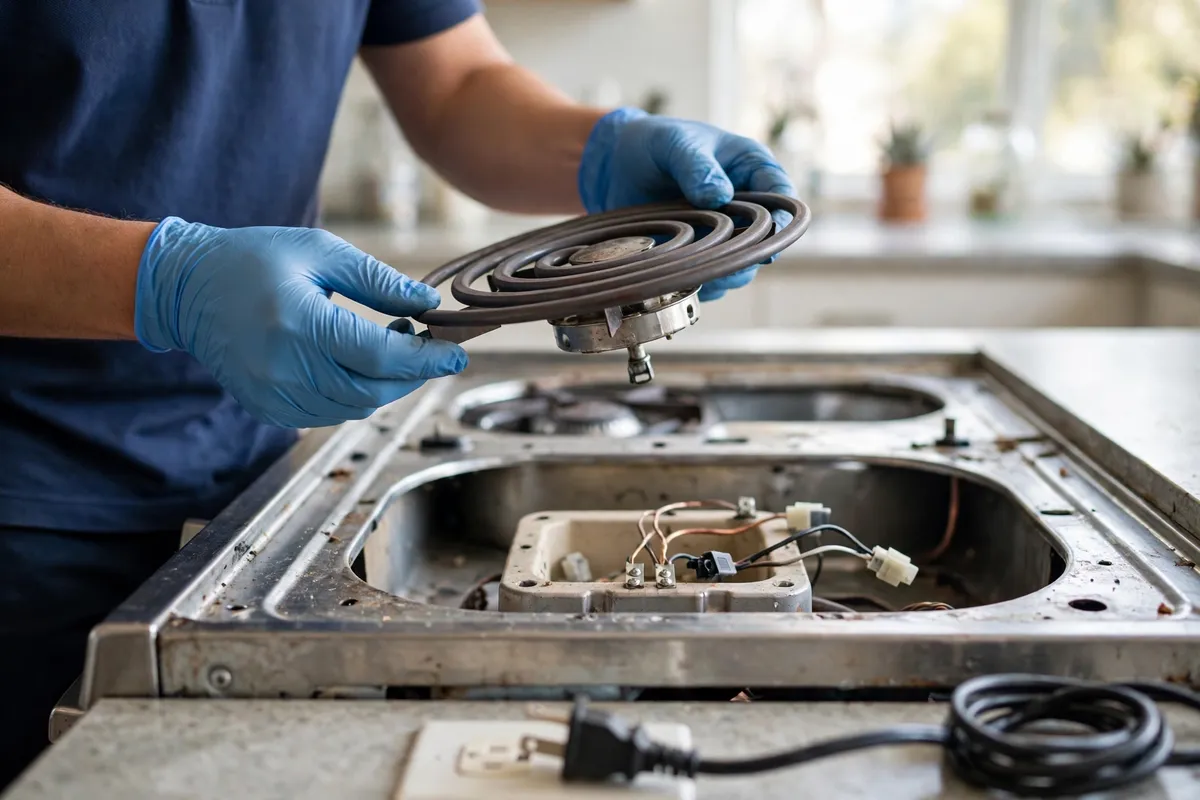
Loose connections cause arcing. Burned receptacles cause poor contact. Swap coils to test. Burned or loose receptacles are common and inexpensive. Loose connections cause arcing and heat damage.
Pros serving San Pablo see this one regularly.
Try this first: Test by trading coils. Push coils fully in.
- Burned receptacle
- Burn marks
- Burner heats intermittently
Stove Burner Won't Light: Repair in San Pablo
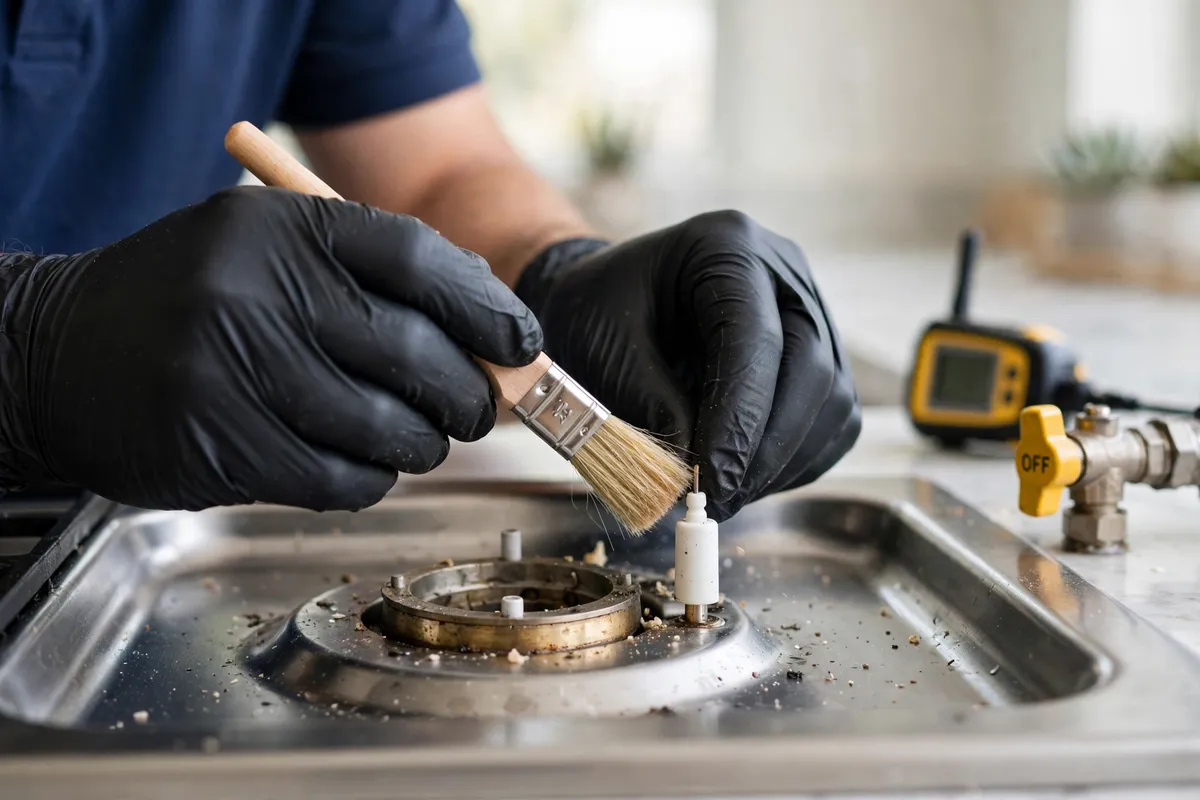
Clean, dry igniters spark reliably. Misaligned caps cause uneven flames. Moisture can make igniters click continuously. A failed spark module affects every burner. If cleaning and drying don't help, the igniter, its wire or the spark module may need replacing.
In homes in the inner East Bay, this comes up often.
Try this first: Reseat the burner cap. Allow wet burners to dry before use.
- Burner clicks but won't light
- Burner lights slowly
- Constant clicking
Induction Cooktop Repair in San Pablo
Burned-out elements stop heating. Non-magnetic pans won't heat. Stop using cracked glass. Cracks in glass cooktops are a safety concern. Radiant elements under the glass can fail.
Quick things to rule out: Stop using a cracked cooktop. Test cookware.
- Error code
- Burner doesn't heat
- Element doesn't heat
Gas Stove Repair and Leak Checks in San Pablo
A healthy gas burner flame is mostly blue with a small inner cone. A healthy flame is blue. Carbon monoxide can build up if burners don't burn cleanly. Never ignore a gas smell. A gas smell is a safety issue.
Easy checks for San Pablo homeowners: Don't use switches if you smell gas. Check that burner caps are seated properly.
- Weak flame
- Hissing
- Yellow flame
Range Control Knob Repair in San Pablo
Burners may stay on high. Knob failure stops control. Switches control heat levels. Switches and knobs control burner heat. Infinite switches control how hot each burner gets.
Easy checks for San Pablo homeowners: Shut off power. Turn off power before inspecting.
- Knob spins
- No control
- Burner won't turn off
Other stove problems
Other issues local technicians see in San Pablo, though less often: propane and natural gas conversions.
Quick Checks Before You Call
- Write down any error code.
- Note which burners are affected.
- If you smell gas, leave and call from outside.
- Check whether burner caps are seated.
What to Expect From the Visit
- Describe the problem. Explain the symptoms, any error codes and the model number when you call.
- Diagnosis. The technician checks the parts most likely to have failed.
- Estimate. Before work starts, ask for the total including parts and labor.
- Repair and test. The part is replaced and the appliance is tested.
San Pablo Stove Repair FAQ
Why does my stove burner keep clicking in San Pablo?
Moisture, a misaligned cap or a faulty igniter or switch. Older homes may still have original gas lines and connectors; any gas smell needs immediate attention.
Why does my igniter keep clicking?
Moisture from a spill or a faulty spark switch is the usual cause. Let spills dry fully before using the burner.
Can my range be converted to propane?
A qualified technician should handle conversions. Propane runs at higher pressure than natural gas.