Local Conditions That Matter for Stove Repair in Albany
Hayward, San Leandro and Castro Valley have many postwar homes from the 1940s to the 1960s with garage laundry setups. Alameda is served by Alameda Municipal Power, its own city-owned electric utility, while most neighboring cities are on PG&E.
Older homes often have appliance circuits that predate today's loads, which can show up as tripped breakers when a dryer or range is replaced.
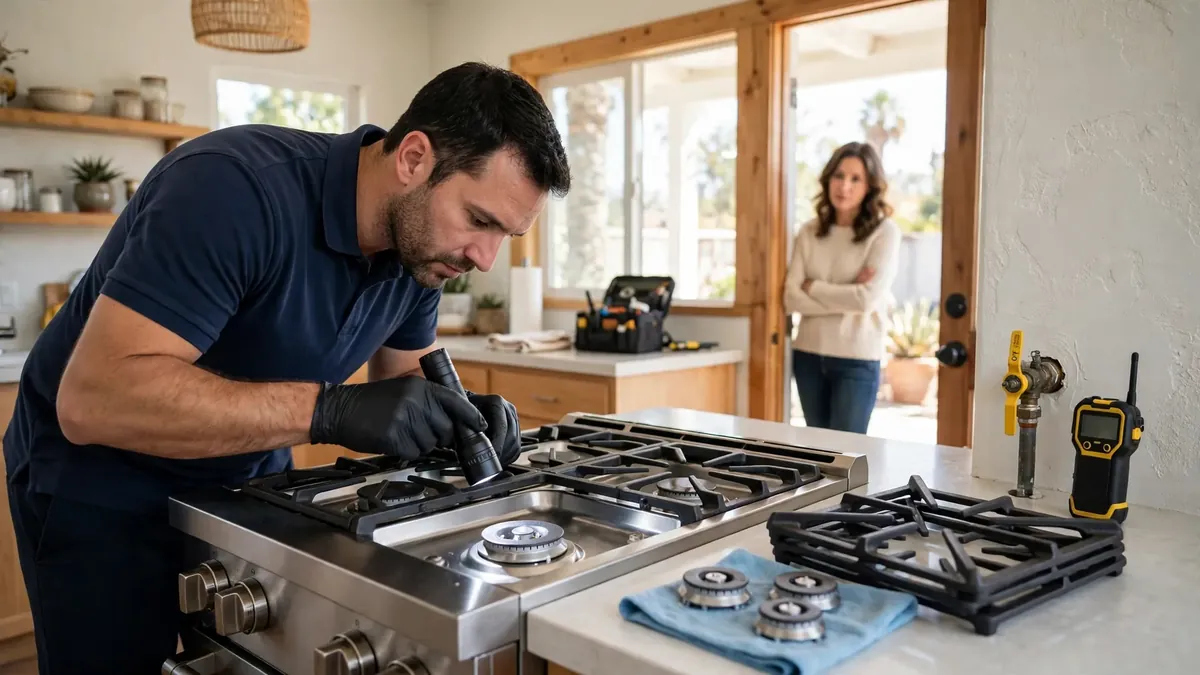
What that means for your stove: In older houses, flexible gas connectors and shutoff valves may be decades old and worth inspecting.
PG&E serves most of Albany. Tripped breakers and GFCI outlets are easy to overlook, so check both before deciding your stove has a failed part.
Stove Problems Pros See in Albany
Each section below covers one specific repair, the parts involved and the signs that point to it.
Gas Burner Igniter Repair in Albany
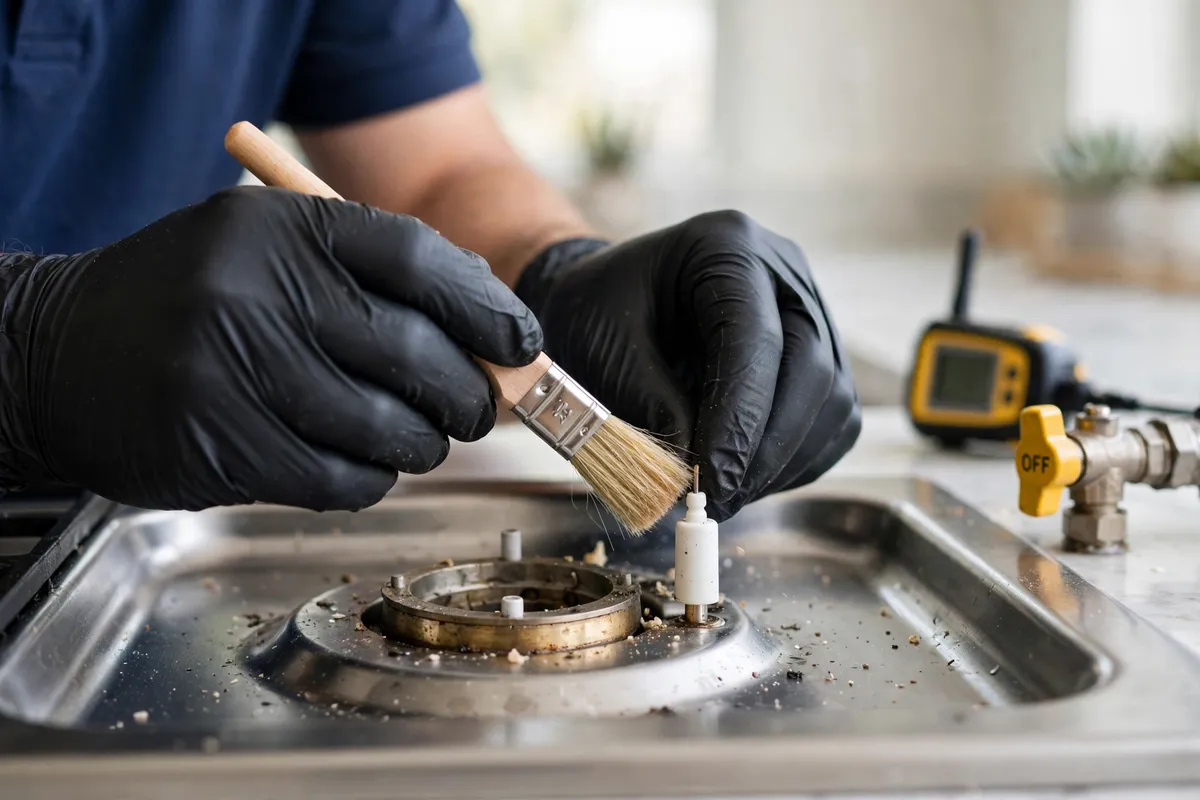
Clean, dry igniters spark reliably. Clicking that won't stop usually means moisture or a faulty spark switch. Misaligned caps cause uneven flames. Moisture can make igniters click continuously. Burners that won't light may have clogged ports or dirty igniters.
In homes in the inner East Bay, this comes up often.
A few safe steps to try: Reseat the burner cap. Let the burner dry fully after cleaning.
- Burner clicks but won't light
- Burner lights only sometimes
- Constant clicking
Gas Stove Repair and Leak Checks in Albany
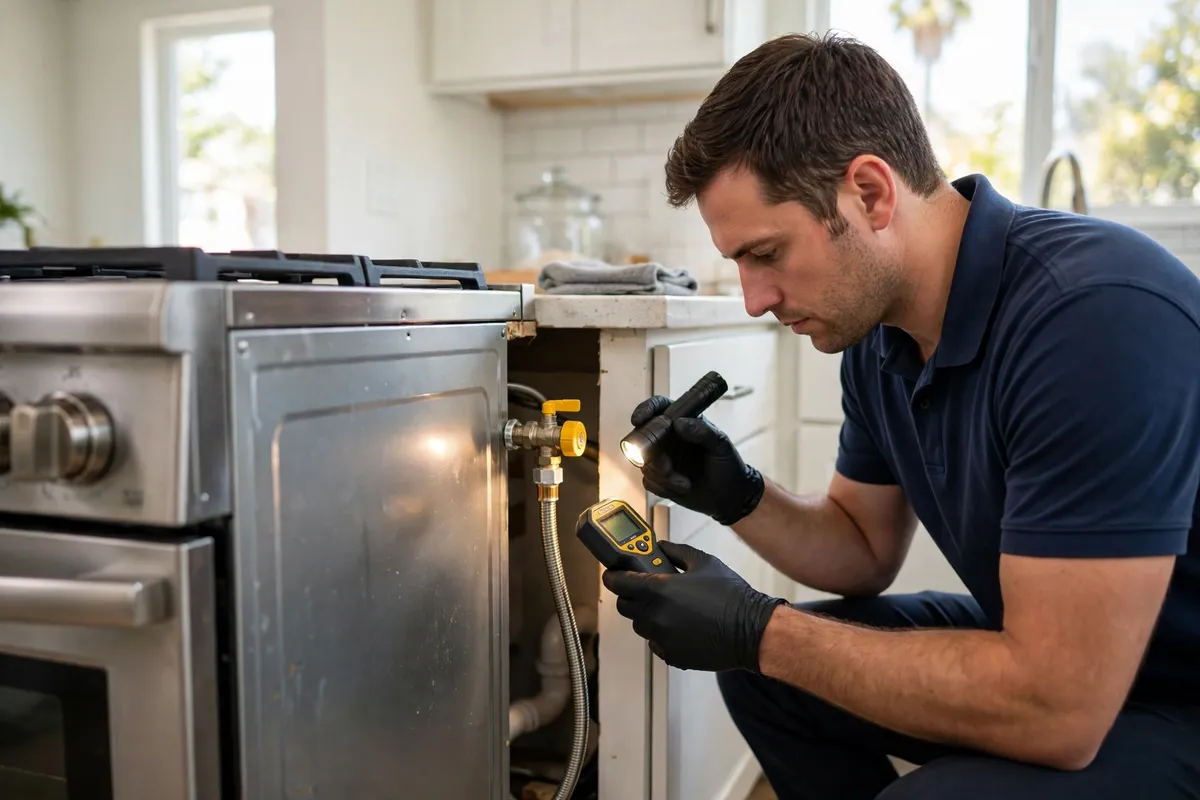
If you smell gas, don't use the stove, don't flip switches, leave the home and call your gas utility or 911 from outside. A healthy flame is blue. Incomplete combustion can produce carbon monoxide. Never ignore a gas smell. A gas smell is a safety issue.
Pros serving Albany see this one regularly.
Before booking a visit, check this: Keep a CO alarm in the home. Install a carbon monoxide detector nearby.
- Yellow or orange flame
- Soot on pans
- Weak flame
Electric Stove Coil Element Repair in Albany
Receptacles can burn out. Swapping coils between burners helps find the problem. Loose connections cause arcing. Loose connections cause arcing and heat damage. A burned receptacle can make the element heat intermittently.
A few safe steps to try: Push coils fully in. Test by trading coils.
- Sparks at the receptacle
- Coil doesn't heat
- Burn marks
Induction Cooktop Repair in Albany
Cracked glass is a safety issue. A radiant zone that won't glow may have a failed element or limiter; one that stays on high points to a switch or relay. Induction needs magnetic pans. Elements may fail. Stop using cracked glass.
Quick things to rule out: Check pans with a magnet. Clean spills promptly.
- Error code on induction
- Error code
- Cracked glass
Range Control Knob Repair in Albany
Stuck switches cause overheating. Stripped knobs spin freely. Switches control heat levels. Replacing the switch is usually straightforward with the right part number. Knobs can strip and stop turning the switch.
Safe checks before you call: Test the knob. Turn off power before inspecting.
- Burner stays on high
- No control
- No heat control
Other stove problems
A stove can also need help with these, which are less frequent in Albany: propane and natural gas conversions.
Quick Checks Before You Call
- Write down any error code.
- Find the model number.
- Note which burners are affected.
- Clean and dry the burners.
What to Expect From the Visit
- Describe the problem. Share what the appliance is doing, when it started and the model number.
- Diagnosis. A technician tests the likely parts to find the cause.
- Estimate. Ask what the repair includes and how it compares with replacing the appliance.
- Repair and test. After the repair, the appliance is run to confirm it works.
Albany Stove Repair FAQ
Why won't my gas burner light in Albany?
Clogged burner ports, a misaligned cap or a wet igniter are common causes. Older homes may still have original gas lines and connectors; any gas smell needs immediate attention.
Why won't my electric coil burner heat?
The element, receptacle or infinite switch may have failed.
Why are my flames tall and yellow after a conversion?
Propane needs smaller orifices than natural gas. Conversion requires orifice changes.