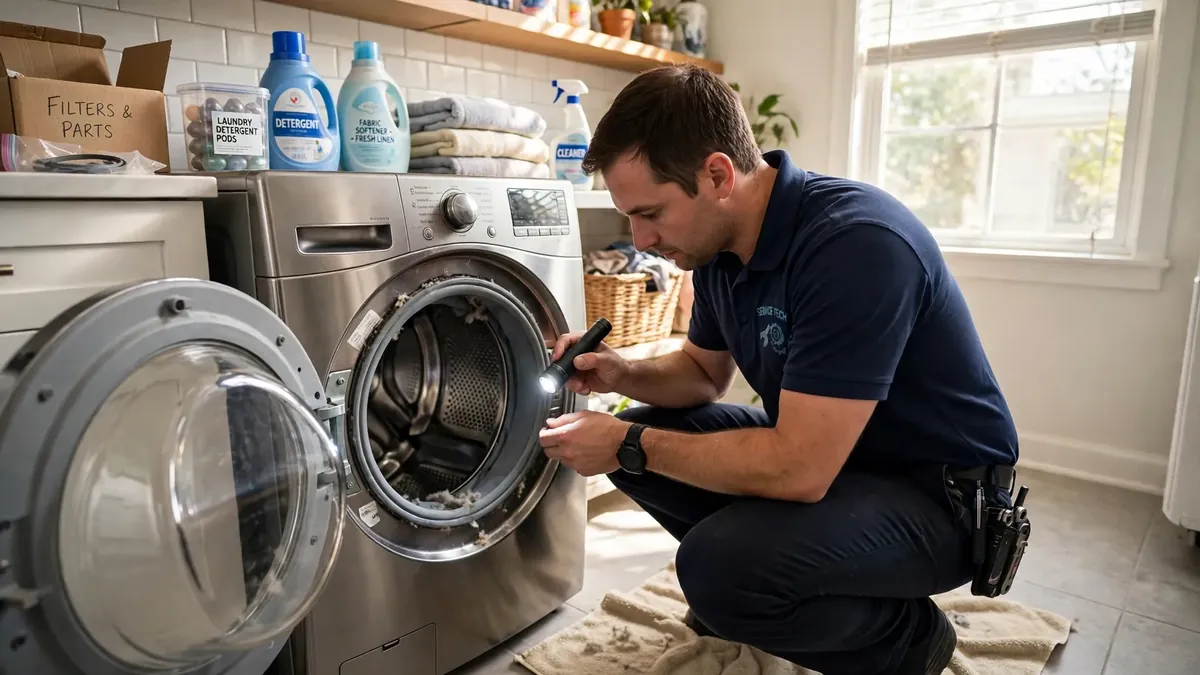
Local Conditions That Matter for Washer Repair in Thermal
In August 2023, Tropical Storm Hilary brought flooding to parts of the valley. Groundwater here is hard.
Many homes are seasonal or second homes that sit empty during the hottest months.
What that means for your washer: Hard water leaves deposits that make parts work harder and wear out sooner. Vacation homes put appliances through long idle stretches followed by heavy use, which wears seals, belts and pumps unevenly.
In Thermal, electric service usually comes from the Imperial Irrigation District. If your washer stopped working after the power went out and came back, say so when you call; that detail points the diagnosis toward electronics.
Washer Problems Pros See in Thermal
The problems below are ranked for Thermal homes, with the most likely ones first and troubleshooting tips for each.
Washer Drain Pump Repair in Thermal
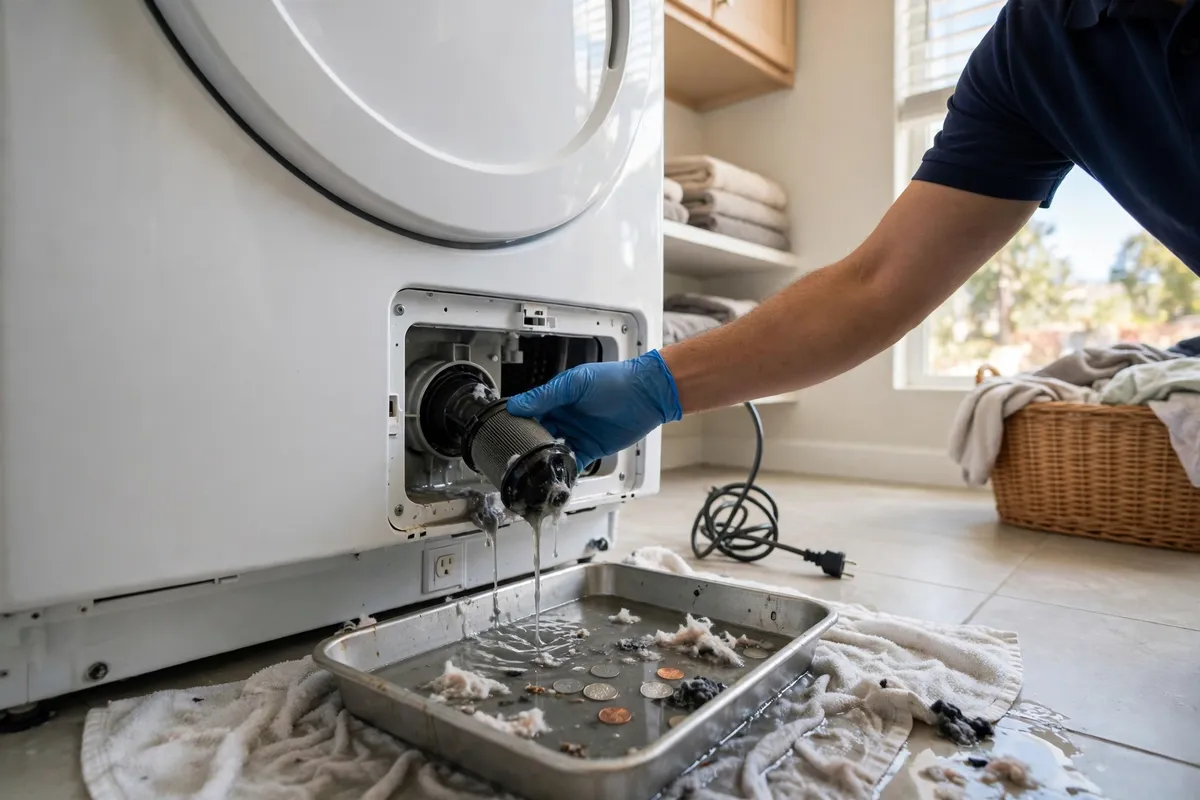
A drain hose coated inside with residue drains more and more slowly. A technician can replace it and check the hose. A faulty pressure switch can confuse the washer about when to drain. A clogged drain pump filter is the most common reason a washer won't drain. If the hose is pushed too far into the standpipe, the washer can siphon or drain poorly.
Pros serving Thermal see this one regularly.
Quick things to rule out: Make sure the drain hose sits loosely in the standpipe, not sealed tight. Make sure the drain hose isn't kinked or pushed too far into the standpipe.
- Humming with no draining
- Clothes soaking wet
- A humming during drain with no water moving
Leaking Washing Machine Repair in Thermal
A small tear in the door boot leaks during the wash. Over-sudsing pushes foam out of vents and seals. Water during drain suggests the pump area. A worn tub seal can drip into the cabinet unseen. Too much detergent can cause suds to overflow.
If you're in Thermal, start your troubleshooting here.
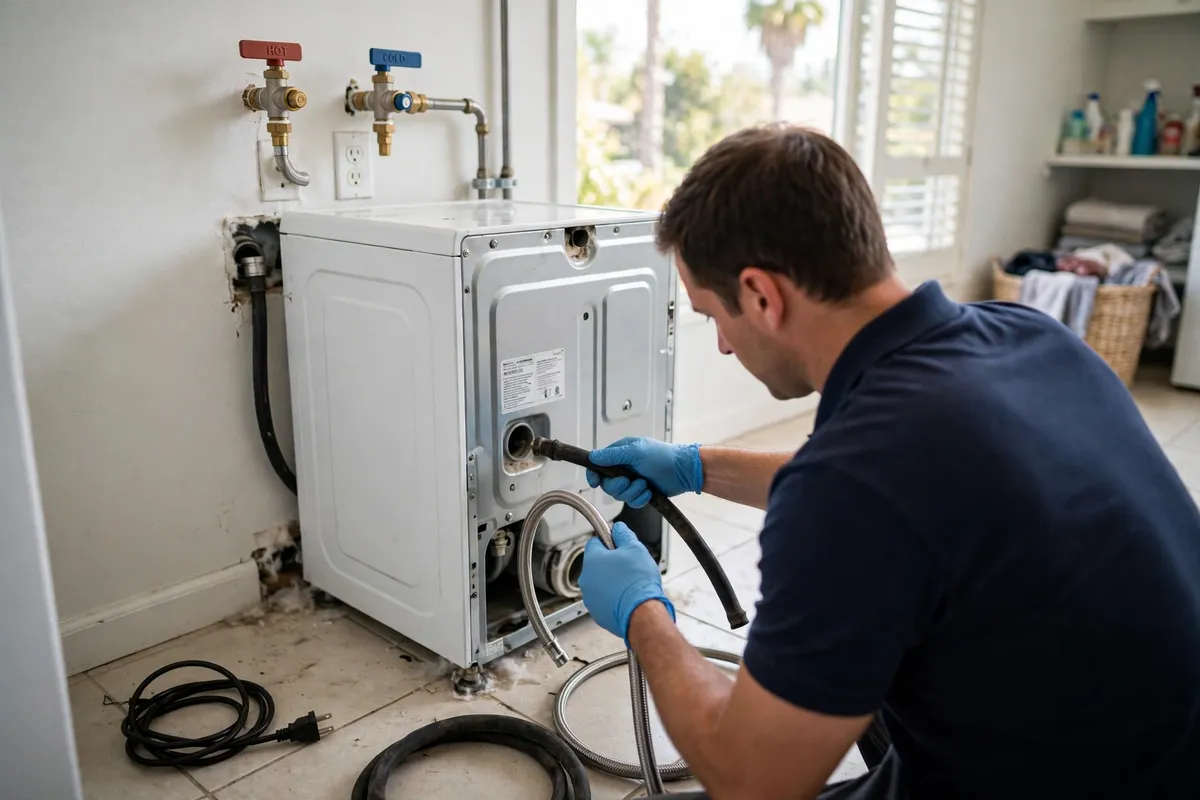
Try this first: Inspect the door boot for tears or debris. Swap old rubber fill hoses for braided steel hoses.
- Wet floor behind the machine
- Bulging hoses
- Rust spots under the cabinet
Washer Spin and Agitation Repair in Thermal
Top-load washers block spin when the lid switch or lock fails. Modern washers test the load's balance and slow down if it's uneven. Failing drum bearings rumble loudly during spin. Slipping belts reduce spin speed and leave clothes wetter. A washer won't spin if it can't drain first.
Worth checking in a few minutes: Look in the drum for water left after the cycle. Redistribute the load and run a spin cycle.
- Clothes very wet
- Agitator doesn't move
- Clothes drip after the final spin
Washer Door Gasket Replacement in Thermal
Front-load washers seal the door with a thick rubber boot that holds a little water after every load. Leaving the door closed between loads keeps moisture inside. A damaged seal leaks most with bigger loads. Most washers can get a replacement gasket. The folds in a front-load gasket hold water, lint and soap after every cycle, which feeds mildew.
Before booking a visit, check this: Run a cleaning cycle monthly. Check pockets for coins and pins that can tear the seal.
- Black mildew on the gasket
- Slimy residue in the folds
- Musty smell
Washer Inlet Valve Repair in Thermal
The inlet valve uses solenoids that can fail, so one side or both stop opening. If the level sensor misreads, the washer fills too little. If only hot or cold fills, one inlet valve may be failing. Low water pressure can slow filling. When household pressure is low, the washer may time out.
Quick things to rule out: Unscrew the hoses and rinse the inlet screens. Turn both supply faucets fully open.
- Only hot or only cold water fills
- No water enters
- Error code
Other washer problems
A washer can also need help with these, which are less frequent in Thermal: washer won't start or shows error codes; shaking and noisy washer.
Quick Checks Before You Call
- Check the hoses behind the washer.
- Find the model number.
- Note where water appears.
- Note any error codes.
How the Repair Usually Goes
- Describe the problem. Describe the symptom, any error code and when it first appeared.
- Diagnosis. A technician tests the likely parts to find the cause.
- Estimate. Ask for the total cost including parts and labor before approving the repair.
- Repair and test. Once the repair is done, the appliance is tested under normal use.
Thermal Washer Repair FAQ
Why won't my washer start?
Noting the error code saves diagnostic time. If the display shows a code, write it down; it often points straight at the failed part.
Why won't my washer drain in Thermal?
Most often it's a clogged pump filter or a kinked drain hose; a failed pump is next. Vacation homes put appliances through long idle stretches followed by heavy use, which wears seals, belts and pumps unevenly.
How often should washer hoses be replaced?
Rubber hoses about every five years; braided steel hoses last longer.