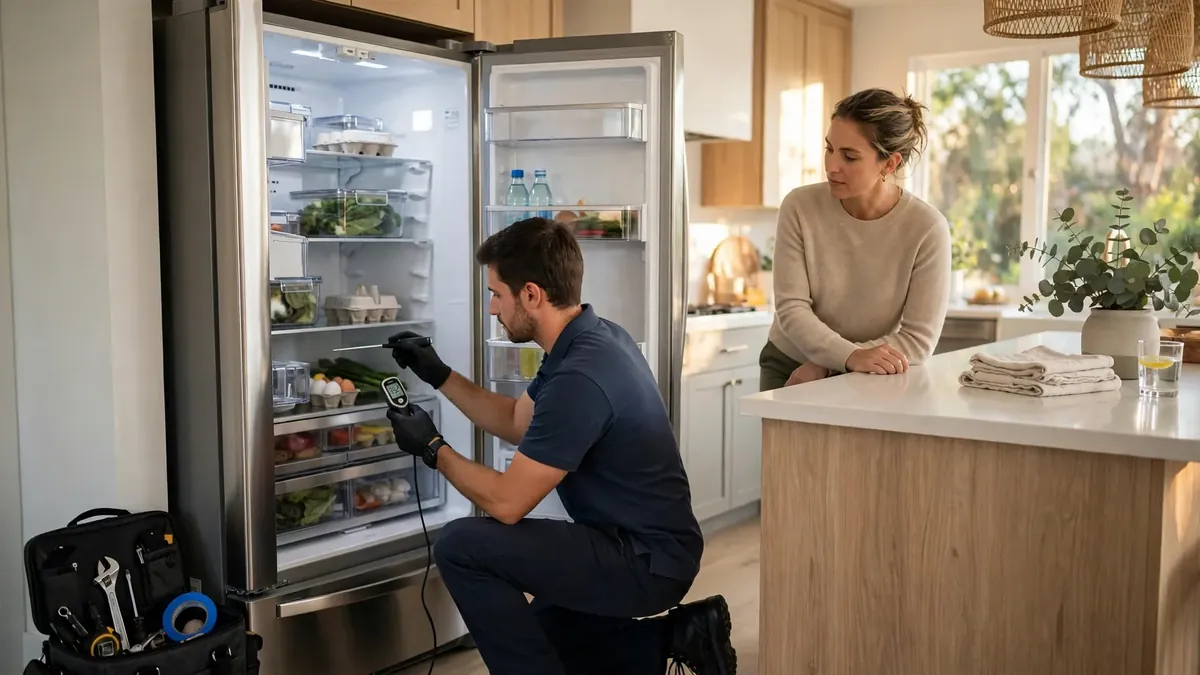
Local Conditions That Matter for Refrigerator Repair in West Point
Distances between towns are long, so scheduling may depend on a provider's travel route. Amador, Calaveras, Tuolumne and Mariposa counties sit in the Sierra foothills along Highway 49, the old Gold Rush route.
Summers are hot in the lower foothills and winters can bring snow above about 3,000 feet.
What that means for your refrigerator: Long stretches of high temperatures make any refrigerator work harder, and parts that are already worn tend to fail during heat waves. Outages and surges are a common reason refrigerators stop cooling here; the start relay and control board are the first things to test.
Because PG&E is the usual electric provider in West Point, any planned outage notice is worth keeping in mind; a refrigerator that fails right after one points to an electrical cause.
Plan ahead for power shutoffs: freeze water jugs to keep a refrigerator cool longer.
The Refrigerator Repairs Most Often Needed in West Point
Symptoms overlap, so it's worth skimming two or three sections before deciding which one matches your refrigerator.
Ice Maker Repair in West Point
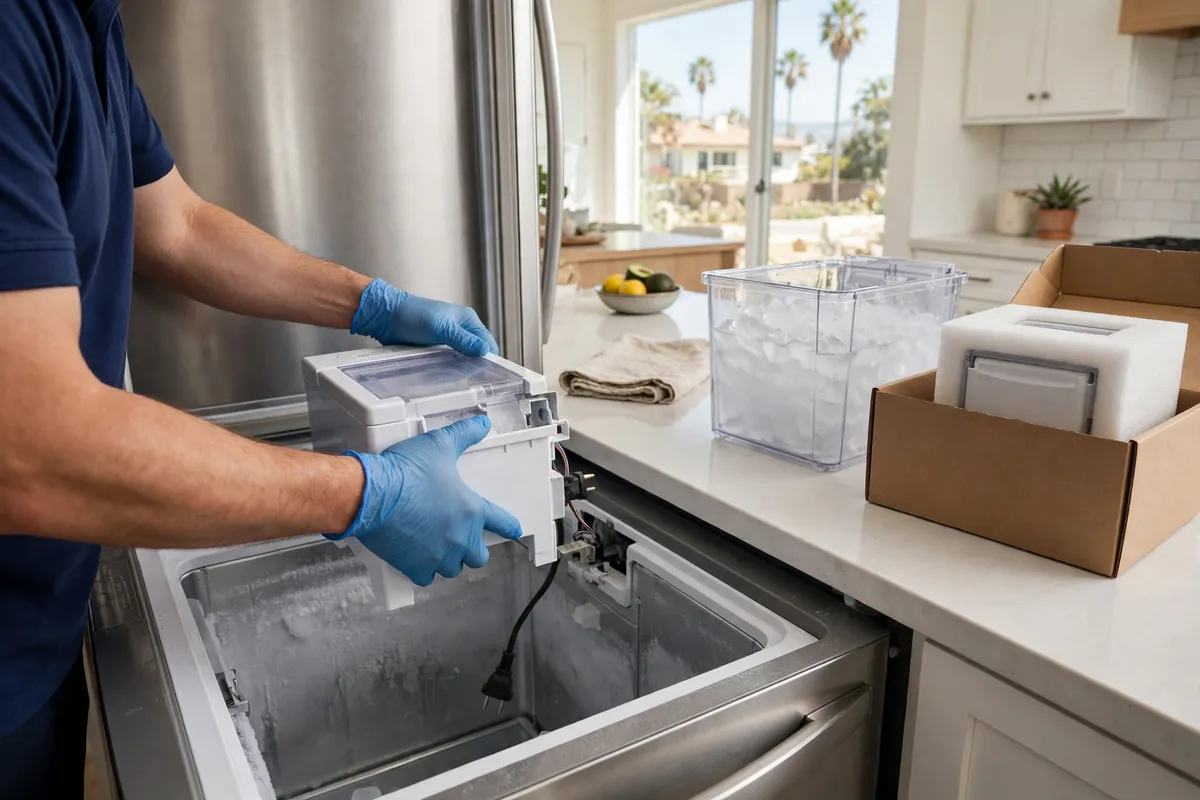
If the bin-full sensor is blocked by ice, production pauses. Clumped ice points to temperature swings in the freezer. After a filter change, trapped air can make the dispenser sputter. A sluggish inlet valve is a common reason for undersized cubes. Ice makers in the door rely on a dedicated duct that can frost over.
If you're in West Point, start your troubleshooting here.
Before booking a visit, check this: Look for ice blocking the fill tube at the back of the ice maker. Check the freezer temperature; the ice maker needs the freezer near 0°F.
- Ice tastes stale
- Ice clumped into one block
- Water dispenses slowly
Warm Refrigerator Repair in West Point
If the air damper sticks closed, cold air never reaches the lower compartment. Food safety guidance treats anything above 40°F for more than two hours as a risk for perishables. Telling a pro which compartment is warm, and since when, speeds up the diagnosis. Most warm fridges are fixed without touching the refrigerant at all. A fridge that cools at night but not in the afternoon is often struggling to reject heat.
Pros serving West Point see this one regularly.
Worth checking in a few minutes: Power-cycle the fridge by unplugging it briefly; some control glitches clear this way. Check whether the freezer vents near the back wall are blocked by bags or boxes.
- Milk spoiling before its date
- Water bottles sweat inside the fridge
- Condensation on shelves
Refrigerator Water Leak Repair in West Point
A worn compression fitting on the water line can drip slowly for weeks. Moving a fridge can kink or crack an old plastic supply line. A misplaced drain pan can spill water each time the fridge defrosts. Water under the crisper drawers usually comes from a clogged defrost drain at the back of the freezer. Small leaks soak into wood and laminate floors quietly.
Quick things to rule out: Turn off the water supply to the fridge if the leak is coming from the line. Look inside the freezer for ice at the bottom back wall, which signals a blocked drain.
- Water stains on the floor in front
- Wet spots behind the fridge
- Ice sheet on the freezer floor
Refrigerator Compressor and Start Relay Repair in West Point
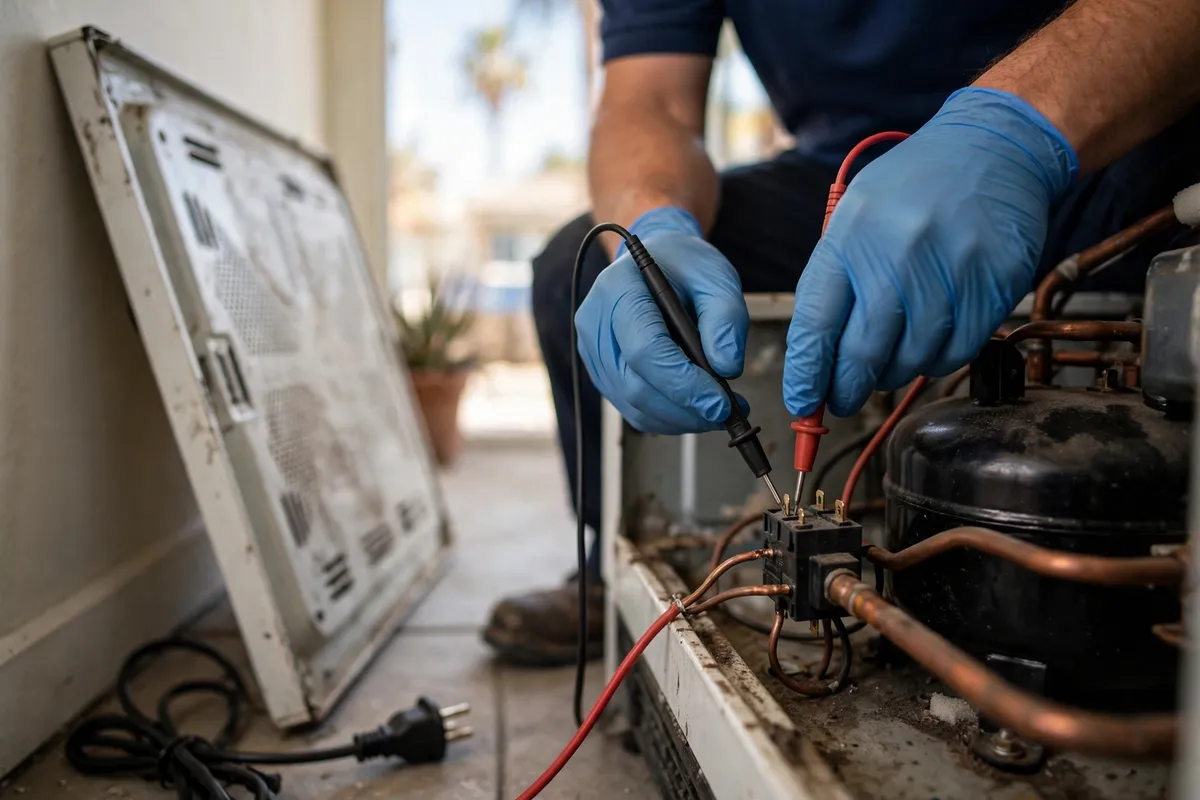
A failed overload protector can mimic a dead compressor. On older units, a compressor failure usually tips the decision toward replacement. Relays are inexpensive compared with compressors, so testing the relay first can save a lot. When the compressor never rests, check the condenser side first. Voltage problems from a shared circuit or extension cord can make a compressor struggle to start.
Worth checking in a few minutes: Listen at the back for a click every few minutes followed by silence. Rule out dirty coils, which can make a healthy compressor overheat.
- Burning smell near the compressor
- No cooling after a power outage
- The fridge is warm and silent
Second Refrigerator in the Garage: Repair in West Point
A tripped GFCI outlet in the garage can silently cut power. Rodents like the warm space around a garage compressor. Sunlight hitting the fridge raises its workload noticeably. Manufacturers sell heater kits that keep a fridge running properly in a cold garage. Some models are rated for garages, and many aren't.
Safe checks before you call: Look for droppings or nesting material around the base. Check behind the kick plate for signs of rodents.
- Food freezes in the fridge section in winter
- Garage fridge warm on hot afternoons
- The garage outlet trips
Condenser Coil Cleaning and Fan Repair in West Point
A condenser fan motor can slow down before it fails completely, which cuts cooling gradually. When heat can't escape, the compressor may trip its overload and cycle off. Some models route condenser tubing through the side walls, so warm sides aren't always a problem. Pet hair is one of the fastest ways to clog a condenser. Clean coils won't fix a failed part, but they often turn a fridge that barely keeps up into one that cools normally again.
Safe checks before you call: Look behind the unit for a matted layer of lint near the compressor compartment. Make sure the back of the fridge isn't pressed against the wall.
- Warm air blows out from under the front
- No fan noise from the back
- Compressor hot to the touch
Other refrigerator problems
These come up less often around West Point, and local pros handle them too: evaporator fan and defrost repair; door gasket replacement.
Quick Checks Before You Call
- Put an appliance thermometer on the middle shelf overnight.
- Check that the doors close and seal fully.
- Check the temperature setting.
- Move perishables to a cooler.
How the Repair Usually Goes
- Describe the problem. Share what the appliance is doing, when it started and the model number.
- Diagnosis. A pro confirms the cause by testing parts rather than guessing.
- Estimate. You get an estimate for parts and labor before work begins.
- Repair and test. The failed part is replaced and the appliance runs a full test.
West Point Refrigerator Repair FAQ
How long can food stay in a warm refrigerator?
Perishable food shouldn't be held above 40°F for more than two hours.
What temperature should my refrigerator be in West Point?
Aim for 37°F in the fresh-food section and 0°F in the freezer. An appliance thermometer in a glass of water gives a truer reading than the air. On the hottest days, a refrigerator in a warm kitchen or garage may run nonstop; clean coils and a working condenser fan make the difference.
Why is there frost on the back wall of my freezer?
The evaporator fan is the fridge's circulation system; without it, cold air stays trapped in the freezer. A defrost thermostat or heater failure lets frost build up gradually over several days.