What Affects Refrigerator Repair in Santa Clara
Santa Clara gets its electricity from Silicon Valley Power, the city's own utility, and has many postwar homes near the university.
Much of the housing in San Jose, Sunnyvale, Santa Clara and Mountain View dates from the 1950s to the 1970s, with many kitchens and laundry rooms remodeled since. Los Gatos, Saratoga, Los Altos and Cupertino include many larger homes with built-in refrigeration, double wall ovens and professional-style ranges.
Rental apartments and condos make up a large share of housing in San Jose, Santa Clara and Mountain View, where stacked washer-dryer units are common.
What that means for your refrigerator: Long stretches of high temperatures make any refrigerator work harder, and parts that are already worn tend to fail during heat waves. Premium brands may have specific service requirements, so having the model number ready matters.
Electricity in Santa Clara typically comes through Silicon Valley Power. When a refrigerator acts strangely after a storm or a planned shutoff, the timing is a useful clue for whoever diagnoses it.
Clean the refrigerator's condenser coils before summer; valley heat makes dusty coils a common cause of warm fridges in July and August.
Common Refrigerator Repairs in Santa Clara Homes
The problems below are ranked for Santa Clara homes, with the most likely ones first and troubleshooting tips for each.
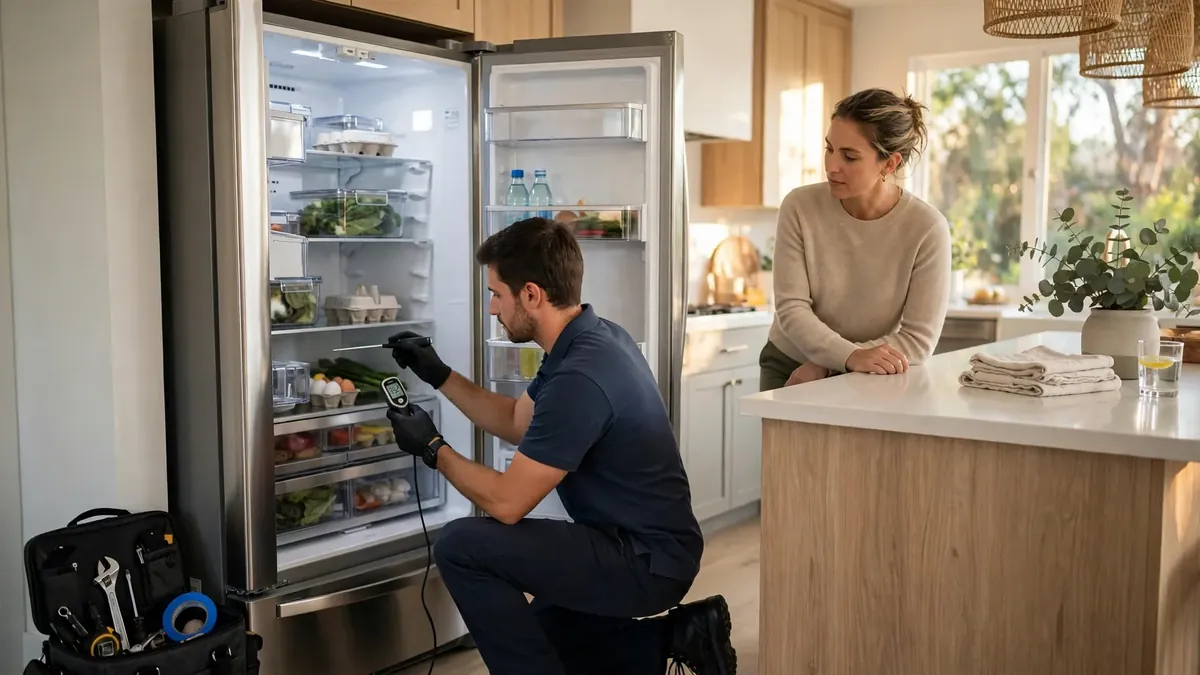
Refrigerator Not Cooling? Repair in Santa Clara
When the temperature sensor drifts, the board shuts the cooling off too early. Marginal parts tend to fail when kitchen temperatures climb. A packed fridge can't circulate air, so pockets of warmth form. Most warm fridges are fixed without touching the refrigerant at all. Telling a pro which compartment is warm, and since when, speeds up the diagnosis.
If you're in Santa Clara, start your troubleshooting here.
Worth checking in a few minutes: Check whether the freezer vents near the back wall are blocked by bags or boxes. Hold a hand near the vent inside the fridge to see whether cold air is moving.
- Butter feels soft on the door shelf
- Fresh-food section above 40°F
- Milk spoils before its date
Refrigerator Ice Maker Repair in Santa Clara
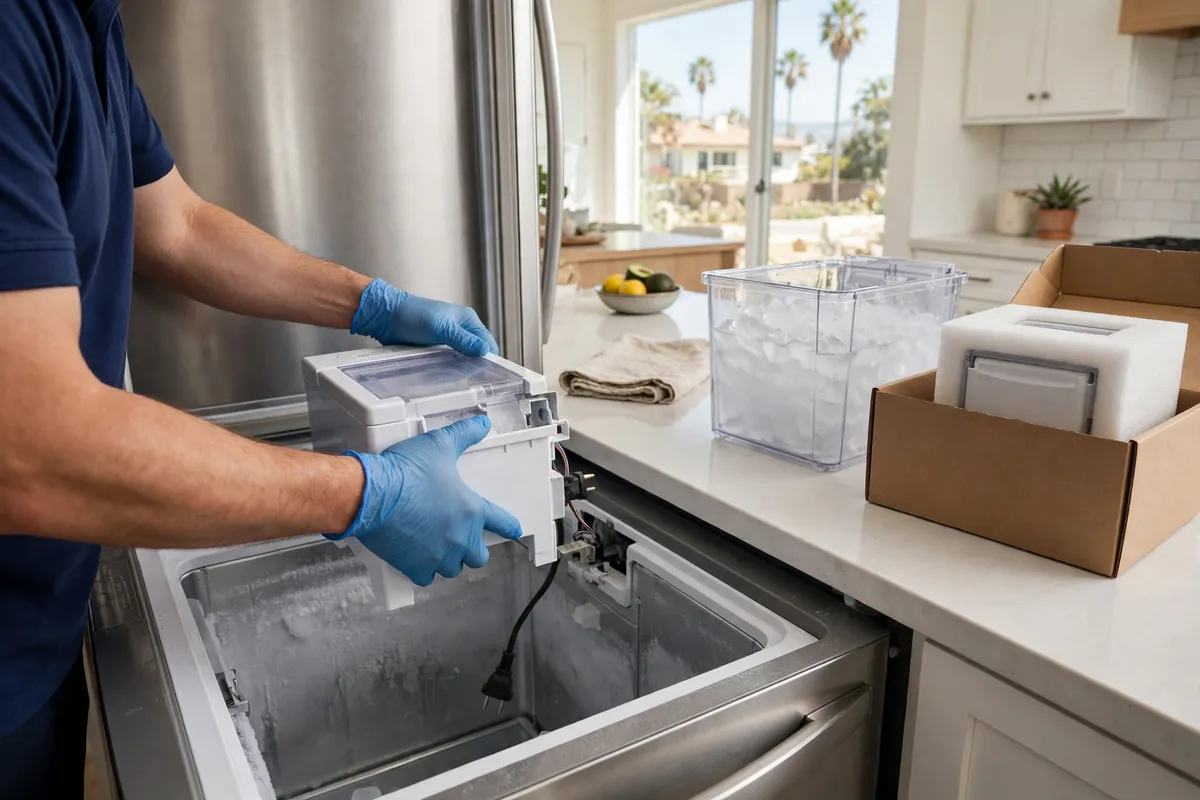
If the bin-full sensor is blocked by ice, production pauses. Clumped ice points to temperature swings in the freezer. A bad-tasting or cloudy batch usually points to an old filter or stale ice. If nothing happens at all, it may be the module or the arm being switched off. On French-door models, the ice compartment has its own seal and airflow that can fail.
In Santa Clara, this ranks among the most frequent refrigerator problems.
Worth checking in a few minutes: Replace the water filter if it's more than six months old. Check that the shutoff valve behind the fridge is fully open and the line isn't kinked.
- Ice clumps together
- The dispenser sputters
- Water dispenses slowly
Refrigerator Door Seal Repair in Santa Clara
Mild heat sometimes relaxes a creased gasket enough to seal again. Leaky seals cost money every hour the fridge runs. A gasket that has rolled inward won't seal even if it looks fine. Mold in gasket folds is common in humid kitchens and can be cleaned with mild soap. If the fridge tilts forward, the doors drift open instead of closing.
Safe checks before you call: In a dark room, place a flashlight inside and check for light around the seal. Check that the fridge leans slightly back so the doors swing closed.
- Dollar bill slides out easily
- Frost near the door
- Mildew in the gasket folds
Refrigerator Condenser Fan Repair in Santa Clara
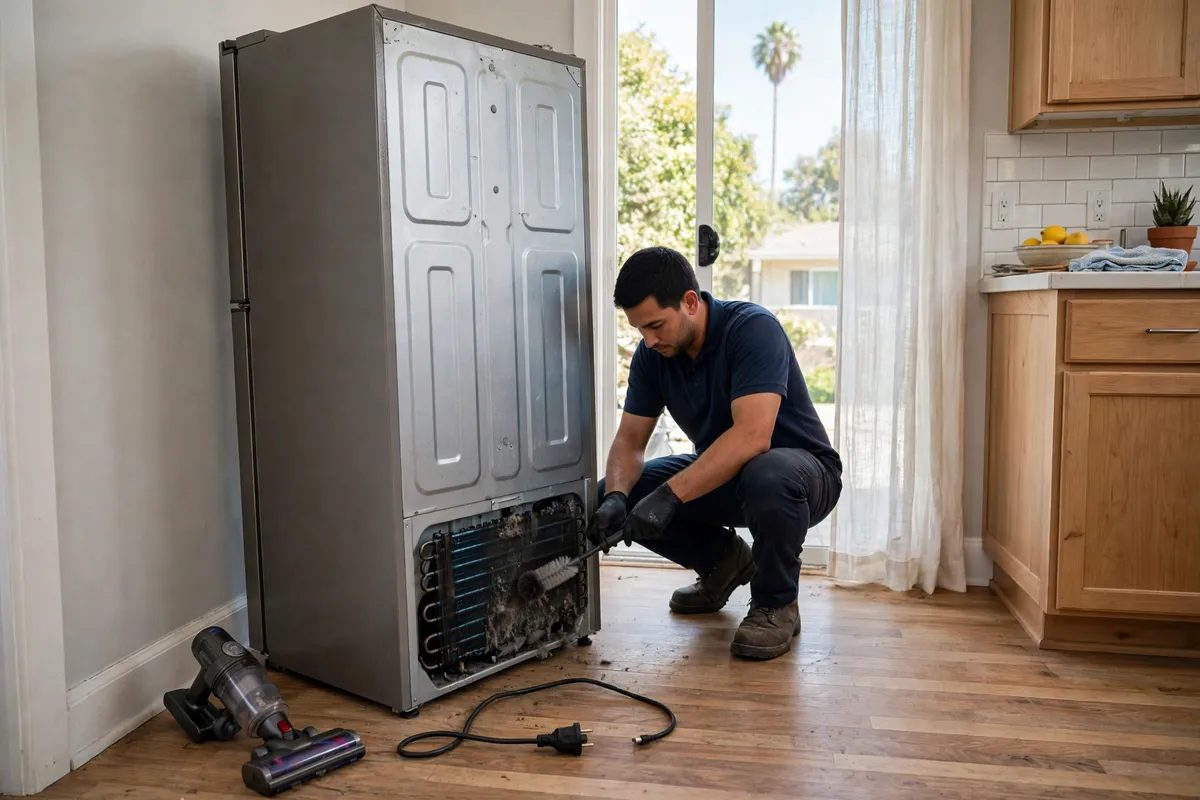
Grease from nearby cooking helps lint stick to the coils. Some models route condenser tubing through the side walls, so warm sides aren't always a problem. Clean coils mean shorter run times and lower energy use. The condenser is the fridge's radiator; when it can't release heat, everything downstream works harder. A slowing condenser fan reduces airflow long before it stops spinning.
Quick things to rule out: Leave a small gap behind the fridge so warm air has somewhere to go. Make sure the back of the fridge isn't pressed against the wall.
- No fan noise from the back
- The kick plate area is thick with dust
- Thick dust on the bottom grille
Garage Refrigerator Repair in Santa Clara
A garage kit adds a small heater near the thermostat so the fridge runs in winter. Nests and chewed wires show up more often in garage fridges. A sunny garage wall can push the fridge past its design limits. A nearly empty garage fridge loses cold quickly when opened. Most household fridges are designed for indoor temperatures, roughly 55°F to 90°F.
Quick things to rule out: Fill empty shelves with water bottles to add thermal mass. Check behind the kick plate for signs of rodents.
- The fridge runs nonstop in summer
- Sweating on the outside of the cabinet
- Fridge works fine after being moved indoors
Noisy Refrigerator Fan Repair in Santa Clara
Chirping from the freezer often means ice is building around the fan. A manual defrost buys time, not a repair. Press the door switch to hear whether the freezer fan actually runs. A defrost thermostat or heater failure lets frost build up gradually over several days. A control board that skips defrost causes the same frost buildup as a failed heater.
What you can check yourself: Open the freezer and listen; the fan should run when the door switch is pressed in. Hold the door switch in with your finger to check whether the fan runs.
- Frost on the freezer's back wall
- Ice buildup around the fan
- Frost returns after defrosting
Other refrigerator problems
Other issues local technicians see in Santa Clara, though less often: refrigerator water leak repair; compressor and start relay diagnosis.
What to Note Before Calling
- Check that the doors close and seal fully.
- Check whether the condenser fan near the compressor is spinning.
- Check the temperature setting.
- Move perishables to a cooler.
How the Repair Usually Goes
- Describe the problem. Have the model number ready and explain what changed and when.
- Diagnosis. The technician checks the parts most likely to have failed.
- Estimate. Ask for the total cost including parts and labor before approving the repair.
- Repair and test. Once the repair is done, the appliance is tested under normal use.
Santa Clara Refrigerator Repair FAQ
Where does water under a fridge come from?
A cracked fill tube or loose fitting on the ice maker can drip behind the fridge. Food bits and slime build up in the defrost drain over time.
What temperature should my refrigerator be in Santa Clara?
Aim for 37°F in the fresh-food section and 0°F in the freezer. An appliance thermometer in a glass of water gives a truer reading than the air. Summer heat in Silicon Valley makes condenser coils and fans the first things to check when a refrigerator warms up, especially for a second fridge in the garage.
Why is my fridge warm but the freezer cold?
That usually points to an airflow problem: a failed evaporator fan, a stuck damper or a defrost failure that has iced over the coil. It's rarely the compressor.