What Affects Refrigerator Repair in San Lucas
Groundwater is hard throughout the valley. Afternoon winds blow up the valley much of the year.
Hollister, San Juan Bautista and Tres Pinos sit in San Benito County, with warmer, drier weather.
What that means for your refrigerator: Summer heat in the Salinas Valley and San Benito County makes condenser coils and fans the first things to check when a refrigerator warms up, especially for a second fridge in the garage. With hard water, regular cleaning of filters and screens prevents many problems before they start.
Electricity in San Lucas typically comes through PG&E. When a refrigerator acts strangely after a storm or a planned shutoff, the timing is a useful clue for whoever diagnoses it.
Refrigerator Problems Pros See in San Lucas
Not every problem needs a technician, so each section starts with what's going on and what you can rule out yourself.
Warm Refrigerator Repair in San Lucas
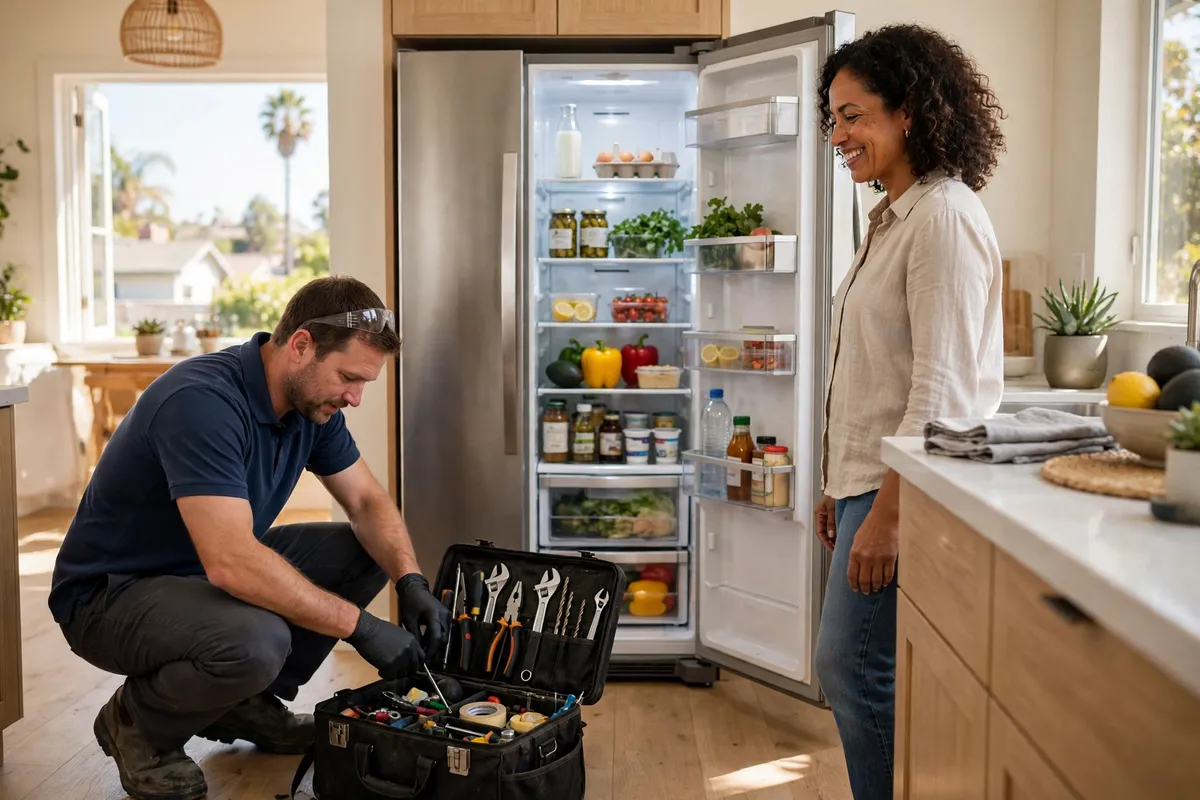
If the air damper sticks closed, cold air never reaches the lower compartment. Fridges often show weakness during the first hot week of the year, when every part works harder. Sealed-system leaks are less common than people fear and usually come after fan, relay and defrost checks. Cooling that fades as the day warms up usually means the condenser side can't keep up. When cold air can't circulate, the freezer can sit at 0°F while the fresh-food side drifts into the 50s.
Around San Lucas, this problem accounts for a good share of refrigerator calls.
Safe checks before you call: Feel the air coming from the freezer vent; weak or warm air narrows the fault to the fan or defrost system. Note any recent events such as an outage, a move or a cleaning that might have bumped a setting.
- Fresh-food section above 40°F
- Drinks never feel properly cold
- Butter feels soft on the door shelf
Ice Maker Repair in San Lucas
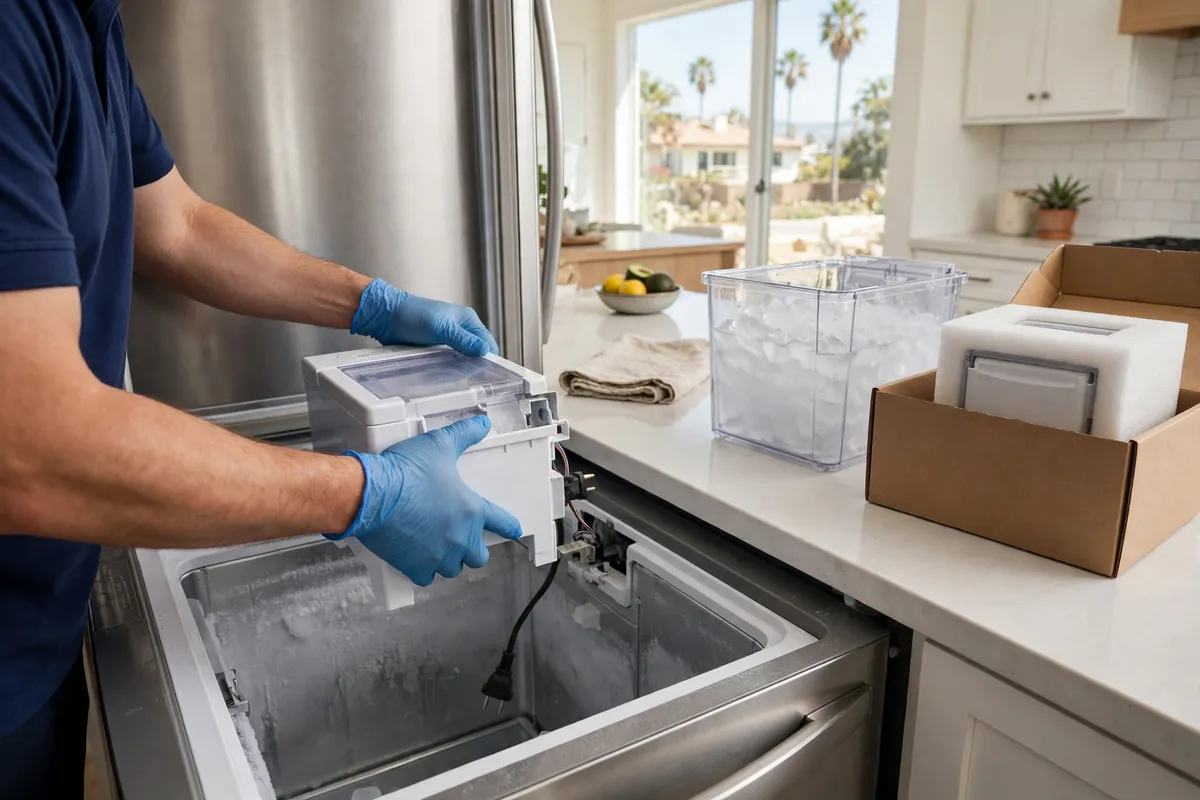
A raised shutoff arm or a blocked bin sensor tells the ice maker to stop. Ice makers in the door rely on a dedicated duct that can frost over. After a filter change, trapped air can make the dispenser sputter. Off-tasting ice often comes from an overdue filter or ice that has sat too long. A water inlet valve that's weak or clogged reduces the fill and leads to small cubes.
It's one of the first things worth ruling out in a San Lucas home.
Worth checking in a few minutes: Empty the ice bin and break up any clumps blocking the auger. Check the freezer temperature; the ice maker needs the freezer near 0°F.
- Water dispenser works but no ice
- Ice clumps together
- No ice for more than a day
Refrigerator Condenser Fan Repair in San Lucas
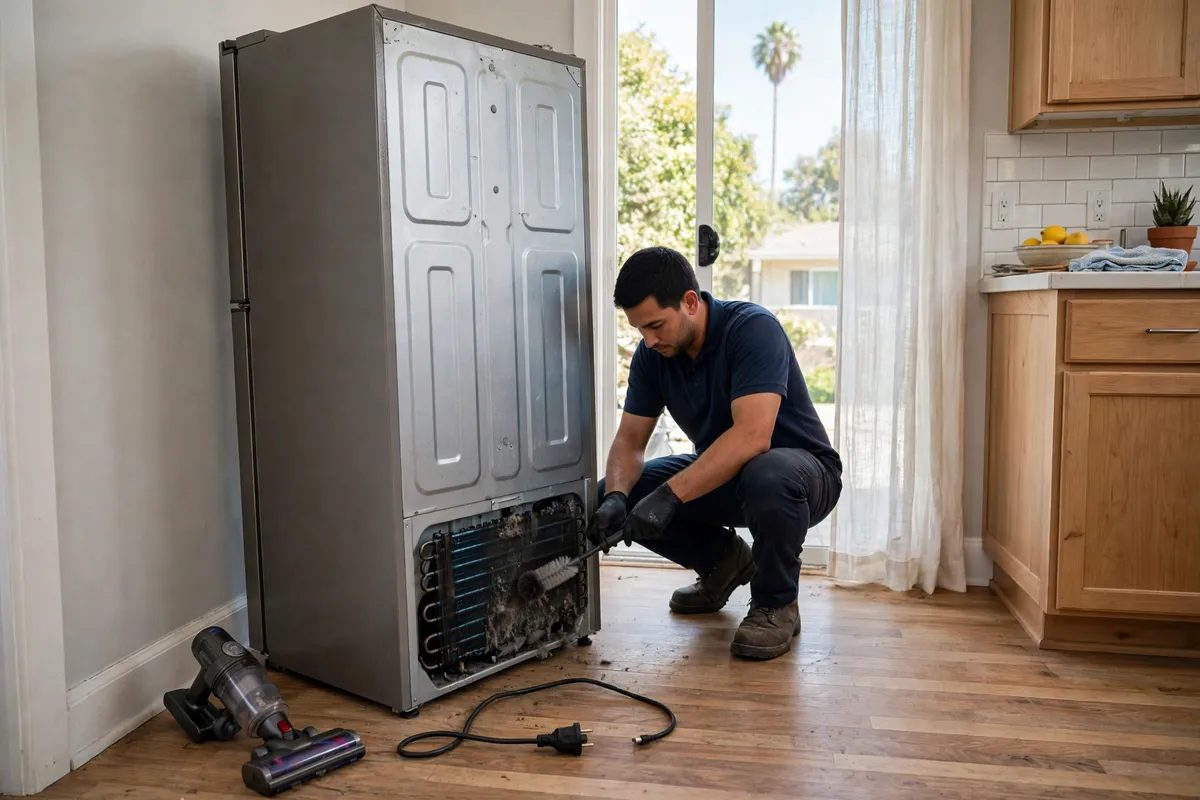
Fan motors often weaken over months, so cooling fades rather than stopping overnight. Cleaning the coils and replacing a failed fan motor are among the least expensive refrigerator repairs. Less dust on the condenser means the fridge uses less power. Shedding pets can blanket the coils in a matter of months. A compressor that keeps tripping its overload is often a symptom of dirty coils.
Safe checks before you call: Leave a small gap behind the fridge so warm air has somewhere to go. Unplug the fridge, remove the kick plate and vacuum the coils with a brush attachment.
- No fan noise from the back
- The fridge runs almost constantly
- Compressor hot to the touch
Refrigerator Water Leak Repair in San Lucas
A cracked fill tube or loose fitting on the ice maker can drip behind the fridge. Small leaks soak into wood and laminate floors quietly. Drips after each use of the water dispenser point to its line or valve. Plastic water lines can become brittle and split, especially after the fridge is moved. A small clog in the drain opening is enough to send defrost water inside.
What you can check yourself: Lay paper towels under and behind the fridge to track the leak's source. Make sure the fridge is level side to side and tilted slightly back so doors close fully.
- Water pools under the crisper drawers
- Puddle in front of the fridge
- Wet spots behind the fridge
Noisy Refrigerator Fan Repair in San Lucas
Chirping from the freezer often means ice is building around the fan. The evaporator fan is the fridge's circulation system; without it, cold air stays trapped in the freezer. A worn fan motor squeals or chirps, especially when the freezer door is opened. When defrost parts fail, the decline is slow: cooling fades over days. A control board that skips defrost causes the same frost buildup as a failed heater.
Before booking a visit, check this: Look behind the freezer's rear panel vents for a white wall of frost. Shine a light through the freezer vents to look for frost on the coil.
- Frost returns after defrosting
- Chirping from the freezer
- Squealing that changes when the freezer door opens
Second Refrigerator in the Garage: Repair in San Lucas
Manufacturers sell heater kits that keep a fridge running properly in a cold garage. A second fridge that's mostly empty cycles more and holds temperature less steadily. Direct sun through a garage window can add a surprising amount of heat. Rodents like the warm space around a garage compressor. Some models are rated for garages, and many aren't.
A few safe steps to try: Place jugs of water in a mostly empty fridge to stabilize temperatures. Clean the coils more often, since garages are dustier.
- The freezer softens in winter
- Droppings near the base
- The garage outlet trips
Other refrigerator problems
Less common in San Lucas, but local pros fix these as well: compressor and start relay diagnosis; door gasket replacement.
What to Note Before Calling
- Check that the doors close and seal fully.
- Note whether the freezer is also warm.
- Check whether the condenser fan near the compressor is spinning.
- Check the temperature setting.
How the Repair Usually Goes
- Describe the problem. Share what the appliance is doing, when it started and the model number.
- Diagnosis. The likely parts are checked one by one until the cause is confirmed.
- Estimate. You get an estimate for parts and labor before work begins.
- Repair and test. The failed part is replaced and the appliance runs a full test.
San Lucas Refrigerator Repair FAQ
Why does my refrigerator click but not run?
Long, hot run times usually trace back to heat rejection problems. For a fridge past its prime, a new compressor may not be worth the cost.
How long can food stay in a warm refrigerator?
Perishable food shouldn't be held above 40°F for more than two hours.
What temperature should my refrigerator be in San Lucas?
Aim for 37°F in the fresh-food section and 0°F in the freezer. An appliance thermometer in a glass of water gives a truer reading than the air. Summer heat in the Salinas Valley and San Benito County makes condenser coils and fans the first things to check when a refrigerator warms up, especially for a second fridge in the garage.