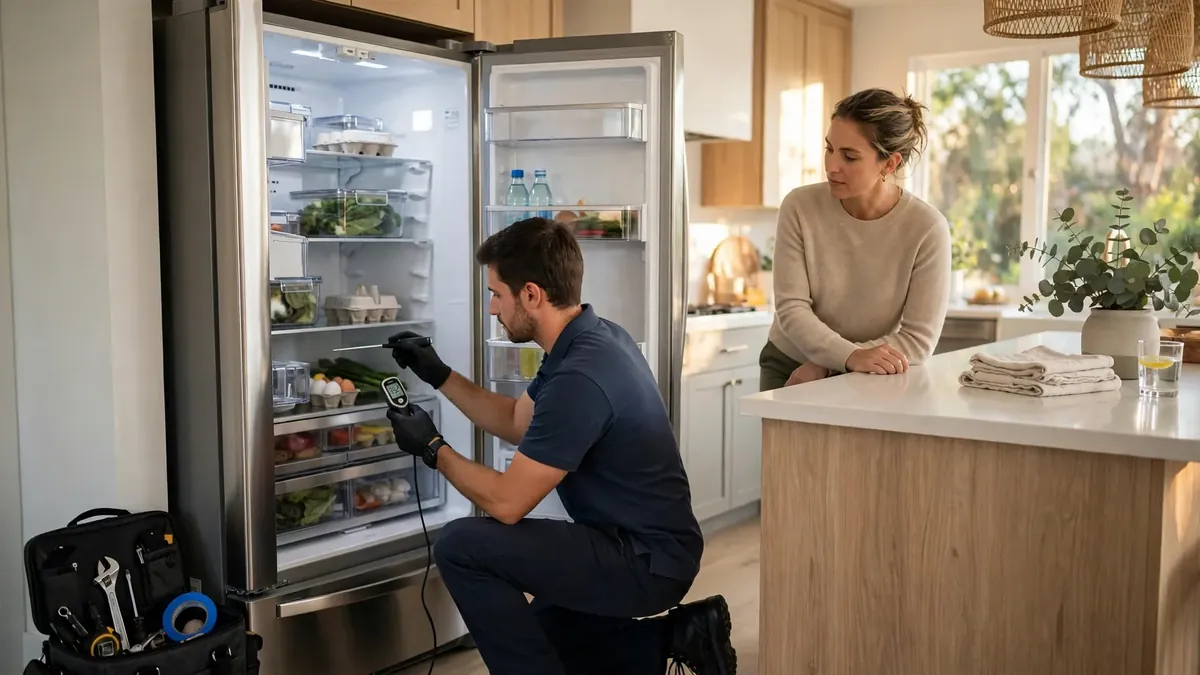
Local Conditions That Matter for Refrigerator Repair in San Jose
San Jose is the largest city in Northern California, with housing from Victorian-era homes near downtown to 1950s–70s tracts and newer high-rises.
Rental apartments and condos make up a large share of housing in San Jose, Santa Clara and Mountain View, where stacked washer-dryer units are common. Palo Alto runs its own electric utility, and Santa Clara is served by Silicon Valley Power, while most of the rest of the county is on PG&E.
Much of the housing in San Jose, Sunnyvale, Santa Clara and Mountain View dates from the 1950s to the 1970s, with many kitchens and laundry rooms remodeled since.
What that means for your refrigerator: Long stretches of heat make any refrigerator with a compressor, fan or motor work harder, so parts that would last years in a mild climate wear out sooner here. Built-in and professional-style appliances are common here, and they often need parts ordered by exact model, so take a photo of the rating label before you call.
Homes in San Jose are generally on PG&E service. A surge protector rated for appliances is an inexpensive way to protect a refrigerator's control board from the spikes that come with restored power.
Clean the refrigerator's condenser coils before summer; valley heat makes dusty coils a common cause of warm fridges in July and August.
The Refrigerator Repairs Most Often Needed in San Jose
Symptoms overlap, so it's worth skimming two or three sections before deciding which one matches your refrigerator.
Warm Refrigerator Repair in San Jose
When the temperature sensor drifts, the board shuts the cooling off too early. Marginal parts tend to fail when kitchen temperatures climb. Overpacking blocks the airflow paths that the cooling system depends on. A stuck damper door keeps freezer air from flowing into the refrigerator section. When performance drops during the hottest hours, heat rejection is the first suspect.
If you're in San Jose, start your troubleshooting here.
A few safe steps to try: Write down when the warming started and whether anything changed, like a move or a power outage. Unplug the fridge for five minutes and plug it back in to reset the control board.
- Condensation on shelves
- Fresh-food section above 40°F
- Water bottles sweat inside the fridge
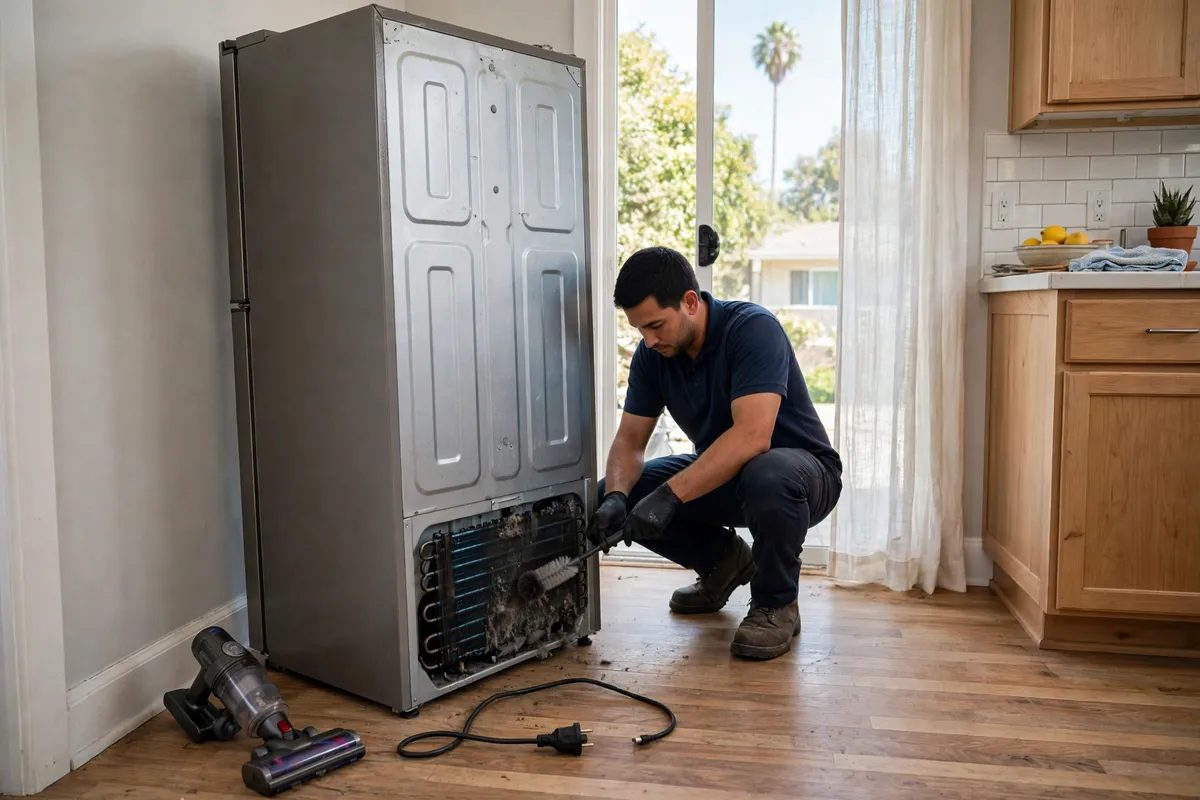
Refrigerator Ice Maker Repair in San Jose
A raised shutoff arm or a blocked bin sensor tells the ice maker to stop. Most ice maker problems trace back to water supply: a kinked line, a clogged filter or a frozen fill tube. After a filter change, trapped air can make the dispenser sputter. A technician can test the inlet valve and module and tell you whether the module is cheaper to replace than to repair. Ice that clumps together usually means it partially melted and refroze.
Pros serving San Jose see this one regularly.
Before booking a visit, check this: Remove the bin and clear stuck ice from the chute. Check the freezer temperature; the ice maker needs the freezer near 0°F.
- The ice maker makes a grinding sound
- The dispenser sputters
- Ice tastes stale
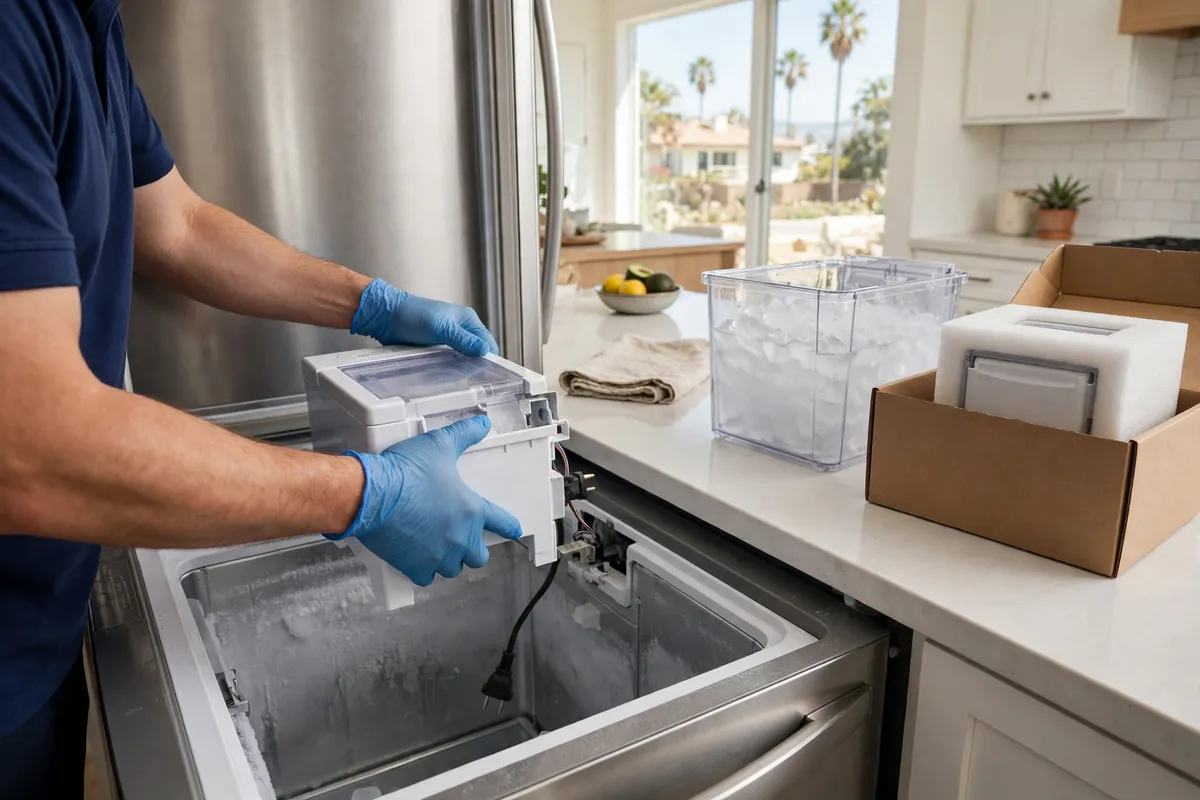
Refrigerator Door Seal Repair in San Jose
A gasket that has rolled inward won't seal even if it looks fine. A bad seal makes the fridge run longer, which raises the electric bill. Gasket folds trap moisture, so mildew appears in humid homes. If the fridge tilts forward, the doors drift open instead of closing. Gasket replacement is one of the more affordable fridge repairs.
Worth checking in a few minutes: Adjust the front leveling legs so the doors close on their own. Clean the gasket with warm soapy water; sticky residue can keep it from seating.
- Fridge runs constantly
- Frost builds up near the door
- Dollar bill slides out easily
Evaporator Fan and Defrost Repair in San Jose
Press the door switch to hear whether the freezer fan actually runs. A manual defrost buys time, not a repair. A fan blade striking ice makes a distinctive chirp. Frost buildup from a failed defrost heater worsens a little each day. If the defrost heater, thermostat or control fails, the coils ice over, airflow stops and the fridge warms even though the freezer stays cold.
Quick things to rule out: Press and hold the freezer door switch and listen for the fan. Shine a light through the freezer vents to look for frost on the coil.
- Fresh-food section warming slowly
- Ice buildup around the fan
- Chirping from the freezer
Second Refrigerator in the Garage: Repair in San Jose
Garage GFCI outlets trip easily, so check them if the fridge is warm. Direct sun through a garage window can add a surprising amount of heat. A nearly empty garage fridge loses cold quickly when opened. Rodents like the warm space around a garage compressor. In cold weather, the fridge's thermostat senses the cool garage and stops running, so the freezer warms.
Try this first: Place jugs of water in a mostly empty fridge to stabilize temperatures. Check that the garage outlet hasn't tripped its reset button.
- The garage outlet trips
- Dust coats the coils quickly
- The fridge runs nonstop in summer
Refrigerator Condenser Fan Repair in San Jose
A slowing condenser fan reduces airflow long before it stops spinning. Clean coils mean shorter run times and lower energy use. Some models route condenser tubing through the side walls, so warm sides aren't always a problem. A fridge pushed into a tight cabinet can't breathe, which shortens compressor life the same way dirty coils do. Pet hair is one of the fastest ways to clog a condenser.
Worth checking in a few minutes: Notice any new buzzing near the kick plate when the compressor starts. Make sure the back of the fridge isn't pressed against the wall.
- Thick dust on the bottom grille
- Warm air blows out from under the front
- No fan noise from the back
Other refrigerator problems
A refrigerator can also need help with these, which are less frequent in San Jose: refrigerator water leak repair; compressor and start relay diagnosis.
What to Note Before Calling
- Put an appliance thermometer on the middle shelf overnight.
- Move perishables to a cooler.
- Check that the doors close and seal fully.
- Note which compartment is warm and since when.
How the Repair Usually Goes
- Describe the problem. Mention any noises, smells or error codes, plus the model number.
- Diagnosis. Expect testing with a meter and a look at the parts tied to the symptom.
- Estimate. Before work starts, ask for the total including parts and labor.
- Repair and test. The failed part is replaced and the appliance runs a full test.
San Jose Refrigerator Repair FAQ
Why is my refrigerator leaking water?
A dislodged pan under the fridge turns normal defrost water into a puddle. A misplaced drain pan can spill water each time the fridge defrosts.
Is it worth repairing a refrigerator in San Jose?
It depends on the age and the part. Fans, relays, gaskets and defrost parts are usually worth fixing; sealed-system repairs on older fridges may not be. Summer heat in Silicon Valley makes condenser coils and fans the first things to check when a refrigerator warms up, especially for a second fridge in the garage.
How long can food stay in a warm refrigerator?
Perishable food shouldn't be held above 40°F for more than two hours.