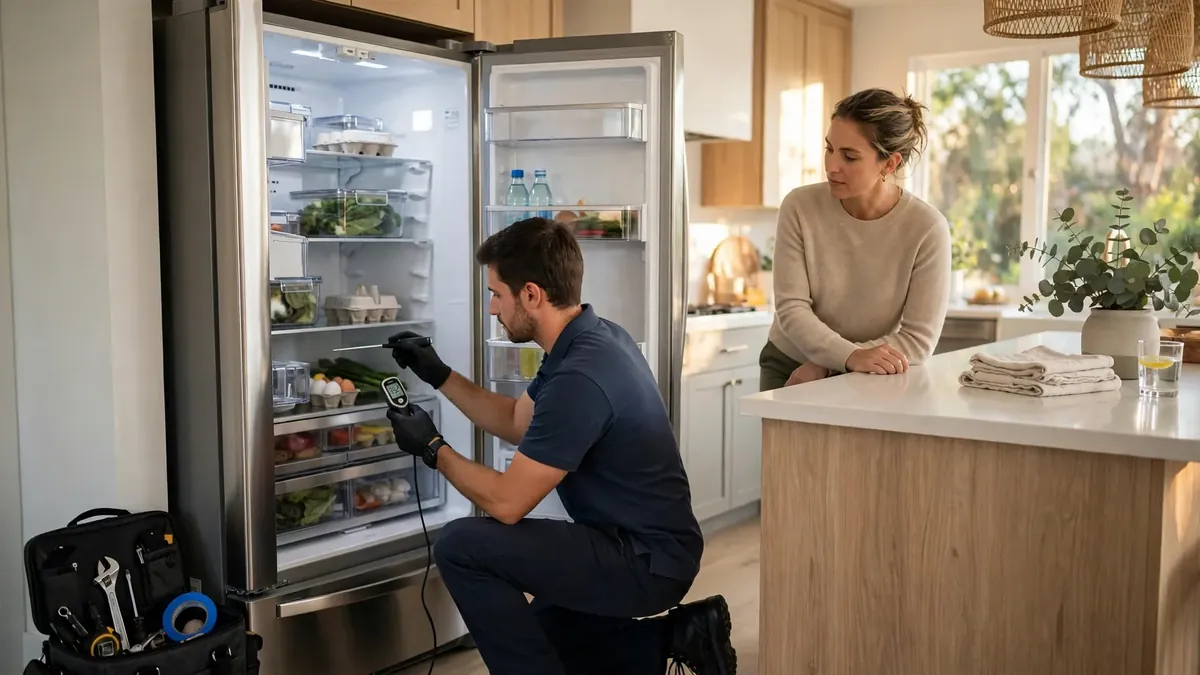
What Affects Refrigerator Repair in Manhattan Beach
Manhattan Beach has many rebuilt homes near the ocean.
Torrance, Gardena, Hawthorne, Lawndale and Carson are mostly postwar neighborhoods built in the 1940s and 1950s. Water is hard across the South Bay.
Manhattan Beach, Hermosa Beach, Redondo Beach and El Segundo sit along the coast, with mild weather and salt air.
What that means for your refrigerator: Near the coast, condenser coils and door hinges corrode faster, and damp air makes worn door gaskets frost up quickly. With hard water, regular cleaning of filters and screens prevents many problems before they start.
SCE serves most of Manhattan Beach. Tripped breakers and GFCI outlets are easy to overlook, so check both before deciding your refrigerator has a failed part.
The Refrigerator Repairs Most Often Needed in Manhattan Beach
Symptoms overlap, so it's worth skimming two or three sections before deciding which one matches your refrigerator.
Refrigerator Not Cooling? Repair in Manhattan Beach
A stuck damper door keeps freezer air from flowing into the refrigerator section. Too much food against the vents chokes off circulation inside the box. Marginal parts tend to fail when kitchen temperatures climb. When performance drops during the hottest hours, heat rejection is the first suspect. A thermistor that reads the wrong temperature can make the control board think the box is already cold.
In homes in the South Bay, this comes up often.
A few safe steps to try: Write down when the warming started and whether anything changed, like a move or a power outage. Clear a few inches around the vents inside the fridge and give it 24 hours to recover.
- Milk spoiling before its date
- Clicking every few minutes from the back
- Fresh-food section above 40°F
Refrigerator Ice Maker Repair in Manhattan Beach
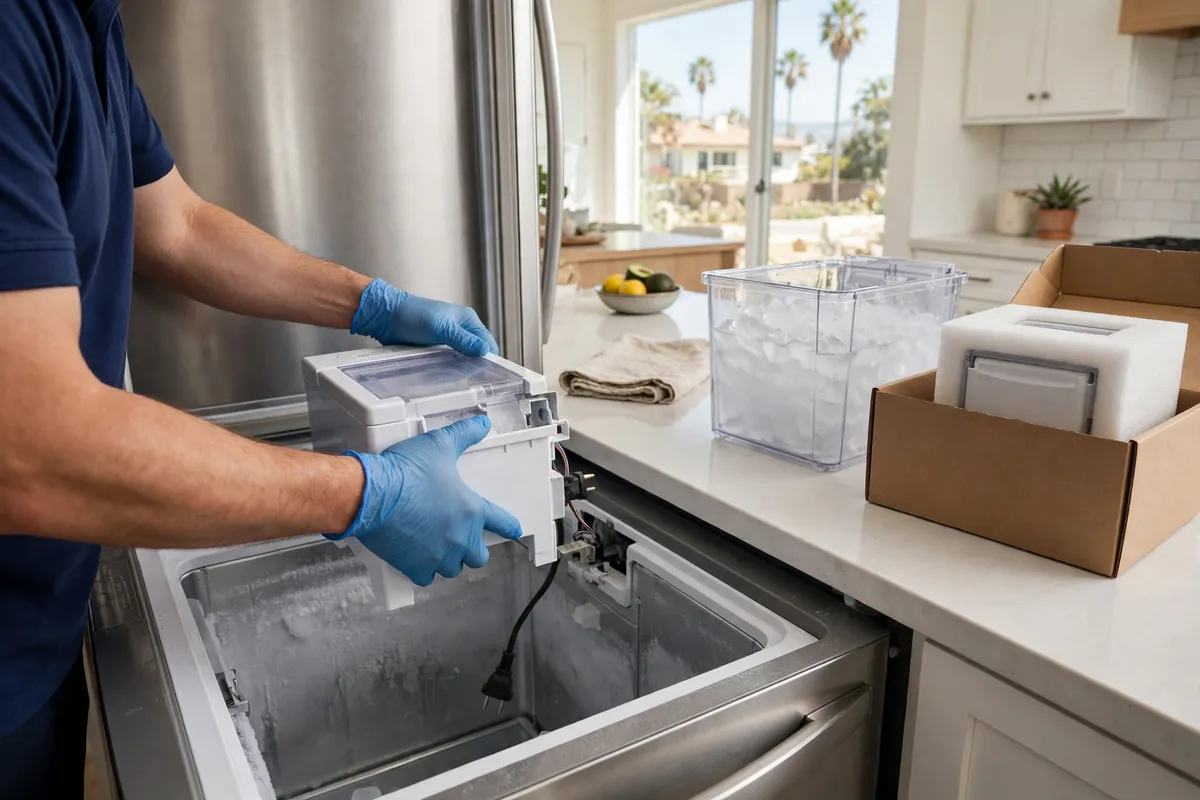
The fridge's inlet valve can partly clog with sediment and starve the ice maker. If nothing happens at all, it may be the module or the arm being switched off. If the freezer is warmer than about 10°F, the ice maker may cycle slowly or stop entirely. A bad-tasting or cloudy batch usually points to an old filter or stale ice. Door-mounted ice makers in French-door fridges depend on a separate fan and seal.
For Manhattan Beach homes, this is often the first thing a pro checks.
Easy checks for Manhattan Beach homeowners: Remove the bin and clear stuck ice from the chute. Empty the ice bin and break up any clumps blocking the auger.
- Buzzing from the back with no water flowing
- Small, hollow or misshapen cubes
- Ice clumped into one block
Leaking Refrigerator Repair in Manhattan Beach
A cracked fill tube or loose fitting on the ice maker can drip behind the fridge. Leaks that appear only after the dispenser is used point to the dispenser line or valve. A slow leak can damage flooring and subfloor long before you notice a puddle. Older plastic tubing tends to crack when the fridge is pulled out for cleaning. Water under the crisper drawers usually comes from a clogged defrost drain at the back of the freezer.
Quick things to rule out: Shut the valve feeding the ice maker until the leak is fixed. Clear the defrost drain with warm water and a turkey baster if you can reach it.
- Ice in the drain area
- Dripping after using the dispenser
- Wet spots behind the fridge
Refrigerator Door Gasket Replacement in Manhattan Beach
A gasket that has rolled inward won't seal even if it looks fine. Replacing a gasket is usually a modest repair compared with the cost of a struggling fridge. A door that sags won't seal even with a new gasket, so hinge alignment is part of the check. Front legs set slightly higher help the doors swing shut. Leaky seals cost money every hour the fridge runs.
What you can check yourself: Check that nothing on the door shelves is pushing the door open. Clean the gasket folds and dry them to remove sticky residue.
- The fridge runs longer than usual
- Gasket feels hard or cracked
- Frost builds up near the door
Refrigerator Condenser Fan Repair in Manhattan Beach
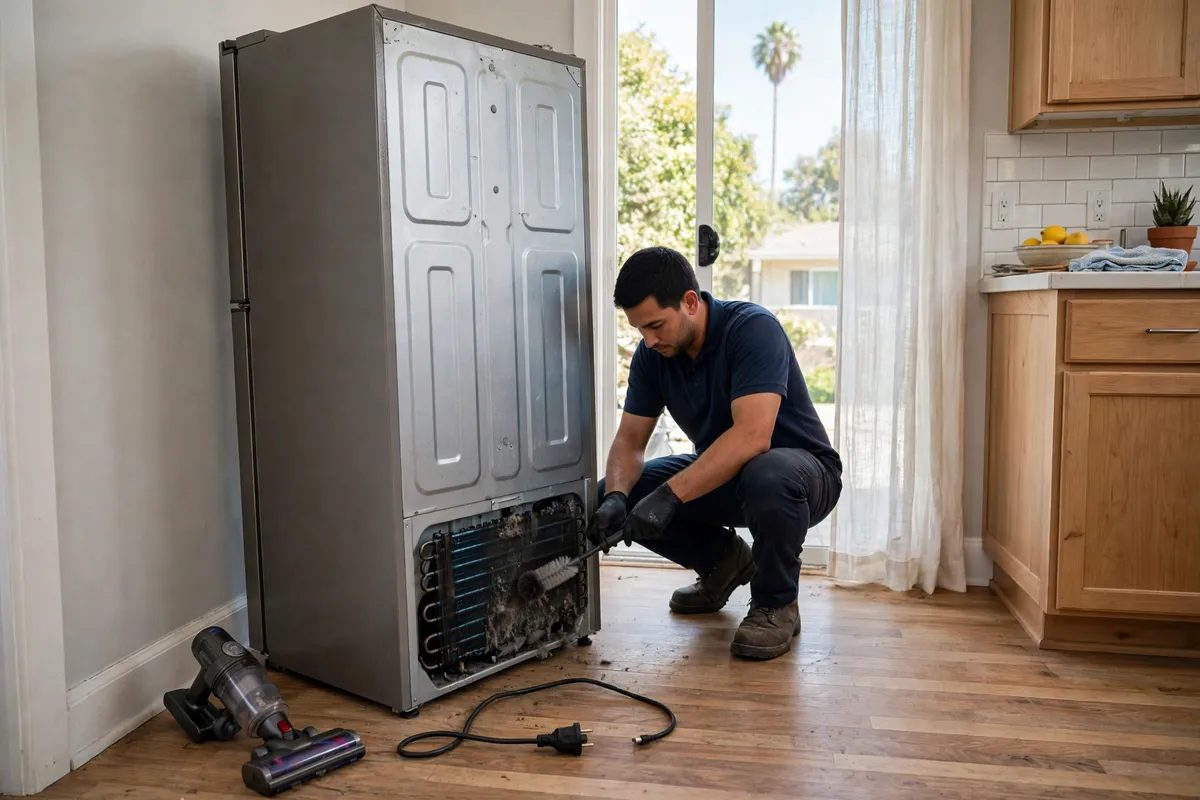
A slowing condenser fan reduces airflow long before it stops spinning. An overheated compressor may shut itself off on a thermal overload and restart later. In kitchens, cooking grease mixes with dust and makes coils harder to clean. Some models route condenser tubing through the side walls, so warm sides aren't always a problem. Clean coils mean shorter run times and lower energy use.
Try this first: Leave at least an inch of space behind and above the fridge so heat can escape. Listen for a rattle or scraping from the fan area at the bottom back.
- The kick plate blows hot air
- Thick dust on the bottom grille
- The compressor area is hot to the touch
Noisy Refrigerator Fan Repair in Manhattan Beach
Behind the freezer's back panel, the evaporator fan moves air over the cold coils and into the fresh-food section. A clicking or chirping noise from the freezer often comes from a fan blade hitting ice. On newer models, the main board times the defrost cycle. If the defrost heater, thermostat or control fails, the coils ice over, airflow stops and the fridge warms even though the freezer stays cold. When defrost parts fail, the decline is slow: cooling fades over days.
Worth checking in a few minutes: Note whether the problem returns a week or two after a manual defrost. Look for a thick layer of frost on the back panel inside the freezer.
- Clicking or buzzing from the freezer
- Ice buildup around the fan
- Frost returns after defrosting
Other refrigerator problems
Less common in Manhattan Beach, but local pros fix these as well: compressor and start relay diagnosis; garage refrigerator problems.
What to Note Before Calling
- Look for frost on the freezer's back wall.
- Move perishables to a cooler.
- Check whether the condenser fan near the compressor is spinning.
- Check the temperature setting.
What to Expect From the Visit
- Describe the problem. Mention any noises, smells or error codes, plus the model number.
- Diagnosis. Expect testing with a meter and a look at the parts tied to the symptom.
- Estimate. You get an estimate for parts and labor before work begins.
- Repair and test. The failed part is replaced and the appliance runs a full test.
Manhattan Beach Refrigerator Repair FAQ
How long can food stay in a warm refrigerator?
Perishable food shouldn't be held above 40°F for more than two hours.
Is it worth repairing a refrigerator in Manhattan Beach?
It depends on the age and the part. Fans, relays, gaskets and defrost parts are usually worth fixing; sealed-system repairs on older fridges may not be. Salt air speeds corrosion on the condenser and hinges of refrigerators in garages or near open doors.
Why does my refrigerator click but not run?
For a fridge past its prime, a new compressor may not be worth the cost. Variable-speed compressors depend on an inverter board, which is tested separately.