Local Conditions That Matter for Refrigerator Repair in La Grange
Many households keep second refrigerators or chest freezers in garages, which struggle in summer heat. Groundwater here is hard, and many rural homes rely on wells.
Modesto Irrigation District and Turlock Irrigation District provide electricity in much of the county instead of PG&E.
What that means for your refrigerator: Hot weather shortens the life of motors, relays and controls, so problems often show up in the warmest months. Mineral scale builds up quietly on screens, valves and heating parts, so performance drops gradually rather than all at once.
The Refrigerator Repairs Most Often Needed in La Grange
Each section below covers one specific repair, the parts involved and the signs that point to it.
Refrigerator Not Cooling? Repair in La Grange
A stuck damper door keeps freezer air from flowing into the refrigerator section. Fridges often show weakness during the first hot week of the year, when every part works harder. A packed fridge can't circulate air, so pockets of warmth form. A fridge that cools at night but not in the afternoon is often struggling to reject heat. Refrigerant problems are possible but are normally the last thing a technician suspects.
In homes in Stanislaus County, this comes up often.
Easy checks for La Grange homeowners: Write down when the warming started and whether anything changed, like a move or a power outage. Listen near the back for the condenser fan and the compressor's hum; silence from both points to power or controls.
- Fresh-food section above 40°F
- Condensation on shelves
- Milk spoils before its date
Ice Maker Repair in La Grange
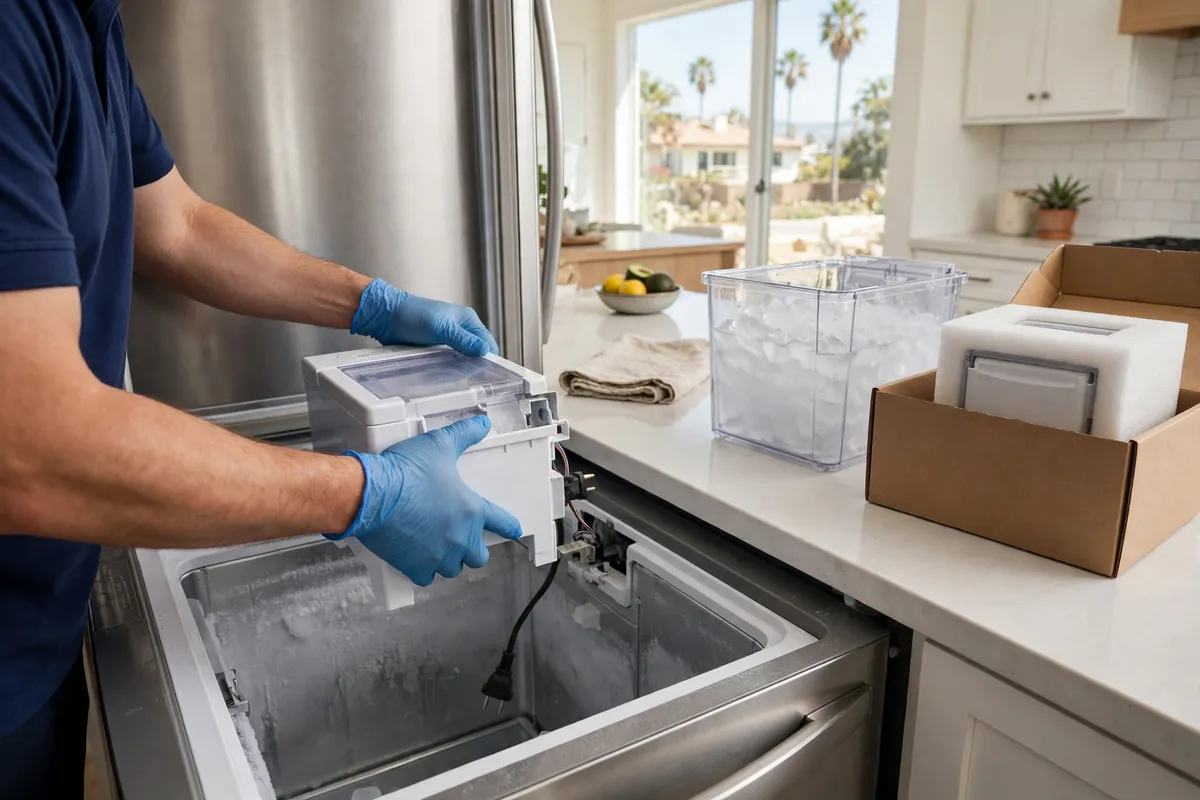
A water inlet valve that's weak or clogged reduces the fill and leads to small cubes. Air in the line after a filter swap usually clears after running a few glasses of water. Ice makers in the door rely on a dedicated duct that can frost over. Stale-tasting cubes are usually a filter or storage issue, not a broken part. If the freezer is warmer than about 10°F, the ice maker may cycle slowly or stop entirely.
If you're in La Grange, start your troubleshooting here.
Try this first: Make sure the freezer is cold enough before blaming the ice maker. Make sure the ice maker's arm or switch is in the on position.
- Ice clumps together
- Ice tastes stale
- No ice for more than a day
Refrigerator Water Leak Repair in La Grange
A slow leak can damage flooring and subfloors before you notice it, especially under laminate and wood. Moving a fridge can kink or crack an old plastic supply line. Water under the fridge can warp flooring without ever pooling visibly. Drips after each use of the water dispenser point to its line or valve. Food bits and slime build up in the defrost drain over time.
What you can check yourself: Lay paper towels under and behind the fridge to track the leak's source. Turn off the water supply to the fridge if the leak is coming from the line.
- Puddle in front of the fridge
- Water dripping from the dispenser
- Ice in the drain area
Noisy Refrigerator Fan Repair in La Grange
Chirping from the freezer often means ice is building around the fan. A control board that skips defrost causes the same frost buildup as a failed heater. Frost buildup from a failed defrost heater worsens a little each day. A manual defrost buys time, not a repair. If the evaporator fan stops, the freezer coil keeps getting cold but the fridge section warms up.
What you can check yourself: Note whether the problem returns a week or two after a manual defrost. Track whether cooling fades again after melting the frost.
- Weak airflow from the freezer vents
- The fridge warms but the freezer stays cold
- Frost returns after defrosting
Condenser Coil Cleaning and Fan Repair in La Grange
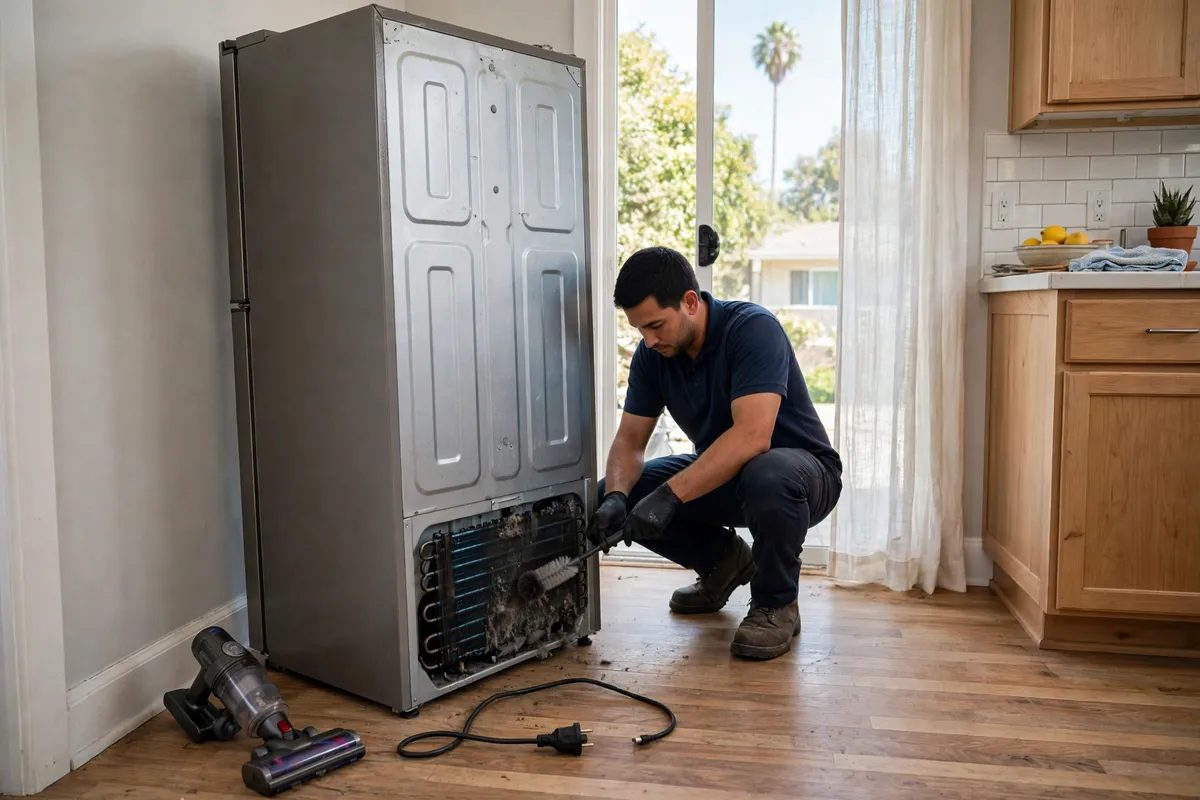
Coils behind the fridge collect grease in kitchens near the range. A compressor that keeps tripping its overload is often a symptom of dirty coils. A slowing condenser fan reduces airflow long before it stops spinning. The condenser is the fridge's radiator; when it can't release heat, everything downstream works harder. Warm side panels can be normal on fridges with built-in wall condensers.
What you can check yourself: Listen for a rattle or scraping from the fan area at the bottom back. Unplug the fridge, remove the kick plate and vacuum the coils with a brush attachment.
- Fridge cools at night but not in the afternoon
- The compressor area is hot to the touch
- The kick plate area is thick with dust
Refrigerator Compressor and Start Relay Repair in La Grange
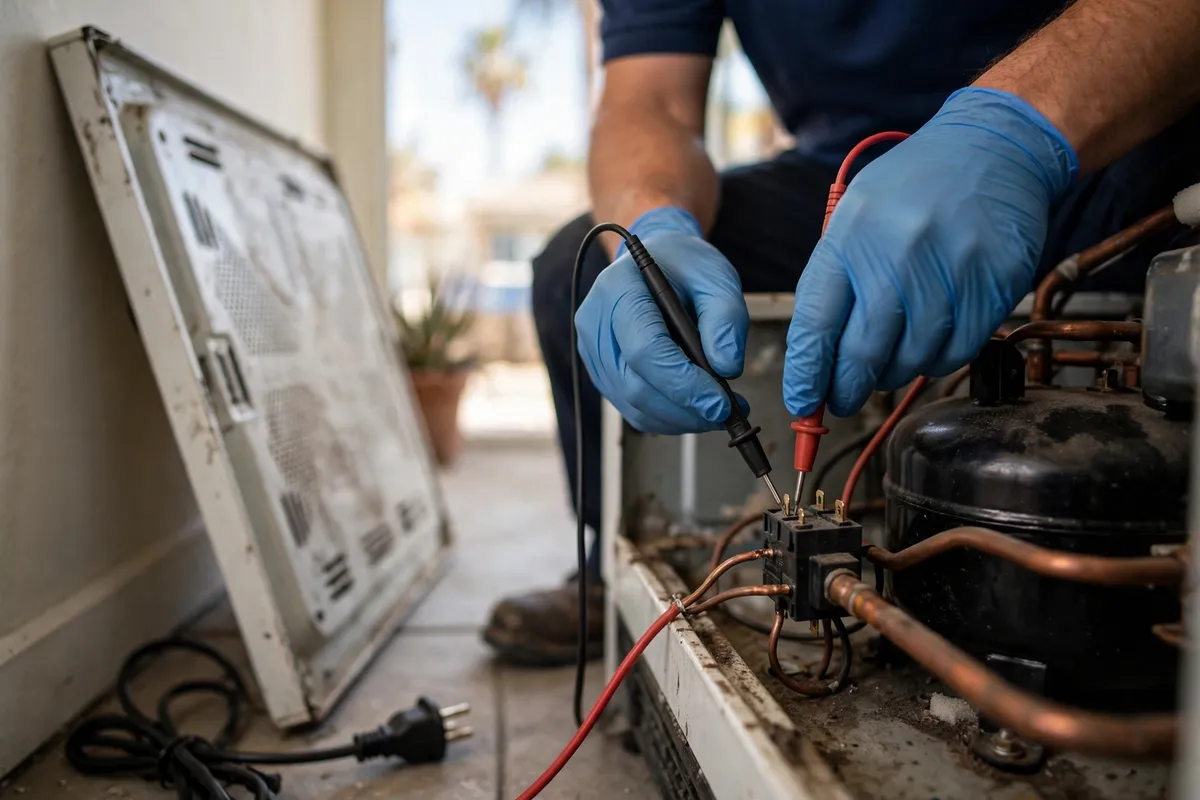
When the compressor never rests, check the condenser side first. The small overload device on the compressor can fail on its own. On older units, a compressor failure usually tips the decision toward replacement. Voltage problems from a shared circuit or extension cord can make a compressor struggle to start. A compressor that hums but never starts may be overheating or struggling against a failed relay.
Safe checks before you call: Clean the condenser coils before assuming the compressor is failing. Check whether the outlet works with another device.
- A humming that never turns into steady running
- Lights dim when the fridge starts
- The compressor is too hot to touch
Other refrigerator problems
A refrigerator can also need help with these, which are less frequent in La Grange: garage refrigerator problems; door gasket replacement.
Quick Checks Before You Call
- Find the model number inside the fridge.
- Move perishables to a cooler.
- Check the temperature setting.
- Look for frost on the freezer's back wall.
How the Repair Usually Goes
- Describe the problem. Mention any noises, smells or error codes, plus the model number.
- Diagnosis. The likely parts are checked one by one until the cause is confirmed.
- Estimate. Before work starts, ask for the total including parts and labor.
- Repair and test. Once the repair is done, the appliance is tested under normal use.
La Grange Refrigerator Repair FAQ
What temperature should my refrigerator be in La Grange?
Aim for 37°F in the fresh-food section and 0°F in the freezer. An appliance thermometer in a glass of water gives a truer reading than the air. Hard water shortens the life of the ice maker's inlet valve and fill tube and clogs refrigerator water filters faster, so ice and dispenser problems are common here.
Why does my garage fridge stop working in winter?
Garage outlets are often on GFCI circuits that can trip and shut the fridge off unnoticed. In a hot garage, the compressor runs constantly; in a cold one, the fridge may not run enough to keep the freezer cold.
Why is my fridge warm but the freezer cold?
That usually points to an airflow problem: a failed evaporator fan, a stuck damper or a defrost failure that has iced over the coil. It's rarely the compressor.