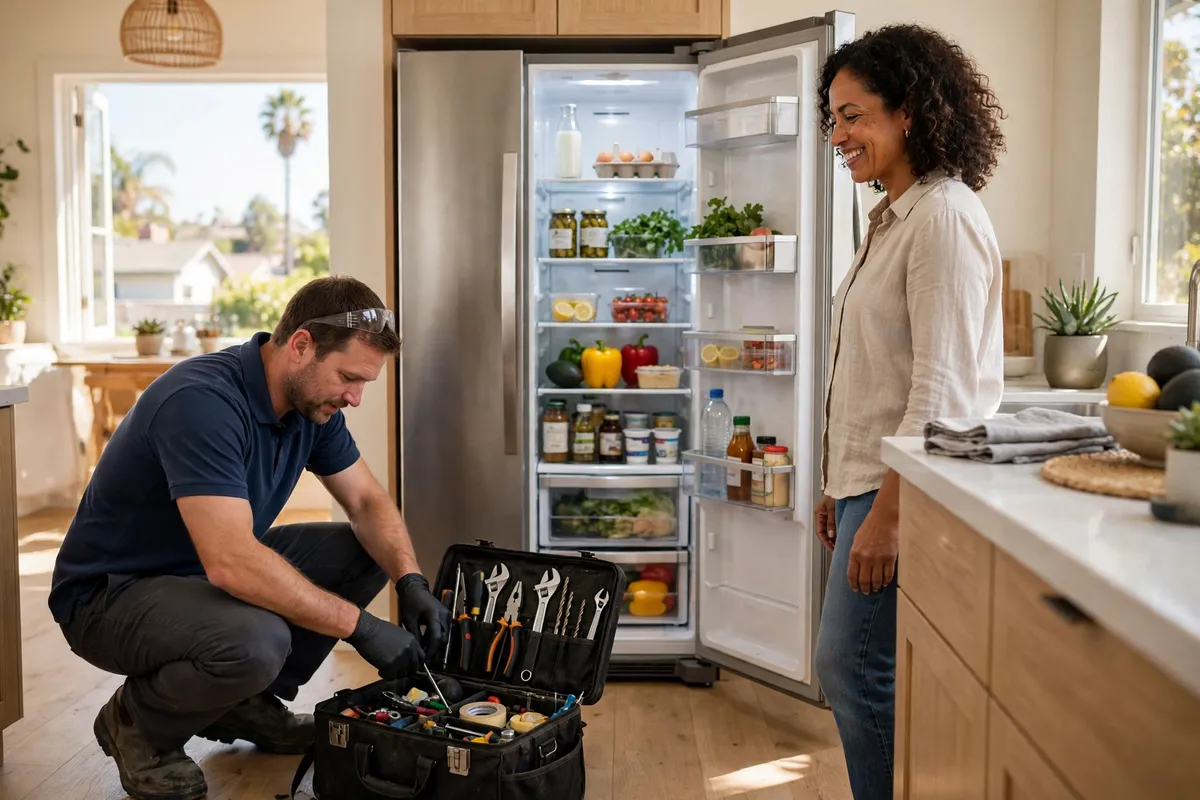
What Affects Refrigerator Repair in Ivanhoe
Groundwater is hard and the main water source for most communities. In 2023, heavy snowmelt refilled the long-dry Tulare Lake bed, flooding farmland around Corcoran.
Visalia, Tulare, Hanford, Porterville and Lemoore sit in the southern San Joaquin Valley, with summer highs often above 100°F.
What that means for your refrigerator: Long stretches of heat make any refrigerator with a compressor, fan or motor work harder, so parts that would last years in a mild climate wear out sooner here. Hard water leaves deposits that make parts work harder and wear out sooner.
Common Refrigerator Repairs in Ivanhoe Homes
Read the section that matches your symptom; each one covers the cause, what to check and when to call.
Warm Refrigerator Repair in Ivanhoe
Before calling, check the easy things: the temperature dial hasn't been bumped, the door closes fully, and nothing blocks the vents inside. If those are fine and the box is still above about 40°F, food safety becomes the priority. Overpacking blocks the airflow paths that the cooling system depends on. If the air damper sticks closed, cold air never reaches the lower compartment. Marginal parts tend to fail when kitchen temperatures climb. When performance drops during the hottest hours, heat rejection is the first suspect.
If you're in Ivanhoe, start your troubleshooting here.
Easy checks for Ivanhoe homeowners: Move items away from the vent at the top of the fresh-food section. Check that the temperature dial wasn't bumped; 37°F for the fridge and 0°F for the freezer are typical targets.
- Milk spoils before its date
- Fresh-food section above 40°F
- Water bottles sweat inside the fridge
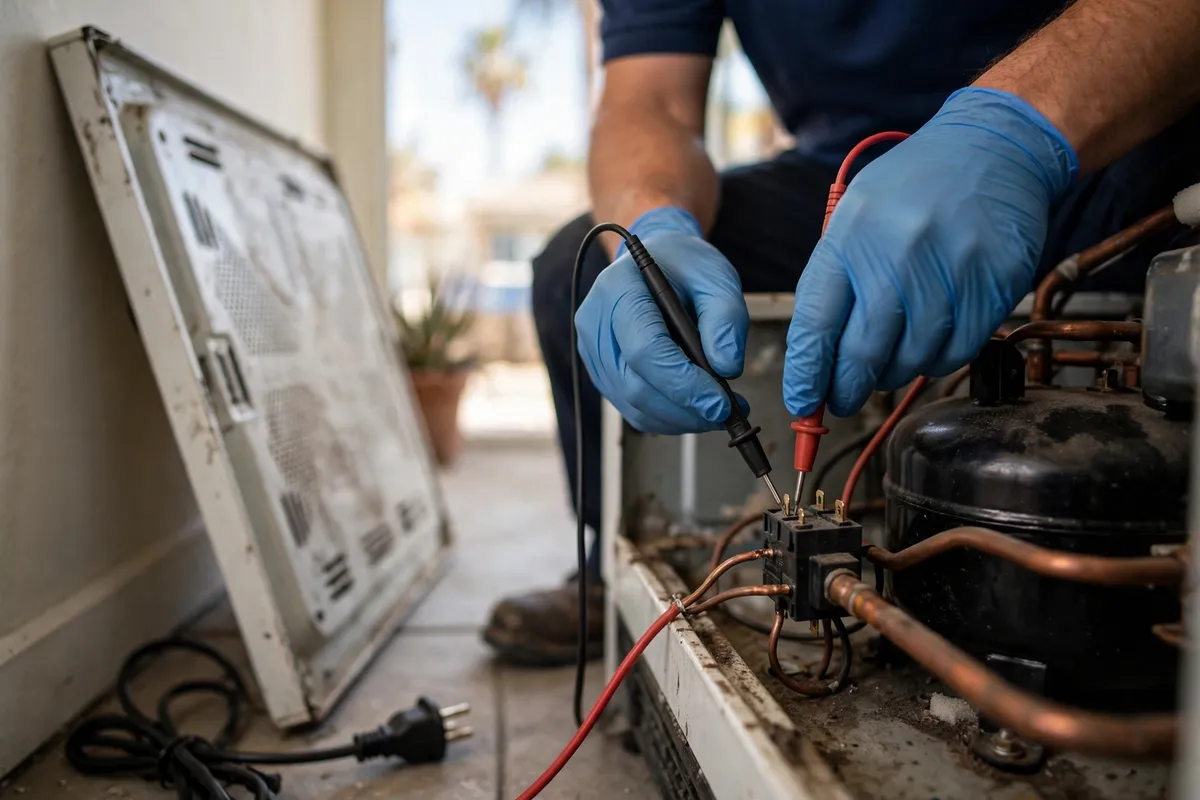
Refrigerator Ice Maker Repair in Ivanhoe
A water inlet valve that's weak or clogged reduces the fill and leads to small cubes. If you hear the ice maker try to fill but get no water, it's often the valve or a frozen fill tube. Clumped ice points to temperature swings in the freezer. After a filter change, trapped air can make the dispenser sputter. A technician can test the inlet valve and module and tell you whether the module is cheaper to replace than to repair.
In homes in Tulare and Kings counties, this comes up often.
What you can check yourself: Check the freezer temperature; the ice maker needs the freezer near 0°F. Make sure the ice maker's arm or switch is in the on position.
- No ice for more than a day
- Water dispenses slowly
- Ice clumps together
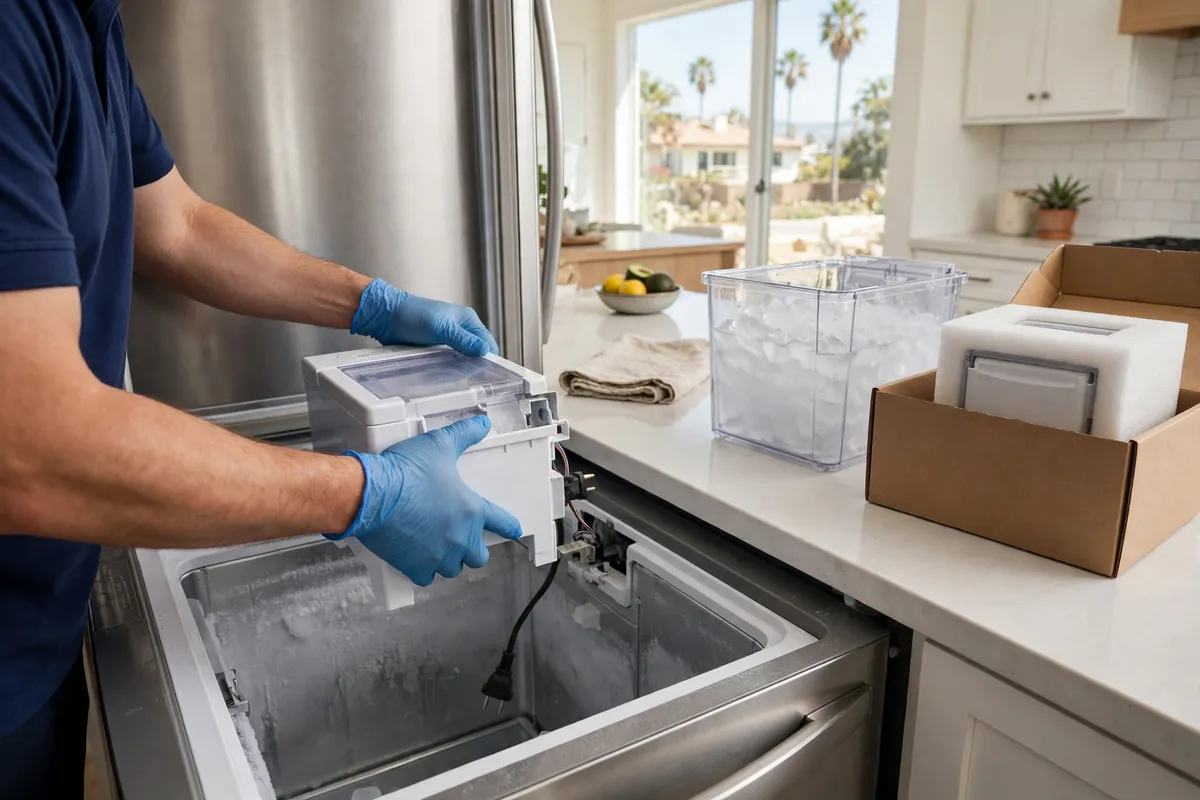
Refrigerator Water Leak Repair in Ivanhoe
Food bits and slime build up in the defrost drain over time. A worn compression fitting on the water line can drip slowly for weeks. Turn off the water supply to the fridge if you can find the valve, and wipe up the water so you can see whether it comes back at the front or the back. Puddles at the front can come from the water line to the dispenser or ice maker. A drain pan that's cracked or out of place can also let defrost water reach the floor.
What you can check yourself: Shut the valve feeding the ice maker until the leak is fixed. Make sure the fridge is level side to side and tilted slightly back so doors close fully.
- Ice forms on the freezer floor
- Wet spots behind the fridge
- Wet floor behind the fridge
Evaporator Fan and Defrost Repair in Ivanhoe
A fan blade striking ice makes a distinctive chirp. Melting the ice helps for a while, but the problem comes back. On newer models, the main board times the defrost cycle. A defrost thermostat or heater failure lets frost build up gradually over several days. Replacing the fan motor or defrost parts usually costs far less than a sealed-system repair, and a technician can test the heater, thermostat and control board to find which part failed.
Safe checks before you call: Open the freezer and listen; the fan should run when the door switch is pressed in. Press and hold the freezer door switch and listen for the fan.
- Fridge cools again after a manual defrost
- Frost on the freezer's back wall
- Chirping from the freezer
Refrigerator Condenser Fan Repair in Ivanhoe
Grease from nearby cooking helps lint stick to the coils. When heat can't escape, the compressor may trip its overload and cycle off. Shedding pets can blanket the coils in a matter of months. Clean coils mean shorter run times and lower energy use. A slowing condenser fan reduces airflow long before it stops spinning.
Try this first: Make sure the back of the fridge isn't pressed against the wall. Look behind the unit for a matted layer of lint near the compressor compartment.
- Fridge cools at night but not in the afternoon
- Thick dust on the bottom grille
- Very warm air at the bottom of the fridge
Second Refrigerator in the Garage: Repair in Ivanhoe
Garage GFCI outlets trip easily, so check them if the fridge is warm. Nests and chewed wires show up more often in garage fridges. A fridge in a hot garage is like running an air conditioner with the windows open. A second fridge that's mostly empty cycles more and holds temperature less steadily. Most household fridges are designed for indoor temperatures, roughly 55°F to 90°F.
Try this first: Fill empty shelves with water bottles to add thermal mass. Place jugs of water in a mostly empty fridge to stabilize temperatures.
- Freezer thaws in cold weather
- The garage outlet trips
- Sweating on the outside of the cabinet
Other refrigerator problems
Pros serving Ivanhoe also handle these less common problems: compressor and start relay diagnosis; door gasket replacement.
Quick Checks Before You Call
- Look for frost on the freezer's back wall.
- Check the temperature setting.
- Listen for the compressor and fans.
- Put an appliance thermometer on the middle shelf overnight.
How the Repair Usually Goes
- Describe the problem. Have the model number ready and explain what changed and when.
- Diagnosis. A pro confirms the cause by testing parts rather than guessing.
- Estimate. Ask for the total cost including parts and labor before approving the repair.
- Repair and test. After the repair, the appliance is run to confirm it works.
Ivanhoe Refrigerator Repair FAQ
Is it worth repairing a refrigerator in Ivanhoe?
It depends on the age and the part. Fans, relays, gaskets and defrost parts are usually worth fixing; sealed-system repairs on older fridges may not be. On the hottest days, a refrigerator in a warm kitchen or garage may run nonstop; clean coils and a working condenser fan make the difference.
Is a clicking fridge a compressor problem?
A compressor that hums but never starts may be overheating or struggling against a failed relay. Linear and inverter compressors in newer fridges use electronic controls that are diagnosed differently.
How long can food stay in a warm refrigerator?
Perishable food shouldn't be held above 40°F for more than two hours.