Local Conditions That Matter for Refrigerator Repair in Hood
Davis is home to UC Davis, and many homes are rented to students, which means heavy use of washers, dryers and dishwashers. Delta towns such as Clarksburg, Courtland, Walnut Grove, Isleton and Ryde sit along levees on the Sacramento River.
Groundwater in much of Yolo County is hard, though Davis and Woodland switched to Sacramento River surface water in 2016.
What that means for your refrigerator: Long stretches of heat make any refrigerator with a compressor, fan or motor work harder, so parts that would last years in a mild climate wear out sooner here. With hard water, regular cleaning of filters and screens prevents many problems before they start.
Electricity in Hood typically comes through PG&E. When a refrigerator acts strangely after a storm or a planned shutoff, the timing is a useful clue for whoever diagnoses it.
Student rentals benefit from a quick appliance check between leases.
The Refrigerator Repairs Most Often Needed in Hood
Each section below covers one specific repair, the parts involved and the signs that point to it.
Warm Refrigerator Repair in Hood
If the air damper sticks closed, cold air never reaches the lower compartment. Marginal parts tend to fail when kitchen temperatures climb. Above 40°F, bacteria multiply quickly, so time matters once the fridge warms. Sealed-system leaks are less common than people fear and usually come after fan, relay and defrost checks. Too much food against the vents chokes off circulation inside the box.
Pros serving Hood see this one regularly.
What you can check yourself: Put an appliance thermometer in a glass of water on the middle shelf; it gives a truer reading than the air. Hold a hand near the vent inside the fridge to see whether cold air is moving.
- Drinks never feel properly cold
- The freezer is fine but the fridge is warm
- Butter feels soft on the door shelf
Ice Maker Repair in Hood
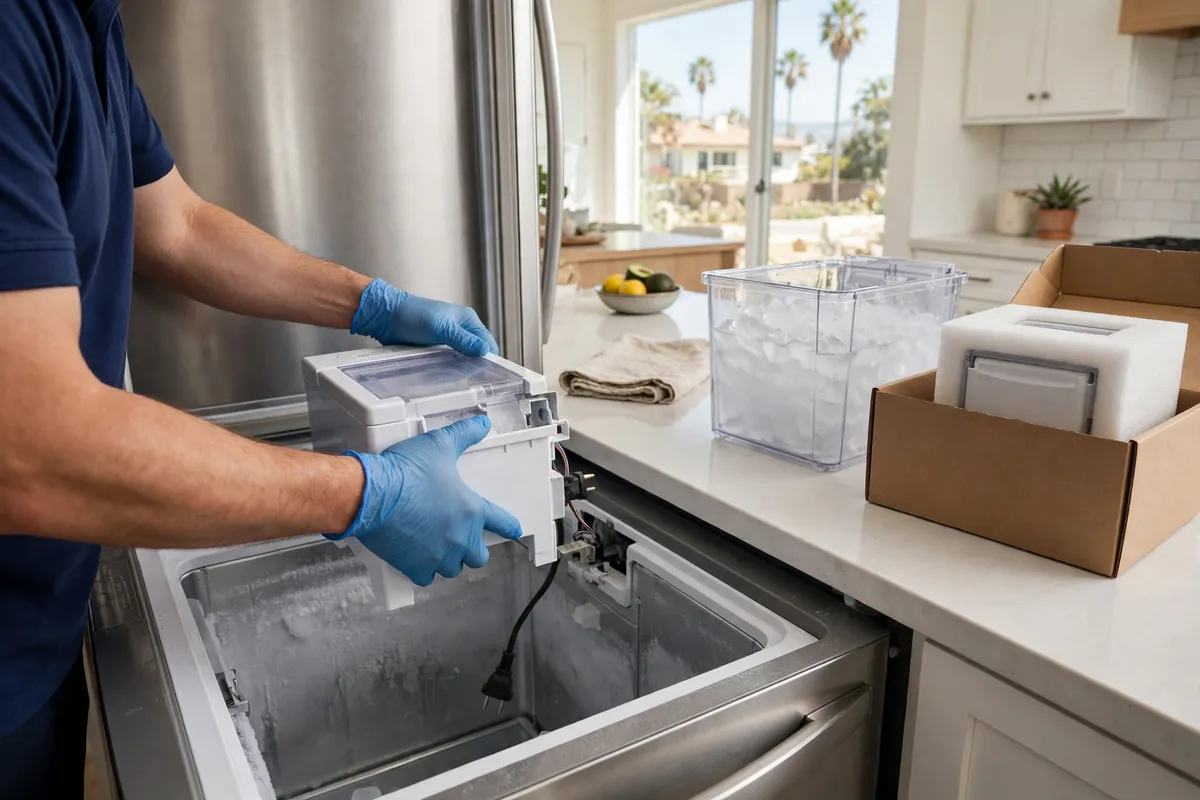
If the bin-full sensor is blocked by ice, production pauses. Clumped ice points to temperature swings in the freezer. Off-tasting ice often comes from an overdue filter or ice that has sat too long. After a filter change, trapped air can make the dispenser sputter. An ice maker is a timed cycle: fill, freeze, harvest. If any step stalls, production stops.
Around Hood, this problem accounts for a good share of refrigerator calls.
Try this first: Empty the ice bin and break up any clumps blocking the auger. Make sure the freezer is cold enough before blaming the ice maker.
- Ice clumps together
- No ice for more than a day
- Small, hollow or misshapen cubes
Noisy Refrigerator Fan Repair in Hood
A fan blade striking ice makes a distinctive chirp. When defrost parts fail, the decline is slow: cooling fades over days. A manual defrost buys time, not a repair. The evaporator fan usually stops when the freezer door opens, so test it with the door switch pressed. On newer models, the main board times the defrost cycle.
Quick things to rule out: Shine a light through the freezer vents to look for frost on the coil. Look for a thick layer of frost on the back panel inside the freezer.
- Frost on the freezer's back wall
- Clicking or buzzing from the freezer
- Fresh-food section warming slowly
Refrigerator Water Leak Repair in Hood
A worn compression fitting on the water line can drip slowly for weeks. Small leaks soak into wood and laminate floors quietly. A misplaced drain pan can spill water each time the fridge defrosts. Puddles at the front can come from the water line to the dispenser or ice maker. Moving a fridge can kink or crack an old plastic supply line.
Easy checks for Hood homeowners: Flush the freezer's drain opening gently with warm water. Shut the valve feeding the ice maker until the leak is fixed.
- Water dripping from the dispenser
- Ice in the drain area
- Dripping after using the dispenser
Refrigerator Compressor and Start Relay Repair in Hood
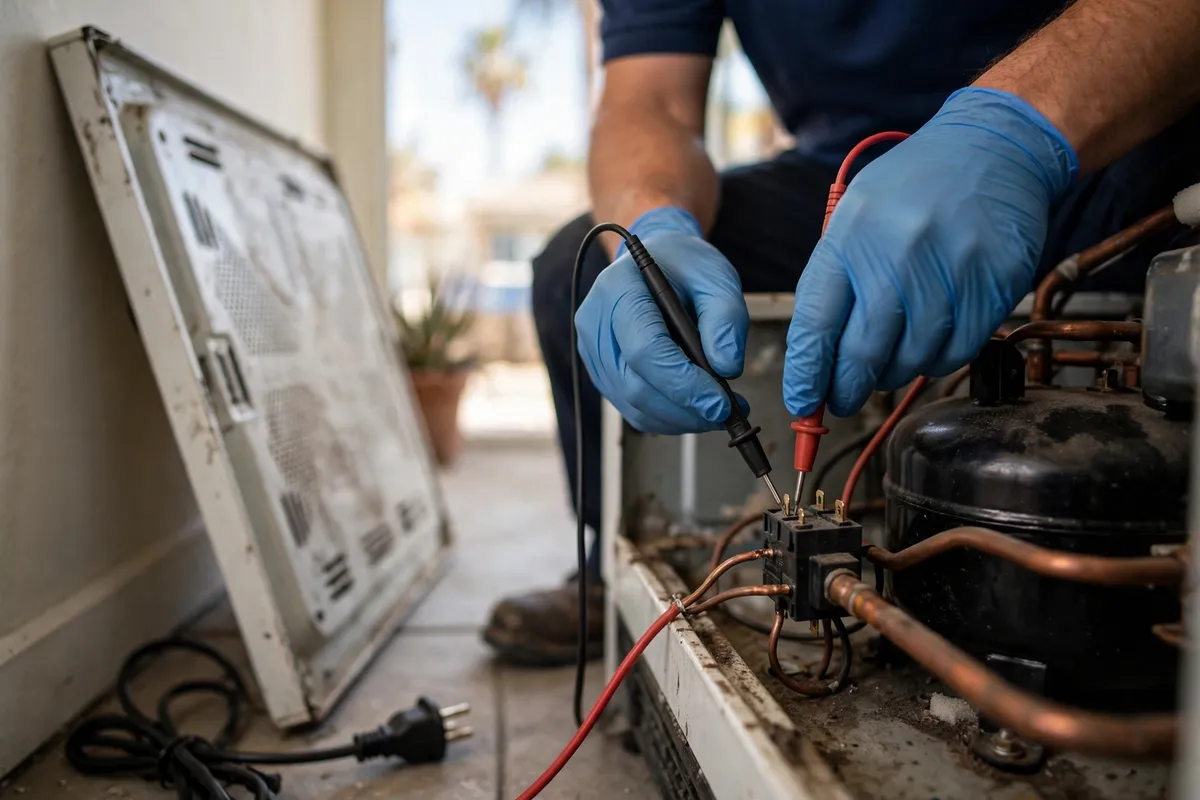
Power outages and surges can damage start relays and electronic control boards. On older units, a compressor failure usually tips the decision toward replacement. An overload protector can fail and stop the compressor even when the compressor is healthy. Relays are inexpensive compared with compressors, so testing the relay first can save a lot. Voltage problems from a shared circuit or extension cord can make a compressor struggle to start.
Quick things to rule out: Remove any extension cord and use a dedicated outlet. Feel whether the compressor area is unusually hot.
- Clicking from the back every few minutes
- No cooling after a power outage
- Lights dim when the fridge starts
Condenser Coil Cleaning and Fan Repair in Hood
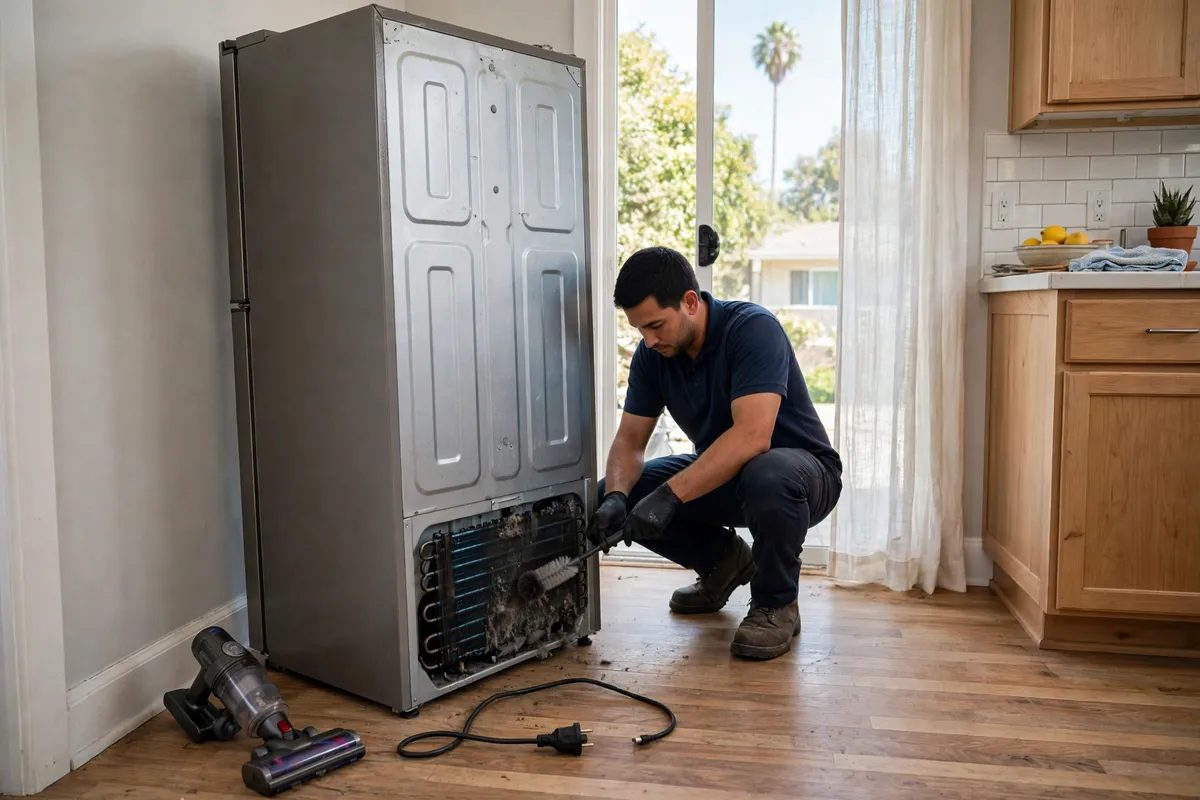
A slowing condenser fan reduces airflow long before it stops spinning. Dust and pet hair on the condenser coils act like a blanket, so the compressor runs longer to shed the same heat. Homes with dogs or cats tend to need coil cleaning twice as often. The condenser is the fridge's radiator; when it can't release heat, everything downstream works harder. A fridge pushed into a tight cabinet can't breathe, which shortens compressor life the same way dirty coils do.
Before booking a visit, check this: Notice any new buzzing near the kick plate when the compressor starts. Leave a small gap behind the fridge so warm air has somewhere to go.
- The kick plate blows hot air
- The kick plate area is thick with dust
- The fridge runs almost constantly
Other refrigerator problems
Pros serving Hood also handle these less common problems: garage refrigerator problems; door gasket replacement.
Quick Checks Before You Call
- Check the temperature setting.
- Move perishables to a cooler.
- Check whether the condenser fan near the compressor is spinning.
- Look for frost on the freezer's back wall.
How the Repair Usually Goes
- Describe the problem. Tell them what the appliance is doing, when it started and the model number from the label.
- Diagnosis. The technician tests the parts most likely to cause your symptom, starting with the simplest.
- Estimate. You should get a clear estimate for the repair before approving it.
- Repair and test. The part is replaced and the appliance is tested.
Hood Refrigerator Repair FAQ
What temperature should my refrigerator be in Hood?
Aim for 37°F in the fresh-food section and 0°F in the freezer. An appliance thermometer in a glass of water gives a truer reading than the air. Hard water shortens the life of the ice maker's inlet valve and fill tube and clogs refrigerator water filters faster, so ice and dispenser problems are common here.
Can I keep a regular fridge in the garage?
Garage GFCI outlets trip easily, so check them if the fridge is warm. Rodents like the warm space around a garage compressor.
Is it worth repairing a refrigerator in Hood?
It depends on the age and the part. Fans, relays, gaskets and defrost parts are usually worth fixing; sealed-system repairs on older fridges may not be. Hard water shortens the life of the ice maker's inlet valve and fill tube and clogs refrigerator water filters faster, so ice and dispenser problems are common here.