What Affects Refrigerator Repair in Herald
Most of Sacramento County gets electricity from SMUD, the Sacramento Municipal Utility District, rather than PG&E. Garages in Sacramento's heat can reach well above outdoor temperatures, which strains refrigerators and freezers kept there.
Sacramento summers are hot and dry, with many days above 100°F, followed by the evening 'Delta breeze' that cools things off.
What that means for your refrigerator: Long stretches of heat make any refrigerator with a compressor, fan or motor work harder, so parts that would last years in a mild climate wear out sooner here.
On 100°F+ days, a garage refrigerator may run constantly; keep it full, away from the garage door and with clean coils.
Common Refrigerator Repairs in Herald Homes
The problems below are ranked for Herald homes, with the most likely ones first and troubleshooting tips for each.
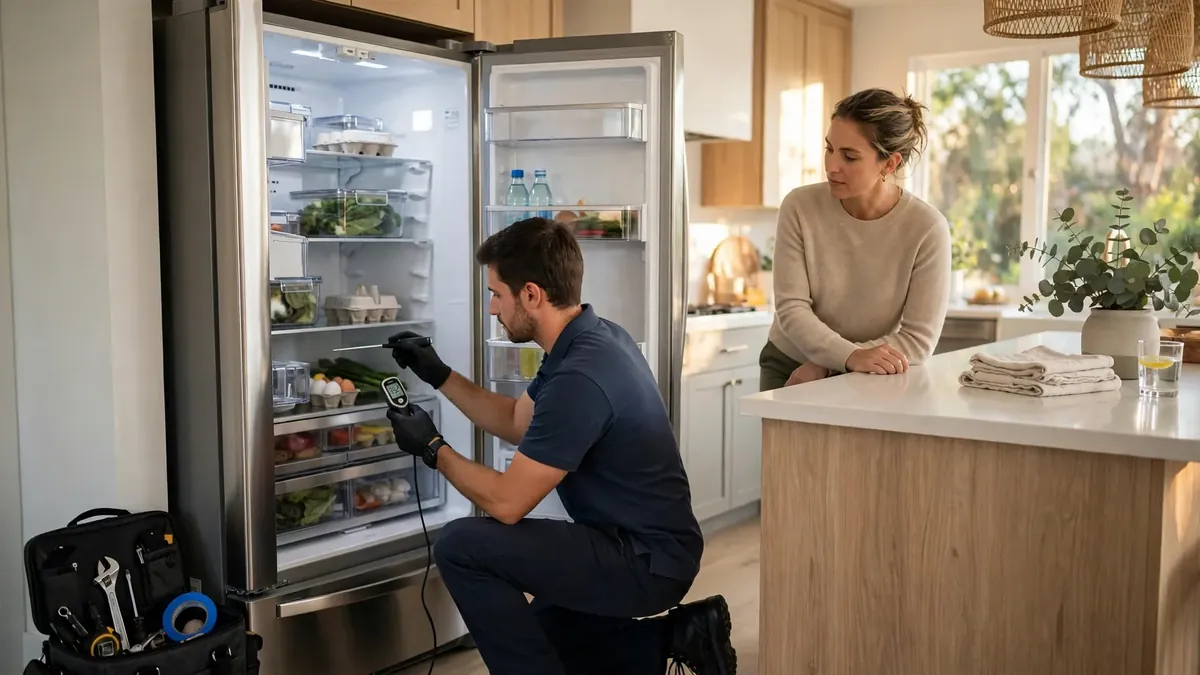
Warm Refrigerator Repair in Herald
If the air damper sticks closed, cold air never reaches the lower compartment. Marginal parts tend to fail when kitchen temperatures climb. Overpacking blocks the airflow paths that the cooling system depends on. Most warm fridges are fixed without touching the refrigerant at all. Above 40°F, bacteria multiply quickly, so time matters once the fridge warms.
Pros serving Herald see this one regularly.
Worth checking in a few minutes: Check whether the freezer vents near the back wall are blocked by bags or boxes. Unplug the fridge for five minutes and plug it back in to reset the control board.
- Milk spoiling before its date
- The fridge feels warm near the top shelf
- The freezer is fine but the fridge is warm
Condenser Coil Cleaning and Fan Repair in Herald
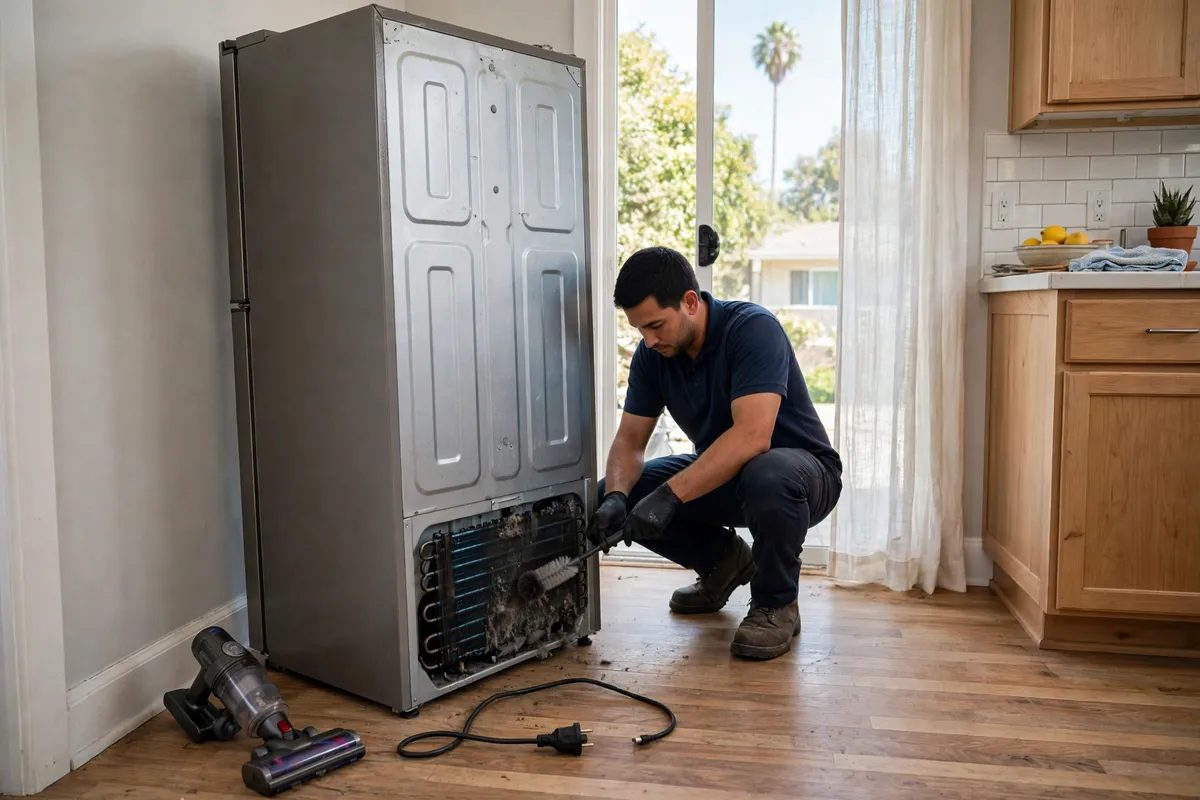
Grease from nearby cooking helps lint stick to the coils. Clean coils mean shorter run times and lower energy use. Some models route condenser tubing through the side walls, so warm sides aren't always a problem. When heat can't escape, the compressor may trip its overload and cycle off. Fan motors often weaken over months, so cooling fades rather than stopping overnight.
In homes in the Sacramento area, this comes up often.
Try this first: Notice any new buzzing near the kick plate when the compressor starts. Unplug the fridge, remove the kick plate and vacuum the coils with a brush attachment.
- The kick plate area is thick with dust
- The fridge runs almost constantly
- No fan noise from the back
Noisy Refrigerator Fan Repair in Herald
Ice on the fan shroud can make a loud scraping or chirping sound. When defrost parts fail, the decline is slow: cooling fades over days. The evaporator fan is the fridge's circulation system; without it, cold air stays trapped in the freezer. A manual defrost buys time, not a repair. Some fridges use a control board to schedule defrost, and a board fault can stop it.
Quick things to rule out: Press and hold the freezer door switch and listen for the fan. Open the freezer and listen; the fan should run when the door switch is pressed in.
- Frost on the freezer's back wall
- Chirping from the freezer
- Fresh-food section warming slowly
Second Refrigerator in the Garage: Repair in Herald
Some fridges include a garage heater kit that helps the thermostat run in cold weather. Adding water jugs helps an empty second fridge hold temperature. Some models are rated for garages, and many aren't. Rodents like the warm space around a garage compressor. A sunny garage wall can push the fridge past its design limits.
A few safe steps to try: Look for droppings or nesting material around the base. Check behind the kick plate for signs of rodents.
- The fridge runs nonstop in summer
- Sweating on the outside of the cabinet
- Freezer thaws in cold weather
Refrigerator Start Relay Repair in Herald
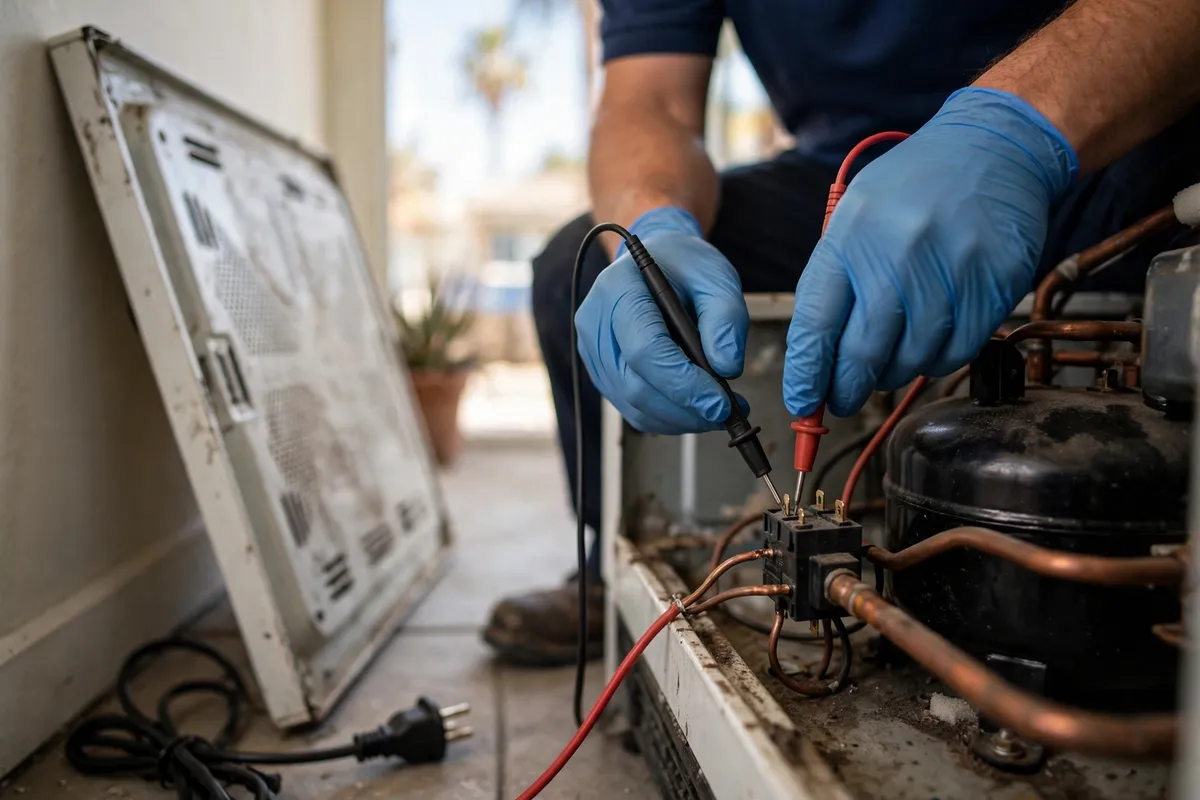
Power outages and surges can damage start relays and electronic control boards. On older units, a compressor failure usually tips the decision toward replacement. When the compressor never rests, check the condenser side first. Extension cords and overloaded circuits can starve the compressor at startup. The small overload device on the compressor can fail on its own.
Quick things to rule out: Listen at the back for a click every few minutes followed by silence. Time how long the fridge clicks off before trying to restart.
- Breaker trips when the fridge starts
- The compressor is too hot to touch
- Clicking every few minutes from the back
Refrigerator Door Seal Repair in Herald
A warm hair dryer on low can soften a stiff gasket so it seats again, if done gently. A gasket works like a magnet-backed weather strip: it has to sit flat all the way around to hold the cold in. Leaky seals cost money every hour the fridge runs. Front legs set slightly higher help the doors swing shut. Dark spots in the gasket are usually mildew rather than damage.
Try this first: Wipe the gasket with warm water and mild soap, then dry it fully. Adjust the front leveling legs so the doors close on their own.
- Dollar bill slides out easily
- Frost near the door
- Condensation on the gasket
Other refrigerator problems
Other issues local technicians see in Herald, though less often: ice maker repair; refrigerator water leak repair.
Before You Call: What to Check
- Check the temperature setting.
- Look for frost on the freezer's back wall.
- Find the model number inside the fridge.
- Listen for the compressor and fans.
What to Expect From the Visit
- Describe the problem. Have the model number ready and explain what changed and when.
- Diagnosis. The likely parts are checked one by one until the cause is confirmed.
- Estimate. Before work starts, ask for the total including parts and labor.
- Repair and test. The part is replaced and the appliance is tested.
Herald Refrigerator Repair FAQ
Why are my ice cubes small or hollow?
Air in the line after a filter swap usually clears after running a few glasses of water. Low water pressure is like a weak garden hose: the mold never fills, so cubes come out small or hollow.
How long can food stay in a warm refrigerator?
Perishable food shouldn't be held above 40°F for more than two hours.
What temperature should my refrigerator be in Herald?
Aim for 37°F in the fresh-food section and 0°F in the freezer. An appliance thermometer in a glass of water gives a truer reading than the air. On the hottest days, a refrigerator in a warm kitchen or garage may run nonstop; clean coils and a working condenser fan make the difference.