What Affects Refrigerator Repair in Hayward
Hayward has many postwar homes from the 1940s through the 1960s and buys its water from the SFPUC's Hetch Hetchy system.
Alameda is served by Alameda Municipal Power, its own city-owned electric utility, while most neighboring cities are on PG&E. The 1991 Oakland Hills firestorm destroyed thousands of homes, and the hills neighborhoods were largely rebuilt in the 1990s.
Older homes often have appliance circuits that predate today's loads, which can show up as tripped breakers when a dryer or range is replaced.
What that means for your refrigerator: Because the local water is soft, mineral buildup is rarely the main issue, which helps a technician rule things out faster.
Because PG&E is the usual electric provider in Hayward, any planned outage notice is worth keeping in mind; a refrigerator that fails right after one points to an electrical cause.
Refrigerator Problems Pros See in Hayward
The problems below are ranked for Hayward homes, with the most likely ones first and troubleshooting tips for each.
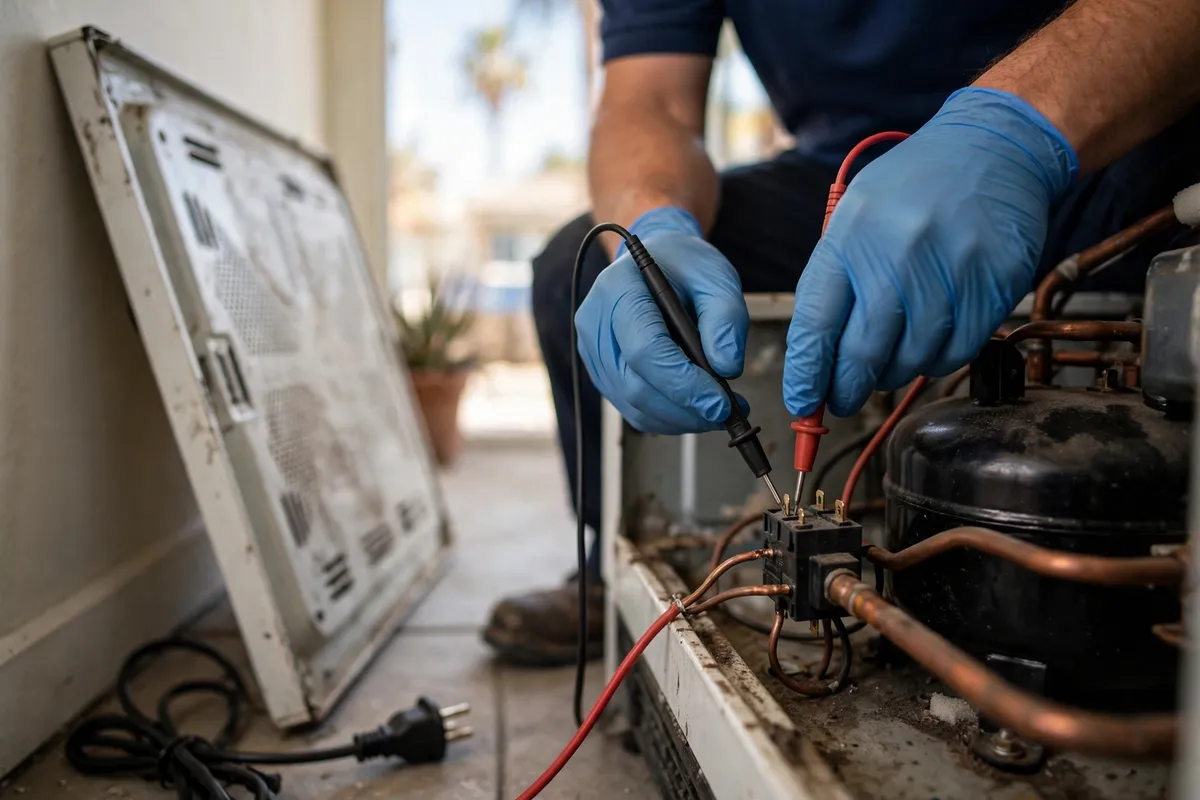
Warm Refrigerator Repair in Hayward
When the temperature sensor drifts, the board shuts the cooling off too early. Marginal parts tend to fail when kitchen temperatures climb. A packed fridge can't circulate air, so pockets of warmth form. Most warm fridges are fixed without touching the refrigerant at all. The damper between the freezer and fridge can stick shut, starving the fresh-food side of cold air.
In homes in the inner East Bay, this comes up often.
Worth checking in a few minutes: Hold a hand near the vent inside the fridge to see whether cold air is moving. Unplug the fridge for five minutes and plug it back in to reset the control board.
- Fresh-food section above 40°F
- The back of the fridge feels unusually hot
- Condensation on shelves
Ice Maker Repair in Hayward
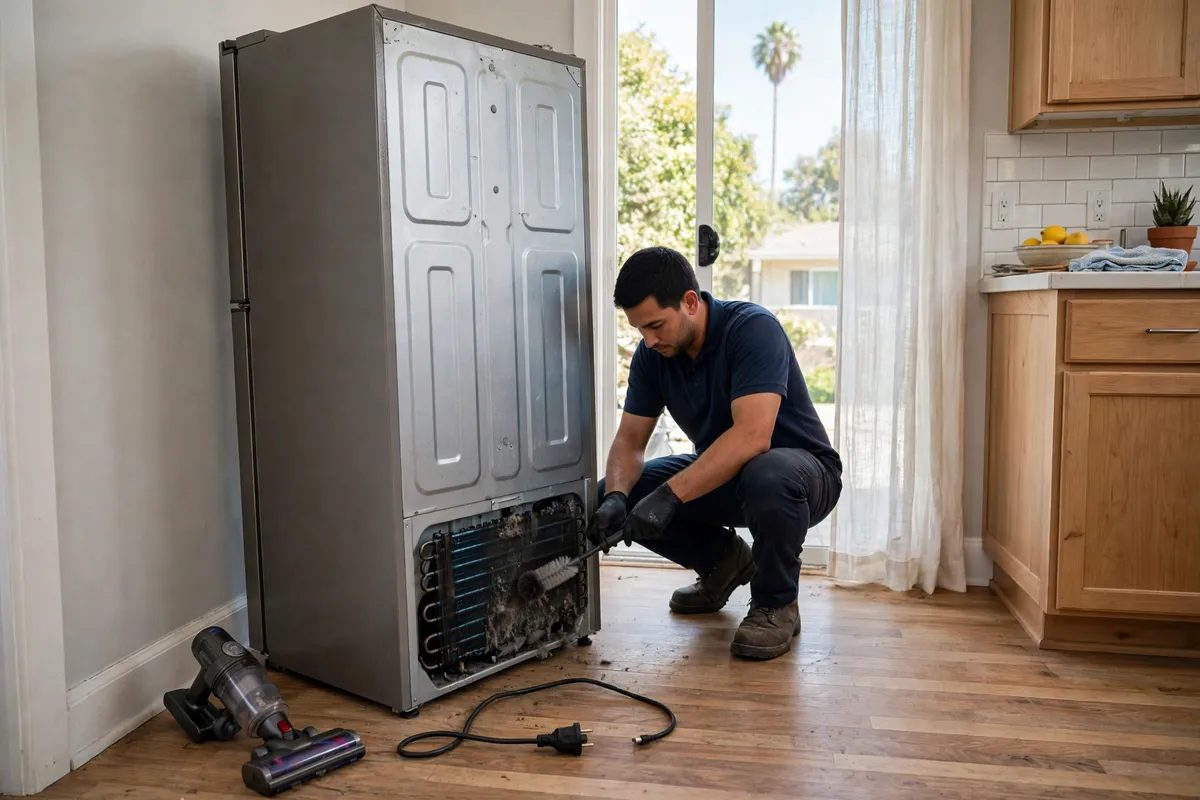
The fridge's inlet valve can partly clog with sediment and starve the ice maker. Small, hollow or misshapen cubes usually point to low water pressure or a filter due for replacement. Ice makers in the door rely on a dedicated duct that can frost over. If the bin-full sensor is blocked by ice, production pauses. Off-tasting ice often comes from an overdue filter or ice that has sat too long.
Pros serving Hayward see this one regularly.
Try this first: Remove the bin and clear stuck ice from the chute. Flush the line by dispensing two or three liters after a filter change.
- The ice bin is empty for days
- The ice maker makes a grinding sound
- Water dispenser works but no ice
Refrigerator Condenser Fan Repair in Hayward
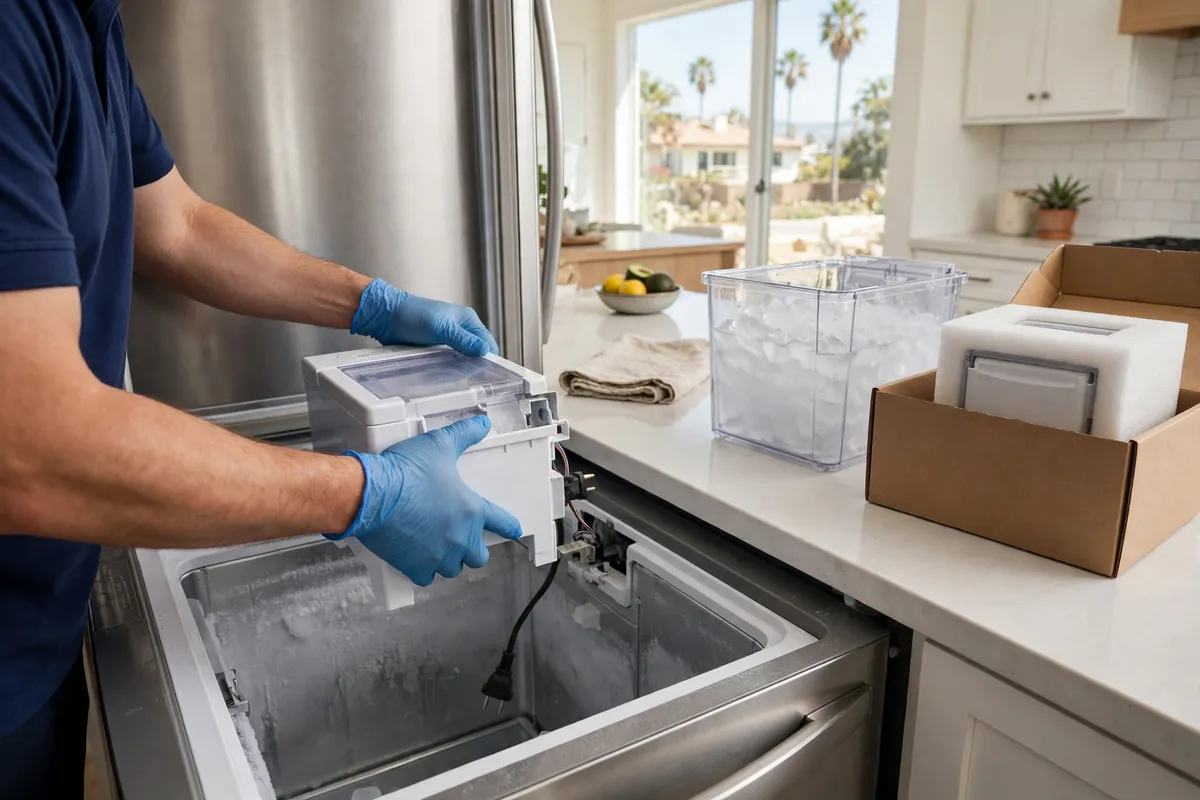
Coils behind the fridge collect grease in kitchens near the range. Fan motors often weaken over months, so cooling fades rather than stopping overnight. Cleaning the coils lowers the electric bill as well as the strain on parts. An overheated compressor may shut itself off on a thermal overload and restart later. The condenser is the fridge's radiator; when it can't release heat, everything downstream works harder.
Try this first: Look behind the unit for a matted layer of lint near the compressor compartment. Notice any new buzzing near the kick plate when the compressor starts.
- Warm air blows out from under the front
- Compressor hot to the touch
- Thick dust on the bottom grille
Refrigerator Water Leak Repair in Hayward
A small clog in the drain opening is enough to send defrost water inside. A pro will clear the defrost drain, check the drain pan, and inspect the supply line and inlet valve. Small leaks soak into wood and laminate floors quietly. Water inside the fridge usually means a drain issue; water outside usually means a supply line. A dislodged pan under the fridge turns normal defrost water into a puddle.
A few safe steps to try: Put a dry paper towel under the front edge overnight to see where drips land. Look inside the freezer for ice at the bottom back wall, which signals a blocked drain.
- Puddle in front of the fridge
- Water dripping from the dispenser
- Wet spots behind the fridge
Second Refrigerator in the Garage: Repair in Hayward
Manufacturers sell heater kits that keep a fridge running properly in a cold garage. Direct sun through a garage window can add a surprising amount of heat. Most household fridges are designed for indoor temperatures, roughly 55°F to 90°F. A nearly empty garage fridge loses cold quickly when opened. Shading the unit, giving it more clearance and keeping coils clean help.
Easy checks for Hayward homeowners: Check the garage temperature on a hot afternoon and a cold morning. Check behind the kick plate for signs of rodents.
- The freezer softens in winter
- The fridge runs nonstop in summer
- Droppings near the base
Noisy Refrigerator Fan Repair in Hayward
A fan blade striking ice makes a distinctive chirp. On newer models, the main board times the defrost cycle. A manual defrost buys time, not a repair. If the evaporator fan stops, the freezer coil keeps getting cold but the fridge section warms up. Frost buildup from a failed defrost heater worsens a little each day.
Easy checks for Hayward homeowners: Look behind the freezer's rear panel vents for a white wall of frost. Press and hold the freezer door switch and listen for the fan.
- Fresh-food section warming slowly
- The fridge warms but the freezer stays cold
- Frost returns after defrosting
Other refrigerator problems
You may also run into these, which are less frequent around Hayward: compressor and start relay diagnosis; door gasket replacement.
What to Note Before Calling
- Put an appliance thermometer on the middle shelf overnight.
- Check the temperature setting.
- Check that the doors close and seal fully.
- Move perishables to a cooler.
What to Expect From the Visit
- Describe the problem. Explain the symptoms, any error codes and the model number when you call.
- Diagnosis. The technician tests the parts most likely to cause your symptom, starting with the simplest.
- Estimate. You get an estimate for parts and labor before work begins.
- Repair and test. After the part is swapped, the technician runs the appliance to confirm the fix.
Hayward Refrigerator Repair FAQ
What temperature should my refrigerator be in Hayward?
Aim for 37°F in the fresh-food section and 0°F in the freezer. An appliance thermometer in a glass of water gives a truer reading than the air. Because the local water is soft, mineral buildup is rarely the main issue, which helps a technician rule things out faster.
Is a clicking fridge a compressor problem?
Newer inverter fridges add a control board between power and the compressor. Long, hot run times usually trace back to heat rejection problems.
How long can food stay in a warm refrigerator?
Perishable food shouldn't be held above 40°F for more than two hours.