Local Conditions That Matter for Refrigerator Repair in Fish Camp
Arnold, Twain Harte, Pinecrest, Mi-Wuk Village, Long Barn and Fish Camp sit between about 3,500 and 6,000 feet, with real winters and snow. Freezing temperatures can crack water lines to ice makers and washers in unheated spaces.
Many homes are cabins and second homes that sit empty for weeks at a time.
What that means for your refrigerator: Repeated outages and power restorations are hard on electronic boards and compressor start parts, so a refrigerator that won't restart after an outage is a common call. In rural areas, longer travel distances make it helpful to describe the problem clearly so the right parts come along.
Fish Camp households are mostly served by PG&E. After an outage, give the refrigerator a few minutes to restart on its own; if it doesn't, a tripped breaker or a damaged board are the usual suspects.
After an outage, check the refrigerator's temperature before assuming the appliance has failed.
Common Refrigerator Repairs in Fish Camp Homes
Each section below covers one specific repair, the parts involved and the signs that point to it.
Refrigerator Ice Maker Repair in Fish Camp
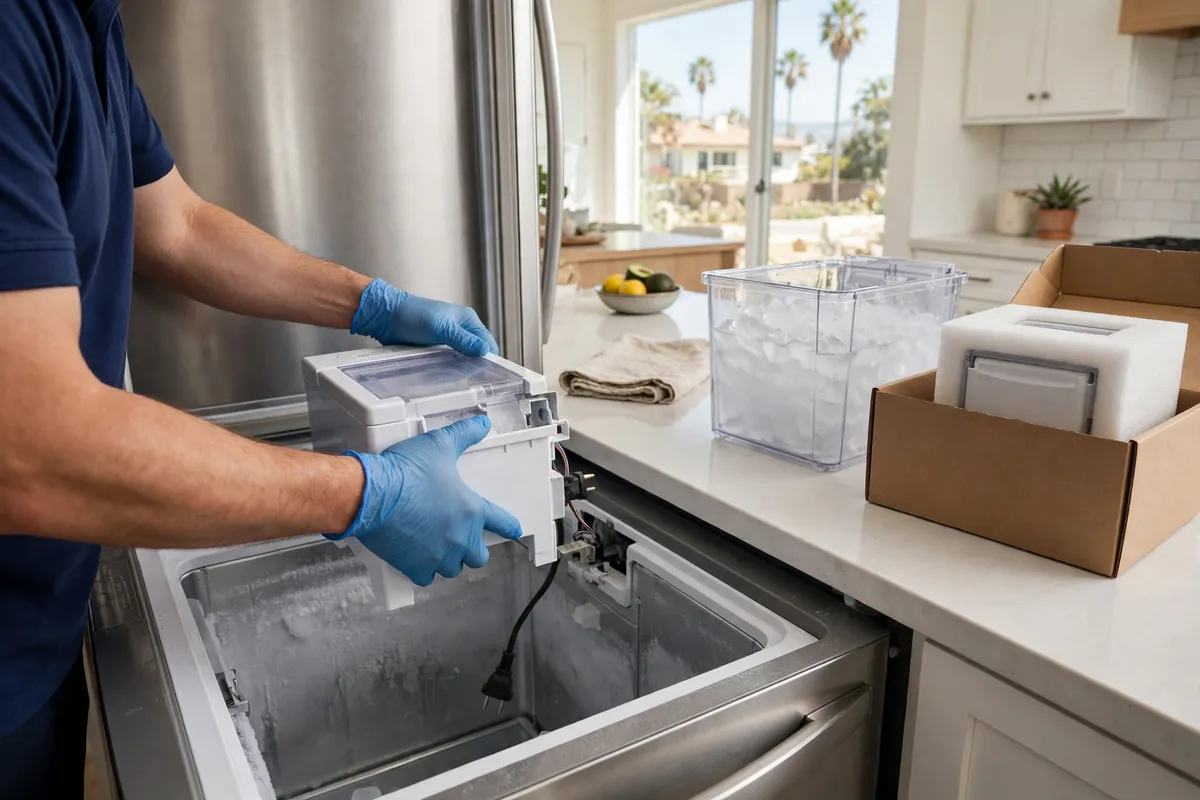
If the bin-full sensor is blocked by ice, production pauses. Clumped ice points to temperature swings in the freezer. After a filter change, trapped air can make the dispenser sputter. A sluggish inlet valve is a common reason for undersized cubes. Off-tasting ice often comes from an overdue filter or ice that has sat too long.
In Fish Camp, this ranks among the most frequent refrigerator problems.
Worth checking in a few minutes: Replace the water filter if it's more than six months old. Run a few glasses of water through the dispenser after replacing the filter to clear air.
- The ice maker makes a grinding sound
- Ice clumped into one block
- Ice clumps together
Leaking Refrigerator Repair in Fish Camp
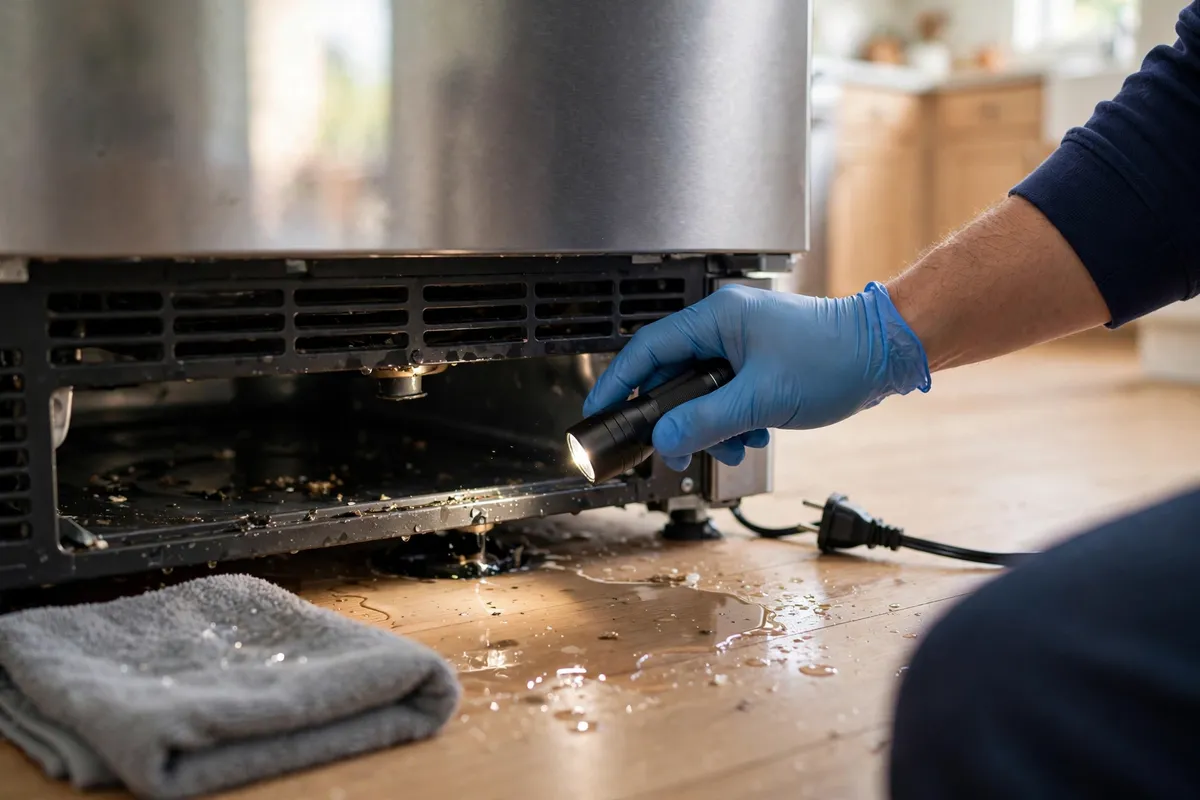
Leaks behind the unit often come from the ice maker's water connection. Small leaks soak into wood and laminate floors quietly. A dislodged pan under the fridge turns normal defrost water into a puddle. Water inside the fridge usually means a drain issue; water outside usually means a supply line. Plastic water lines can become brittle and split, especially after the fridge is moved.
Pros serving Fish Camp see this one regularly.
Safe checks before you call: Shut the valve feeding the ice maker until the leak is fixed. Lay paper towels under and behind the fridge to track the leak's source.
- Ice in the drain area
- Wet floor behind the fridge
- Water dripping from the dispenser
Refrigerator Not Cooling? Repair in Fish Camp
The damper between the freezer and fridge can stick shut, starving the fresh-food side of cold air. If both sections are warming, the cause is more often at the condenser, the compressor or its start relay. Above 40°F, bacteria multiply quickly, so time matters once the fridge warms. When the temperature sensor drifts, the board shuts the cooling off too early. Lights on but no running sound usually points to the start relay or the control board.
Safe checks before you call: Write down when the warming started and whether anything changed, like a move or a power outage. Clear a few inches around the vents inside the fridge and give it 24 hours to recover.
- Fresh-food section above 40°F
- Freezer cold but fridge warm
- Condensation on shelves
Refrigerator Compressor and Start Relay Repair in Fish Camp
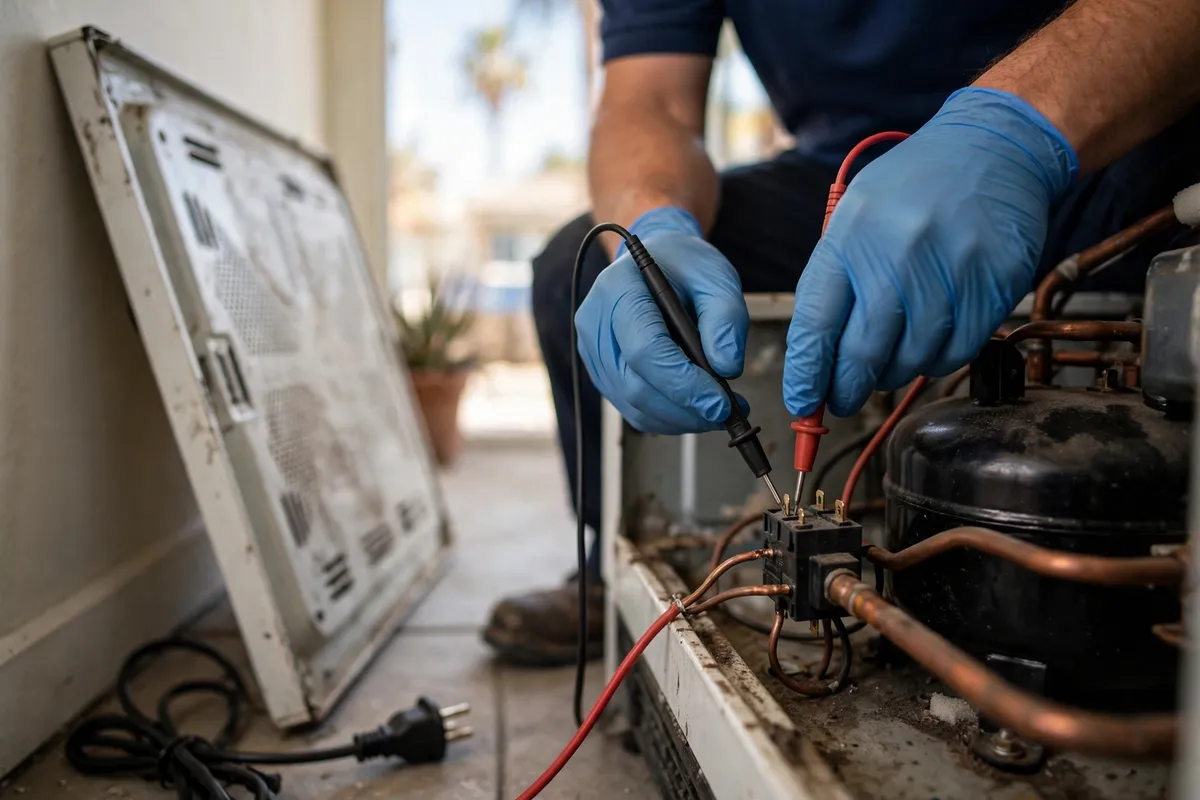
An overload protector can fail and stop the compressor even when the compressor is healthy. Relays are inexpensive compared with compressors, so testing the relay first can save a lot. Linear and inverter compressors in newer fridges use electronic controls that are diagnosed differently. Extension cords and overloaded circuits can starve the compressor at startup. When the compressor never rests, check the condenser side first.
Before booking a visit, check this: Note the interval between clicks from the back of the unit. Remove any extension cord and use a dedicated outlet.
- The fridge is warm and silent
- Breaker trips when the fridge starts
- Clicking from the back every few minutes
Condenser Coil Cleaning and Fan Repair in Fish Camp
Coils behind the fridge collect grease in kitchens near the range. Less dust on the condenser means the fridge uses less power. Pet hair is one of the fastest ways to clog a condenser. When heat can't escape, the compressor may trip its overload and cycle off. A slowing condenser fan reduces airflow long before it stops spinning.
Safe checks before you call: Look behind the unit for a matted layer of lint near the compressor compartment. Unplug the fridge, remove the kick plate and vacuum the coils with a brush attachment.
- Noise from the bottom back of the fridge
- Compressor hot to the touch
- Thick dust on the bottom grille
Refrigerator Door Seal Repair in Fish Camp
The rubber gasket around the door keeps cold air in. When it tears, hardens or pulls away, warm air leaks in, the compressor runs longer, and frost builds up near the door. Doors that don't close on their own usually have a leveling issue. A gasket works like a magnet-backed weather strip: it has to sit flat all the way around to hold the cold in. Gaskets also harden with age, especially near the hinges where they flex the most. Leaky seals cost money every hour the fridge runs.
Easy checks for Fish Camp homeowners: Check that nothing on the door shelves is pushing the door open. Shine a flashlight inside the closed door at night and look for light leaking out.
- Condensation forms around the door edge
- Mildew in the gasket folds
- Dollar bill slides out easily
Other refrigerator problems
Less common in Fish Camp, but local pros fix these as well: evaporator fan and defrost repair; garage refrigerator problems.
Before You Call: What to Check
- Check the temperature setting.
- Move perishables to a cooler.
- Look for frost on the freezer's back wall.
- Check whether the condenser fan near the compressor is spinning.
What to Expect From the Visit
- Describe the problem. Tell them what the appliance is doing, when it started and the model number from the label.
- Diagnosis. A technician tests the likely parts to find the cause.
- Estimate. You get an estimate for parts and labor before work begins.
- Repair and test. After the repair, the appliance is run to confirm it works.
Fish Camp Refrigerator Repair FAQ
What temperature should my refrigerator be in Fish Camp?
Aim for 37°F in the fresh-food section and 0°F in the freezer. An appliance thermometer in a glass of water gives a truer reading than the air. Distances between towns are longer here, so describing the symptoms and model number clearly when you call helps a technician bring the right parts.
Why is there frost on the back wall of my freezer?
A clicking or chirping noise from the freezer often comes from a fan blade hitting ice. A defrost thermostat or heater failure lets frost build up gradually over several days.
How long can food stay in a warm refrigerator?
Perishable food shouldn't be held above 40°F for more than two hours.