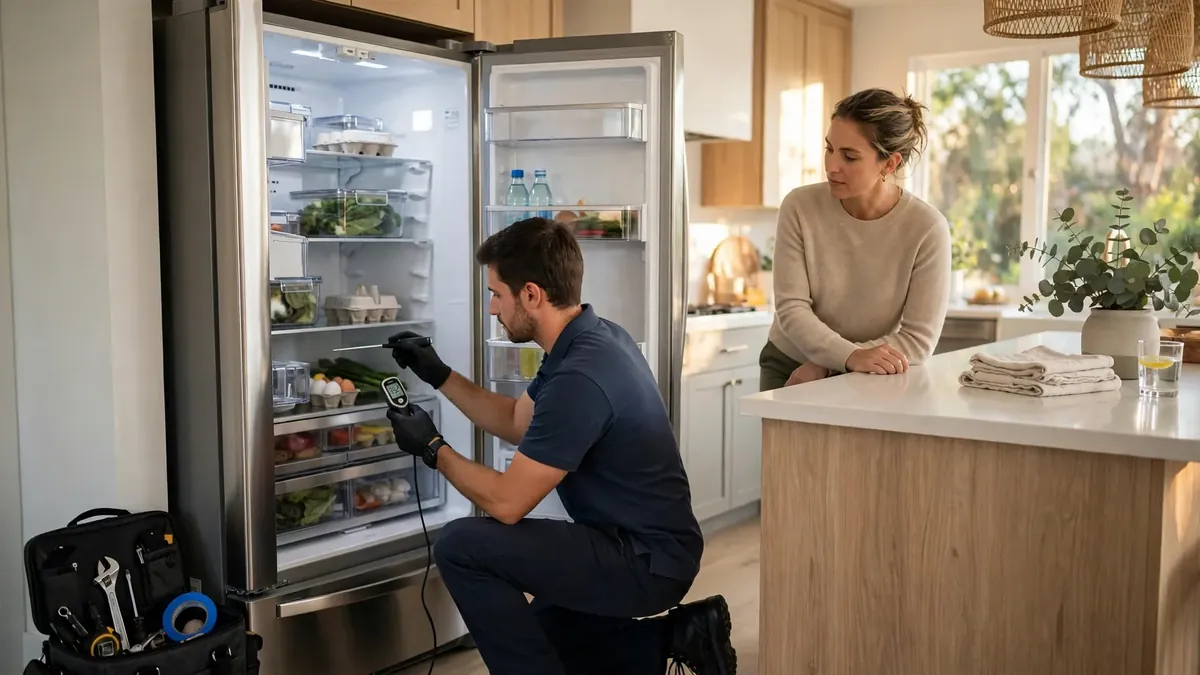
Local Conditions That Matter for Refrigerator Repair in Costa Mesa
Costa Mesa has many mid-century homes.
Newport Coast, Corona del Mar and Laguna Beach include many custom homes with built-in refrigerators and professional ranges. Water is hard along the coast.
Vacation rentals near the beach put heavy wear on washers, dryers and dishwashers.
What that means for your refrigerator: Near the coast, condenser coils and door hinges corrode faster, and damp air makes worn door gaskets frost up quickly. Hard water leaves deposits that make parts work harder and wear out sooner.
Homes in Costa Mesa are generally on SCE service. A surge protector rated for appliances is an inexpensive way to protect a refrigerator's control board from the spikes that come with restored power.
Rinse outdoor kitchen appliances to reduce salt corrosion.
Refrigerator Problems Pros See in Costa Mesa
These sections are ordered by how relevant each problem is for homes around Costa Mesa, given local climate, water and housing.
Ice Maker Repair in Costa Mesa
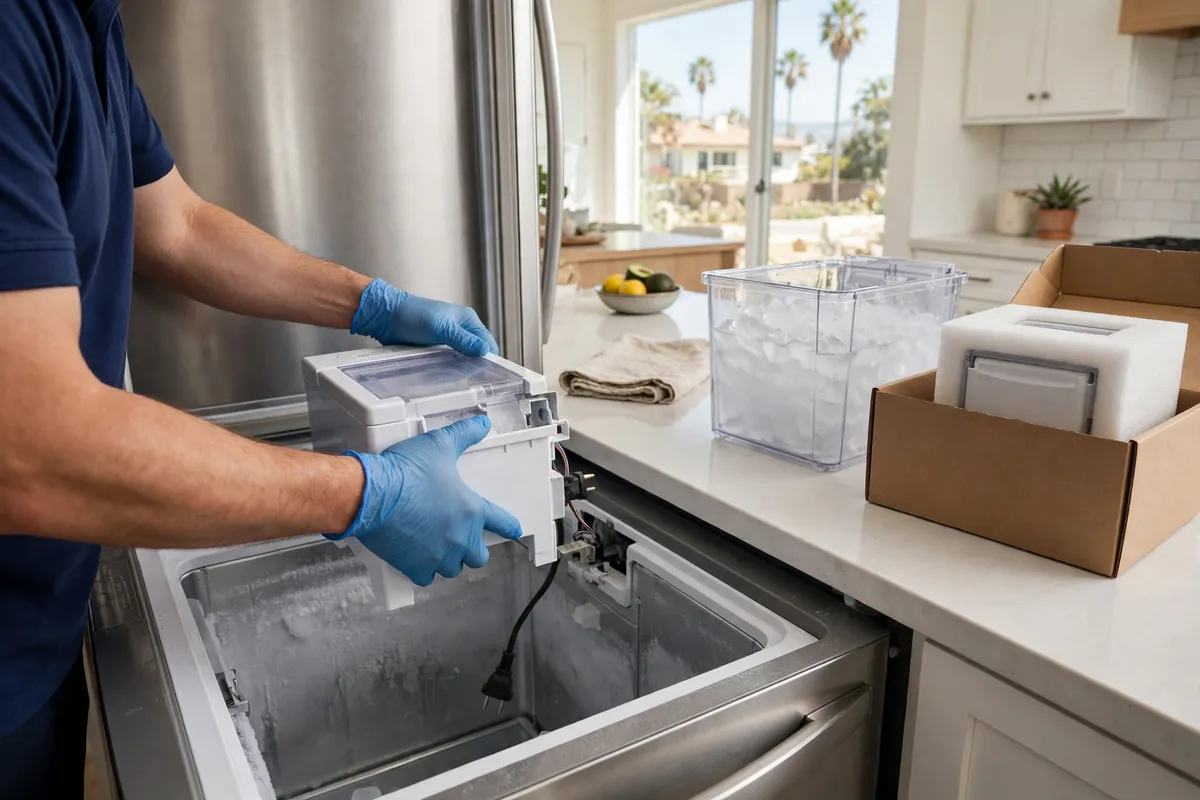
If the bin-full sensor is blocked by ice, production pauses. Clumped ice points to temperature swings in the freezer. After a filter change, trapped air can make the dispenser sputter. A sluggish inlet valve is a common reason for undersized cubes. Ice makers in the door rely on a dedicated duct that can frost over.
Pros serving Costa Mesa see this one regularly.
Easy checks for Costa Mesa homeowners: Look for ice blocking the fill tube at the back of the ice maker. Make sure the freezer is cold enough before blaming the ice maker.
- Ice clumps together
- The dispenser sputters
- Water dispenser works but no ice
Refrigerator Door Gasket Replacement in Costa Mesa
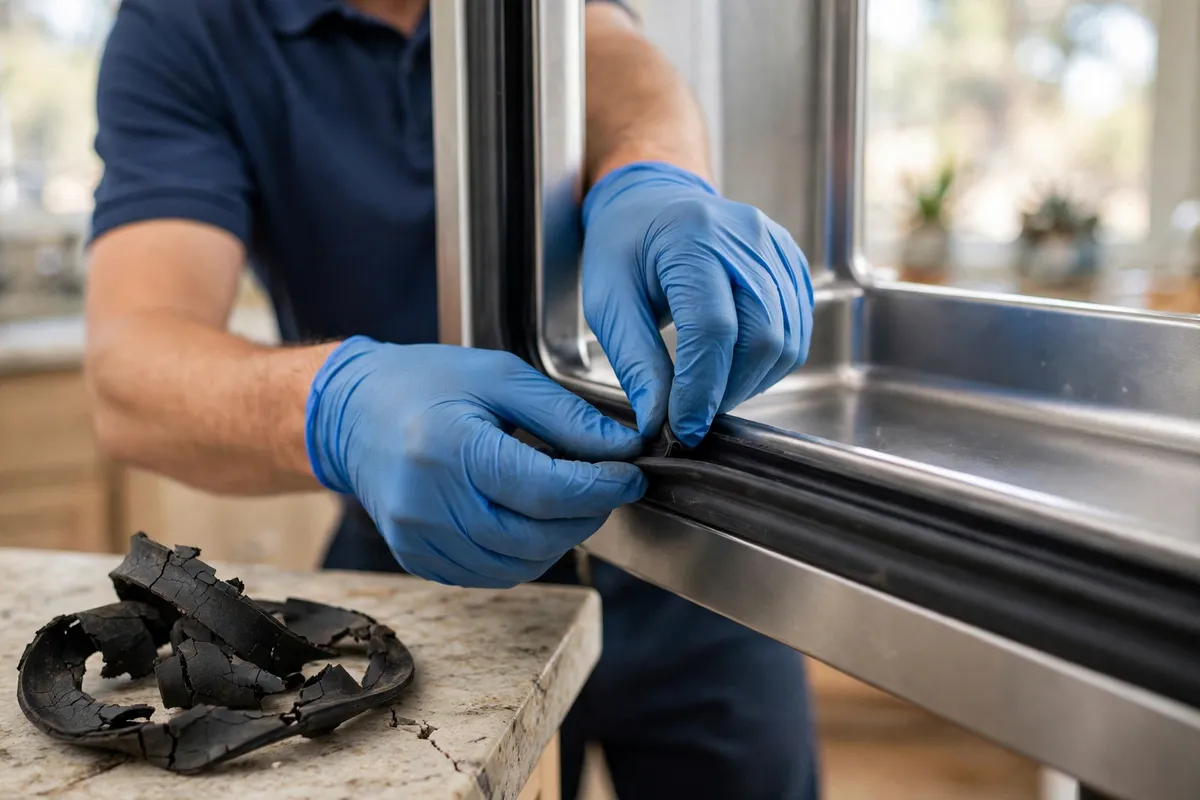
Mild heat sometimes relaxes a creased gasket enough to seal again. Front legs set slightly higher help the doors swing shut. Gasket replacement is one of the more affordable fridge repairs. Mold in gasket folds is common in humid kitchens and can be cleaned with mild soap. A bad seal makes the fridge run longer, which raises the electric bill.
In homes in coastal Orange County, this comes up often.
Quick things to rule out: Check that nothing on the door shelves is pushing the door open. In a dark room, place a flashlight inside and check for light around the seal.
- Mildew in the gasket folds
- Frost near the door
- The fridge runs longer than usual
Refrigerator Not Cooling? Repair in Costa Mesa
A stuck damper door keeps freezer air from flowing into the refrigerator section. Most warm fridges are fixed without touching the refrigerant at all. Fridges often show weakness during the first hot week of the year, when every part works harder. Cooling that fades as the day warms up usually means the condenser side can't keep up. If both sections are warming, the cause is more often at the condenser, the compressor or its start relay.
A few safe steps to try: Write down when the warming started and whether anything changed, like a move or a power outage. Check that the temperature dial wasn't bumped; 37°F for the fridge and 0°F for the freezer are typical targets.
- The freezer is fine but the fridge is warm
- Drinks never feel properly cold
- Compressor runs constantly
Refrigerator Water Leak Repair in Costa Mesa
A small clog in the drain opening is enough to send defrost water inside. Moving a fridge can kink or crack an old plastic supply line. Water under the fridge can warp flooring without ever pooling visibly. Water inside the fridge usually means a drain issue; water outside usually means a supply line. If the puddle shows up right after getting water, suspect the dispenser plumbing.
Quick things to rule out: Shut the valve feeding the ice maker until the leak is fixed. Lay paper towels under and behind the fridge to track the leak's source.
- A damp floor appears after the ice maker runs
- Water stains on the floor in front
- Ice forms on the freezer floor
Condenser Coil Cleaning and Fan Repair in Costa Mesa
In kitchens, cooking grease mixes with dust and makes coils harder to clean. On models with coils underneath, the fan that pulls air across them can stall on built-up lint. Shedding pets can blanket the coils in a matter of months. Fan motors often weaken over months, so cooling fades rather than stopping overnight. Cleaning the coils lowers the electric bill as well as the strain on parts.
Easy checks for Costa Mesa homeowners: Pull the fridge out carefully and check the floor behind it for dust buildup around the fan. Check that the condenser fan spins freely by hand once the power is off.
- Warm air blows out from under the front
- Thick dust on the bottom grille
- Compressor hot to the touch
Noisy Refrigerator Fan Repair in Costa Mesa
The evaporator fan usually stops when the freezer door opens, so test it with the door switch pressed. Some fridges use a control board to schedule defrost, and a board fault can stop it. Frost buildup from a failed defrost heater worsens a little each day. A manual defrost buys time, not a repair. A fan blade striking ice makes a distinctive chirp.
Easy checks for Costa Mesa homeowners: Hold the door switch in with your finger to check whether the fan runs. Look behind the freezer's rear panel vents for a white wall of frost.
- The fridge warms but the freezer stays cold
- Squealing that changes when the freezer door opens
- Fridge cools again after a manual defrost
Other refrigerator problems
Pros serving Costa Mesa also handle these less common problems: garage refrigerator problems; compressor and start relay diagnosis.
Before You Call: What to Check
- Note whether the freezer is also warm.
- Check the temperature setting.
- Check that the doors close and seal fully.
- Look for frost on the freezer's back wall.
How the Repair Usually Goes
- Describe the problem. Tell them what the appliance is doing, when it started and the model number from the label.
- Diagnosis. Expect testing with a meter and a look at the parts tied to the symptom.
- Estimate. You get an estimate for parts and labor before work begins.
- Repair and test. Once the repair is done, the appliance is tested under normal use.
Costa Mesa Refrigerator Repair FAQ
What temperature should my refrigerator be in Costa Mesa?
Aim for 37°F in the fresh-food section and 0°F in the freezer. An appliance thermometer in a glass of water gives a truer reading than the air. Hard water shortens the life of the ice maker's inlet valve and fill tube and clogs refrigerator water filters faster, so ice and dispenser problems are common here.
Why does my garage fridge stop working in winter?
Most household fridges are designed for indoor temperatures, roughly 55°F to 90°F. A fridge in a hot garage is like running an air conditioner with the windows open.
How long can food stay in a warm refrigerator?
Perishable food shouldn't be held above 40°F for more than two hours.