What Affects Refrigerator Repair in Corona
Santa Ana winds blow through Fontana and Rialto in fall and winter. Water is hard.
Colton runs its own electric utility; most other cities are on SCE.
What that means for your refrigerator: In hot spells, a refrigerator in a warm room or garage has less margin before it falls behind. Hard water leaves deposits that make parts work harder and wear out sooner.
SCE serves most of Corona. Tripped breakers and GFCI outlets are easy to overlook, so check both before deciding your refrigerator has a failed part.
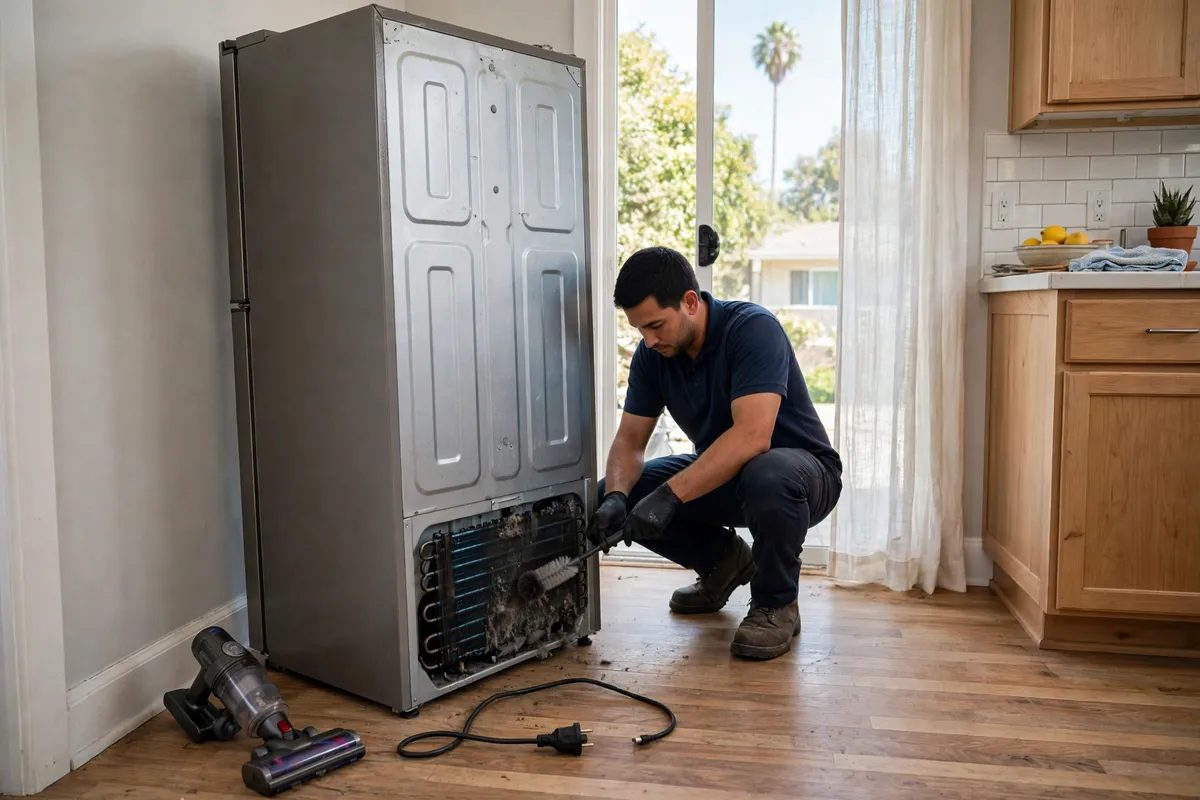
Clean refrigerator coils before summer.
Refrigerator Problems Pros See in Corona
Start with the first few sections; they cover the problems most often tied to conditions in the western Inland Empire.
Refrigerator Not Cooling? Repair in Corona
If the air damper sticks closed, cold air never reaches the lower compartment. Marginal parts tend to fail when kitchen temperatures climb. Overpacking blocks the airflow paths that the cooling system depends on. Most warm fridges are fixed without touching the refrigerant at all. Cooling that fades as the day warms up usually means the condenser side can't keep up.
If you're in Corona, start your troubleshooting here.
Quick things to rule out: Hold a hand near the vent inside the fridge to see whether cold air is moving. Note any recent events such as an outage, a move or a cleaning that might have bumped a setting.
- Compressor runs constantly
- The freezer is fine but the fridge is warm
- Drinks never feel properly cold
Ice Maker Repair in Corona
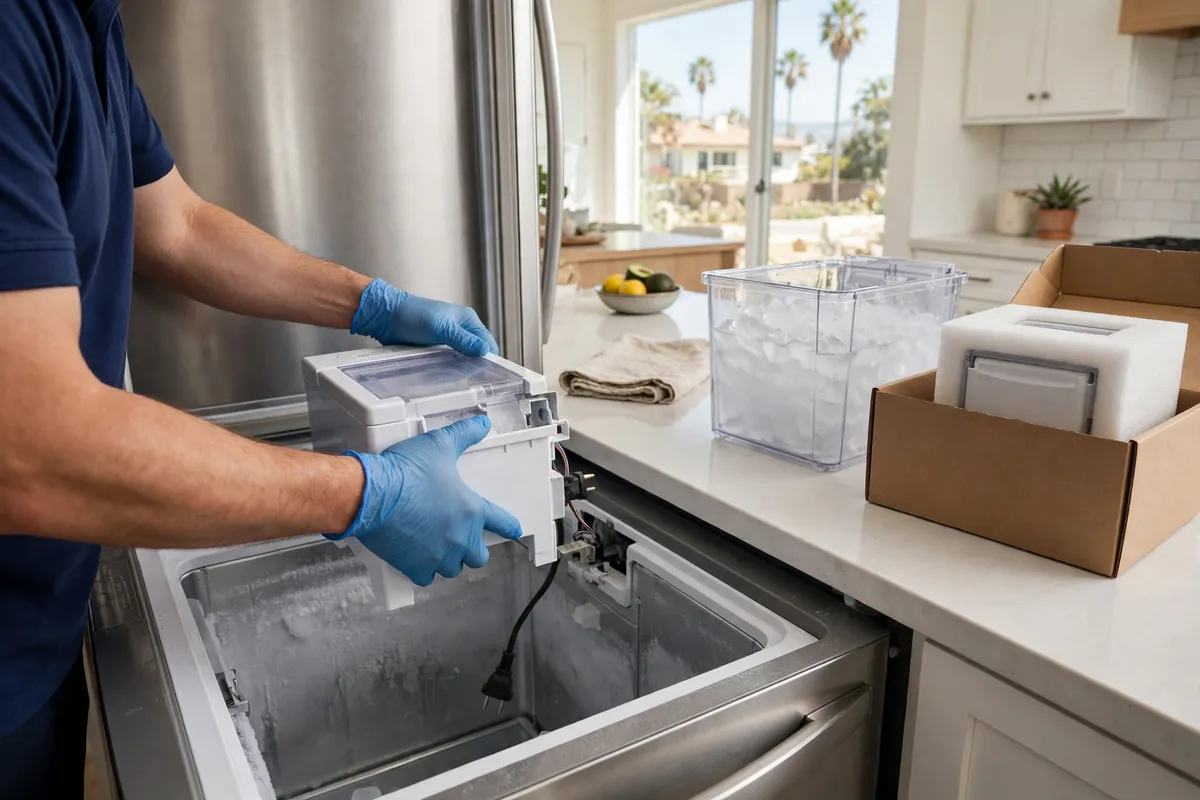
If the bin-full sensor is blocked by ice, production pauses. If you hear the ice maker try to fill but get no water, it's often the valve or a frozen fill tube. If the freezer is warmer than about 10°F, the ice maker may cycle slowly or stop entirely. Clumped ice points to temperature swings in the freezer. Air in the line after a filter swap usually clears after running a few glasses of water.
In homes in the western Inland Empire, this comes up often.
Easy checks for Corona homeowners: Check the freezer temperature; the ice maker needs the freezer near 0°F. Empty the ice bin and break up any clumps blocking the auger.
- Small, hollow or misshapen cubes
- Ice clumps together
- The ice bin is empty for days
Refrigerator Condenser Fan Repair in Corona
Fan motors often weaken over months, so cooling fades rather than stopping overnight. Cleaning the coils and replacing a failed fan motor are among the least expensive refrigerator repairs. Some models route condenser tubing through the side walls, so warm sides aren't always a problem. Pet hair is one of the fastest ways to clog a condenser. Grease from nearby cooking helps lint stick to the coils.
Easy checks for Corona homeowners: Make sure the back of the fridge isn't pressed against the wall. Notice any new buzzing near the kick plate when the compressor starts.
- No fan noise from the back
- Compressor hot to the touch
- The fridge runs almost constantly
Leaking Refrigerator Repair in Corona
Leaks behind the unit often come from the ice maker's water connection. Water under the fridge can warp flooring without ever pooling visibly. A pro will clear the defrost drain, check the drain pan, and inspect the supply line and inlet valve. Water inside the fridge usually means a drain issue; water outside usually means a supply line. If the puddle shows up right after getting water, suspect the dispenser plumbing.
Worth checking in a few minutes: Clear the defrost drain with warm water and a turkey baster if you can reach it. Look inside the freezer for ice at the bottom back wall, which signals a blocked drain.
- A damp floor appears after the ice maker runs
- Water stains on the floor in front
- Wet floor behind the fridge
Noisy Refrigerator Fan Repair in Corona
Chirping from the freezer often means ice is building around the fan. If the defrost heater, thermostat or control fails, the coils ice over, airflow stops and the fridge warms even though the freezer stays cold. Most freezer fans pause when the door is open, which can mislead a quick check. A manual defrost buys time, not a repair. Some fridges use a control board to schedule defrost, and a board fault can stop it.
Safe checks before you call: Shine a light through the freezer vents to look for frost on the coil. Track whether cooling fades again after melting the frost.
- Clicking or buzzing from the freezer
- The fridge warms but the freezer stays cold
- Ice buildup around the fan
Second Refrigerator in the Garage: Repair in Corona
Many refrigerators are designed to run in rooms between about 55°F and 90°F, and a garage can go well outside that range. Most household fridges are designed for indoor temperatures, roughly 55°F to 90°F. A tripped GFCI outlet in the garage can silently cut power. Rodents like the warm space around a garage compressor. Shading the unit, giving it more clearance and keeping coils clean help.
What you can check yourself: Fill empty shelves with water bottles to add thermal mass. Look for droppings or nesting material around the base.
- Freezer thaws in cold weather
- The garage outlet trips
- Fridge works fine after being moved indoors
Other refrigerator problems
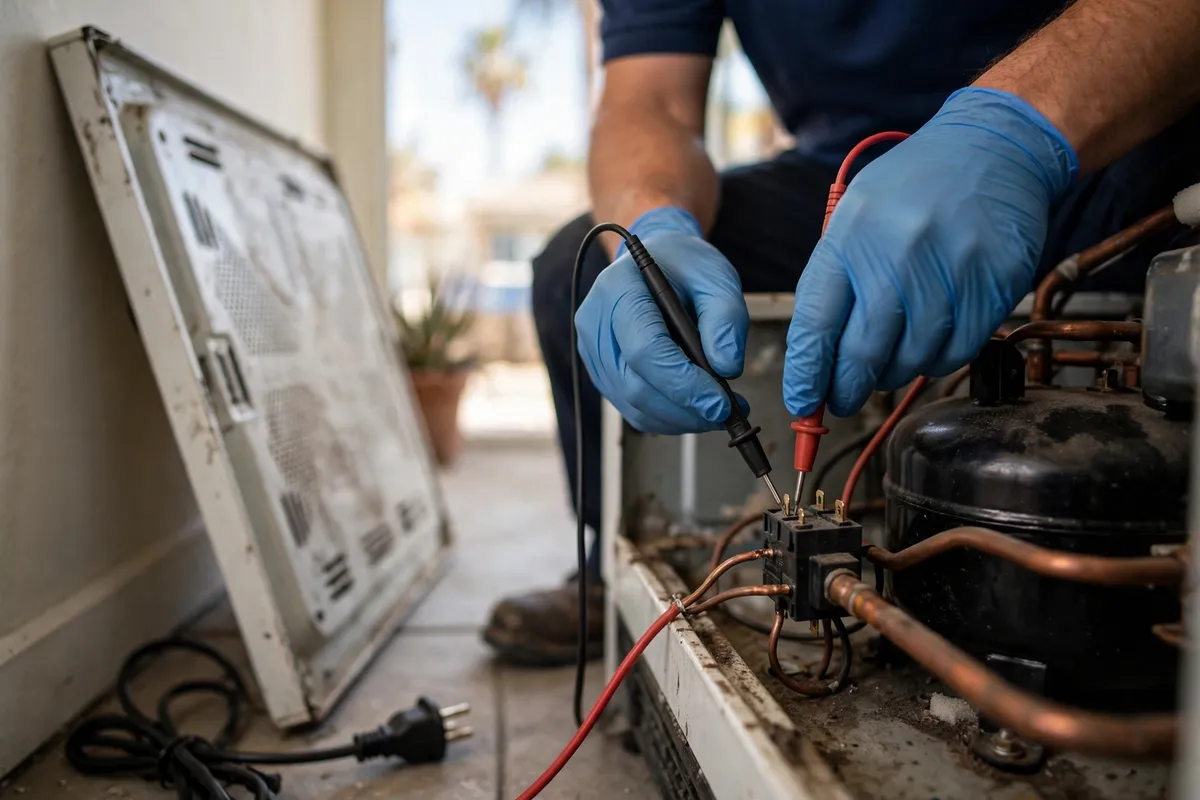
These come up less often around Corona, and local pros handle them too: compressor and start relay diagnosis; door gasket replacement.
Before You Call: What to Check
- Check whether the condenser fan near the compressor is spinning.
- Move perishables to a cooler.
- Find the model number inside the fridge.
- Check the temperature setting.
What to Expect From the Visit
- Describe the problem. Have the model number ready and explain what changed and when.
- Diagnosis. A pro confirms the cause by testing parts rather than guessing.
- Estimate. You get an estimate for parts and labor before work begins.
- Repair and test. After the repair, the appliance is run to confirm it works.
Corona Refrigerator Repair FAQ
Is a clicking fridge a compressor problem?
A compressor needs full voltage to start, which a long extension cord may not provide. For a fridge past its prime, a new compressor may not be worth the cost.
How long can food stay in a warm refrigerator?
Perishable food shouldn't be held above 40°F for more than two hours.
Is it worth repairing a refrigerator in Corona?
It depends on the age and the part. Fans, relays, gaskets and defrost parts are usually worth fixing; sealed-system repairs on older fridges may not be. Summer heat in the western Inland Empire makes condenser coils and fans the first things to check when a refrigerator warms up, especially for a second fridge in the garage.