Local Conditions That Matter for Refrigerator Repair in Chula Vista
Chula Vista has grown with large master-planned neighborhoods in Otay Ranch and Eastlake.
Salt air speeds corrosion on dryer vents and appliance exteriors near the ocean. Housing ranges from older beach cottages to newer master-planned communities in Carlsbad and Chula Vista.
San Diego's water comes largely from the Colorado River and Northern California and is among the hardest in the state.
What that means for your refrigerator: Near the coast, humidity encourages mildew in seals and gaskets and rust on exposed metal parts. Mineral-heavy water gradually narrows water inlets and coats heating parts, so appliances that use water lose performance over the years.
Most homes in Chula Vista get electricity from SDG&E. A refrigerator that misbehaves right after an outage or a flicker may have a damaged control board or relay, so note the timing.
Refrigerator Problems Pros See in Chula Vista
Symptoms overlap, so it's worth skimming two or three sections before deciding which one matches your refrigerator.
Refrigerator Ice Maker Repair in Chula Vista
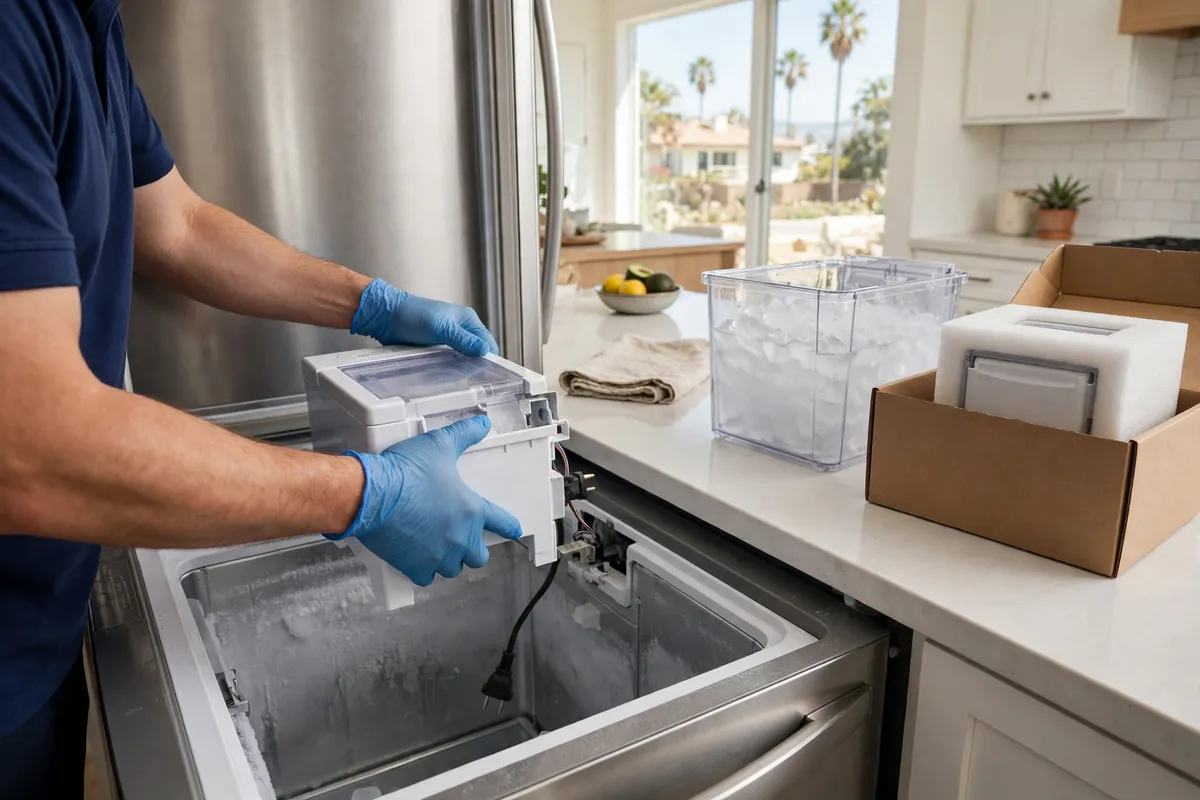
A sluggish inlet valve is a common reason for undersized cubes. Clumped ice points to temperature swings in the freezer. After a filter change, trapped air can make the dispenser sputter. If the bin-full sensor is blocked by ice, production pauses. A bad-tasting or cloudy batch usually points to an old filter or stale ice.
If you're in Chula Vista, start your troubleshooting here.
A few safe steps to try: Make sure the freezer is cold enough before blaming the ice maker. Make sure the ice maker's arm or switch is in the on position.
- Ice clumps together
- Water dispenses slowly
- Ice cubes are small or hollow
Refrigerator Water Leak Repair in Chula Vista
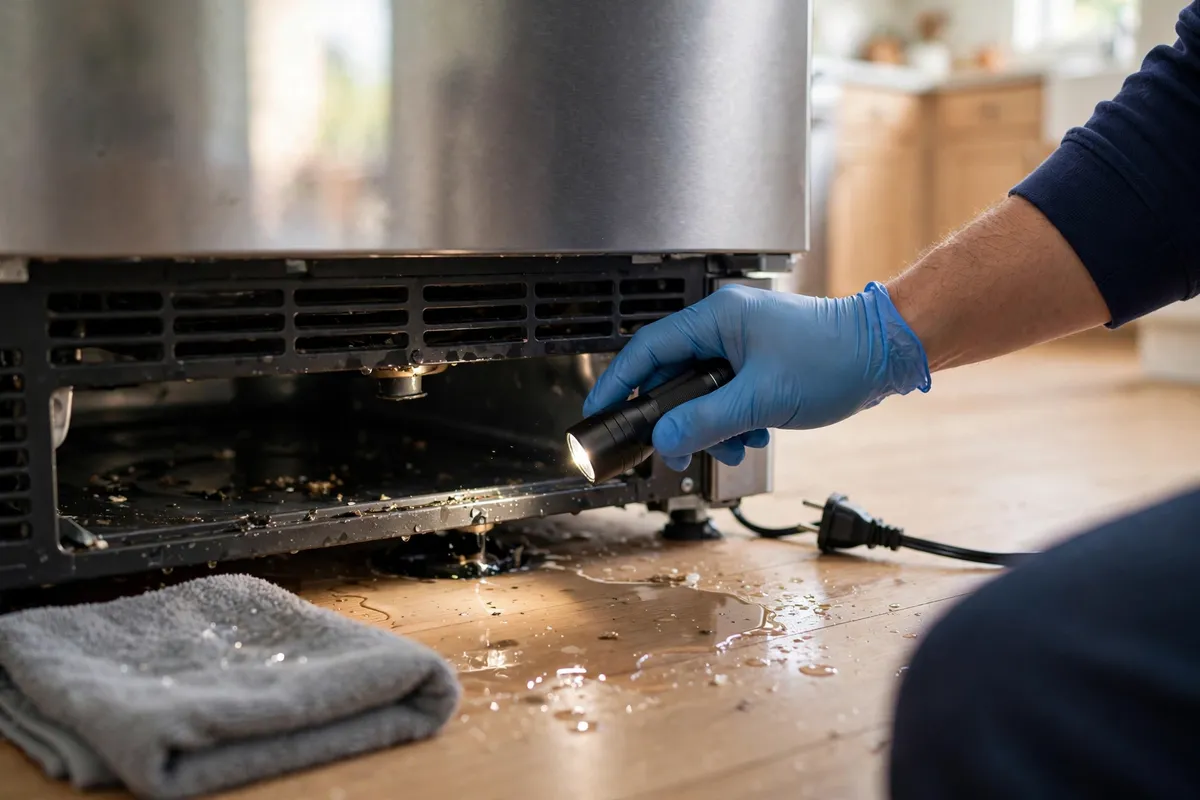
A worn compression fitting on the water line can drip slowly for weeks. Moving a fridge can kink or crack an old plastic supply line. A slow leak can damage flooring and subfloor long before you notice a puddle. Drips after each use of the water dispenser point to its line or valve. A misplaced drain pan can spill water each time the fridge defrosts.
In homes in coastal San Diego County, this comes up often.
Safe checks before you call: Shut the valve feeding the ice maker until the leak is fixed. Check behind the fridge for drips at the water line connection.
- Ice forms on the freezer floor
- Water under the crisper drawers
- Water dripping from the dispenser
Refrigerator Not Cooling? Repair in Chula Vista
A stuck damper door keeps freezer air from flowing into the refrigerator section. Food safety guidance treats anything above 40°F for more than two hours as a risk for perishables. If the interior light works but nothing hums, the problem is often the control board or the compressor's start circuit. Marginal parts tend to fail when kitchen temperatures climb. Too much food against the vents chokes off circulation inside the box.
Quick things to rule out: Clear a few inches around the vents inside the fridge and give it 24 hours to recover. Hold a hand near the vent inside the fridge to see whether cold air is moving.
- The fridge feels warm near the top shelf
- Fresh-food section above 40°F
- Milk spoiling before its date
Refrigerator Door Seal Repair in Chula Vista
A warm hair dryer on low can soften a stiff gasket so it seats again, if done gently. A bad seal makes the fridge run longer, which raises the electric bill. If the fridge tilts forward, the doors drift open instead of closing. Dark spots in the gasket are usually mildew rather than damage. After cleaning, a gasket may fold over and leave a hidden gap.
Easy checks for Chula Vista homeowners: Clean the gasket folds and dry them to remove sticky residue. In a dark room, place a flashlight inside and check for light around the seal.
- Mildew in the gasket folds
- Fridge runs constantly
- Frost builds up near the door
Condenser Coil Cleaning and Fan Repair in Chula Vista
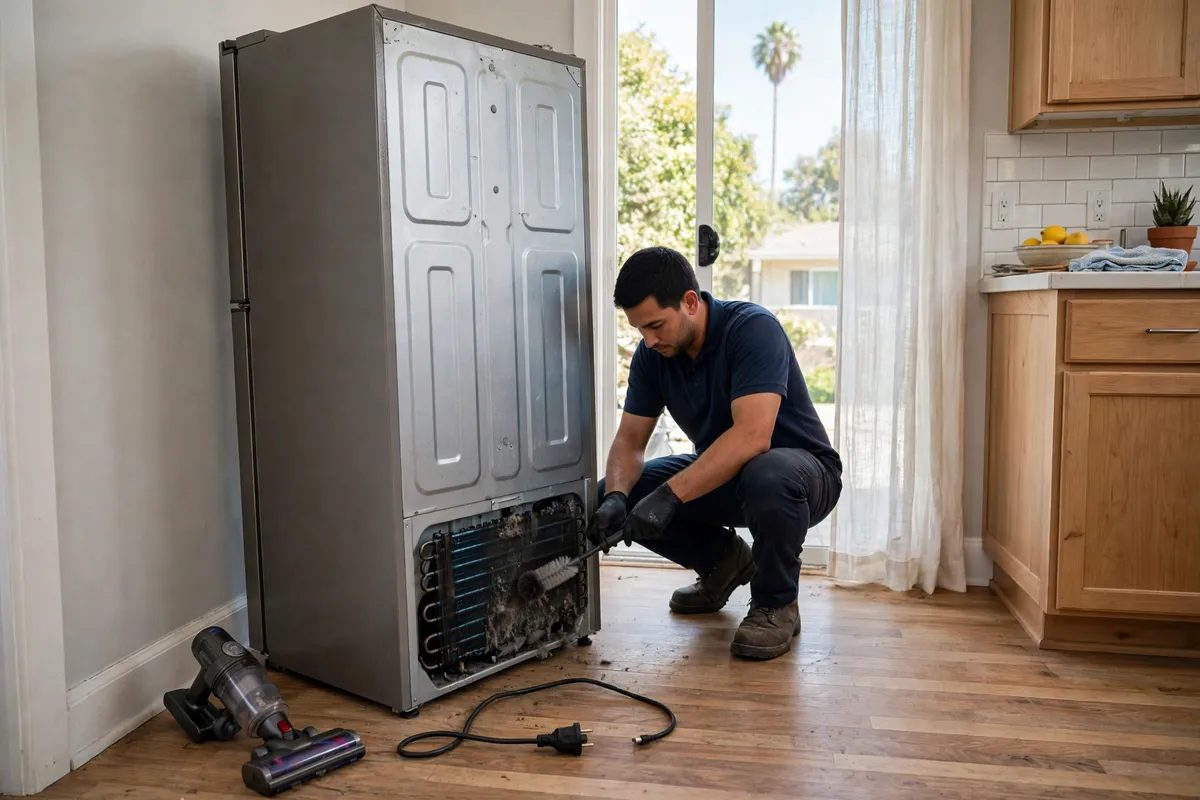
Coils behind the fridge collect grease in kitchens near the range. Warm side panels can be normal on fridges with built-in wall condensers. A compressor that keeps tripping its overload is often a symptom of dirty coils. Cleaning the coils lowers the electric bill as well as the strain on parts. A slowing condenser fan reduces airflow long before it stops spinning.
Safe checks before you call: Unplug the fridge, remove the kick plate and vacuum the coils with a brush attachment. Check that the condenser fan spins freely by hand once the power is off.
- The fridge runs almost constantly
- Very warm air at the bottom of the fridge
- Compressor hot to the touch
Noisy Refrigerator Fan Repair in Chula Vista
Ice on the fan shroud can make a loud scraping or chirping sound. On newer models, the main board times the defrost cycle. Manual defrosting is a temporary fix; the frost returns if the defrost part isn't replaced. A worn fan motor squeals or chirps, especially when the freezer door is opened. When the defrost system fails, frost builds on the evaporator coil until it blocks airflow completely.
Try this first: Open the freezer and listen; the fan should run when the door switch is pressed in. Press and hold the freezer door switch and listen for the fan.
- Fridge cools again after a manual defrost
- Weak airflow from the freezer vents
- Chirping from the freezer
Other refrigerator problems
Other issues local technicians see in Chula Vista, though less often: compressor and start relay diagnosis; garage refrigerator problems.
What to Note Before Calling
- Look for frost on the freezer's back wall.
- Listen for the compressor and fans.
- Note which compartment is warm and since when.
- Note whether the freezer is also warm.
How the Repair Usually Goes
- Describe the problem. Mention any noises, smells or error codes, plus the model number.
- Diagnosis. A technician tests the likely parts to find the cause.
- Estimate. You should get a clear estimate for the repair before approving it.
- Repair and test. The part is replaced and the appliance is tested.
Chula Vista Refrigerator Repair FAQ
What temperature should my refrigerator be in Chula Vista?
Aim for 37°F in the fresh-food section and 0°F in the freezer. An appliance thermometer in a glass of water gives a truer reading than the air. Salt air speeds corrosion on the condenser and hinges of refrigerators in garages or near open doors.
Why is my fridge warm but the freezer cold?
That usually points to an airflow problem: a failed evaporator fan, a stuck damper or a defrost failure that has iced over the coil. It's rarely the compressor.
Is a clicking fridge a compressor problem?
A compressor running hot and long is often the result of dirty coils or a failed condenser fan. A failed compressor on an older fridge often makes replacement the better value.