Local Conditions That Matter for Refrigerator Repair in Castaic
Summers are hot, often above 100°F, and the valley sees Santa Ana winds and wildfire risk. Water is hard, and spotting on dishes and buildup in appliances are common complaints.
SCE has used Public Safety Power Shutoffs in parts of the Santa Clarita Valley during fire weather.
What that means for your refrigerator: Hot weather shortens the life of motors, relays and controls, so problems often show up in the warmest months. With hard water, regular cleaning of filters and screens prevents many problems before they start.
With SCE as the usual electric provider in Castaic, outages and voltage dips do happen. Before assuming a part failed, check the breaker and reset the refrigerator by unplugging it for a minute.
Keep refrigerator and freezer doors closed during a power shutoff.
Common Refrigerator Repairs in Castaic Homes
Each section explains what's happening inside the refrigerator, a few safe checks to try first, and the signs that point to that problem.
Warm Refrigerator Repair in Castaic
A faulty thermistor sends a false reading, so the fridge stops cooling before it should. A packed fridge can't circulate air, so pockets of warmth form. Telling a pro which compartment is warm, and since when, speeds up the diagnosis. The damper between the freezer and fridge can stick shut, starving the fresh-food side of cold air. When performance drops during the hottest hours, heat rejection is the first suspect.
Pros serving Castaic see this one regularly.
What you can check yourself: Move items away from the vent at the top of the fresh-food section. Power-cycle the fridge by unplugging it briefly; some control glitches clear this way.
- The freezer is fine but the fridge is warm
- Fresh-food section above 40°F
- Freezer cold but fridge warm
Refrigerator Water Leak Repair in Castaic
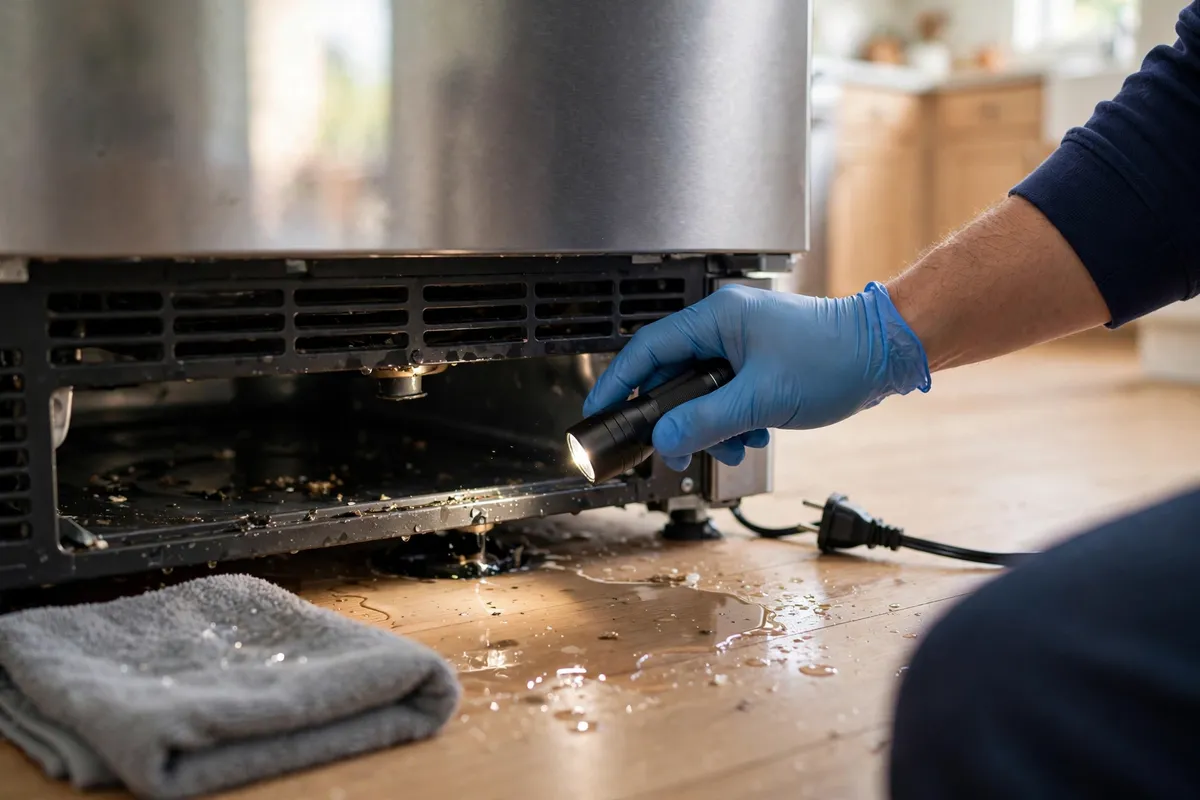
A worn compression fitting on the water line can drip slowly for weeks. Drips after each use of the water dispenser point to its line or valve. Water under the fridge can warp flooring without ever pooling visibly. A dislodged pan under the fridge turns normal defrost water into a puddle. Older plastic tubing tends to crack when the fridge is pulled out for cleaning.
In homes in the Santa Clarita Valley, this comes up often.
Try this first: Check behind the fridge for drips at the water line connection. Flush the freezer's drain opening gently with warm water.
- Ice sheet on the freezer floor
- Water dripping from the dispenser
- Wet floor behind the fridge
Refrigerator Ice Maker Repair in Castaic
If the bin-full sensor is blocked by ice, production pauses. Ice makers in the door rely on a dedicated duct that can frost over. Off-tasting ice often comes from an overdue filter or ice that has sat too long. The fridge's inlet valve can partly clog with sediment and starve the ice maker. If nothing happens at all, it may be the module or the arm being switched off.
Try this first: Empty the ice bin and break up any clumps blocking the auger. Check the freezer temperature; the ice maker needs the freezer near 0°F.
- The ice bin is empty for days
- Water dispenses slowly
- Ice tastes stale
Noisy Refrigerator Fan Repair in Castaic
Most freezer fans pause when the door is open, which can mislead a quick check. Ice on the fan shroud can make a loud scraping or chirping sound. A worn fan motor squeals or chirps, especially when the freezer door is opened. Some fridges use a control board to schedule defrost, and a board fault can stop it. A clicking or chirping noise from the freezer often comes from a fan blade hitting ice.
Worth checking in a few minutes: Look for a thick layer of frost on the back panel inside the freezer. Track whether cooling fades again after melting the frost.
- Weak airflow from the freezer vents
- Chirping from the freezer
- Frost returns after defrosting
Refrigerator Start Relay Repair in Castaic
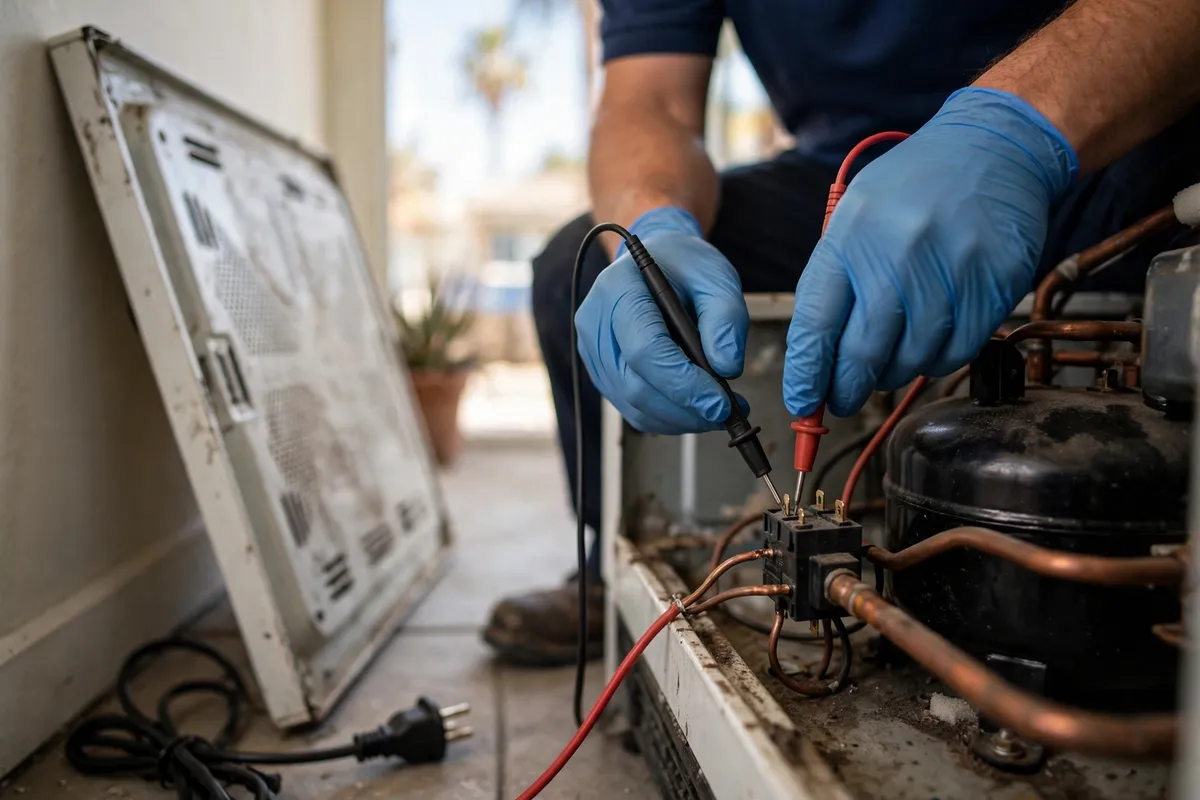
Power outages and surges can damage start relays and electronic control boards. Long, hot run times usually trace back to heat rejection problems. Linear and inverter compressors in newer fridges use electronic controls that are diagnosed differently. A failed compressor on an older fridge often makes replacement the better value. An overload protector can fail and stop the compressor even when the compressor is healthy.
Easy checks for Castaic homeowners: Feel whether the compressor area is unusually hot. Note the interval between clicks from the back of the unit.
- Clicking from the back every few minutes
- Clicking every few minutes from the back
- Compressor hums but doesn't start
Condenser Coil Cleaning and Fan Repair in Castaic
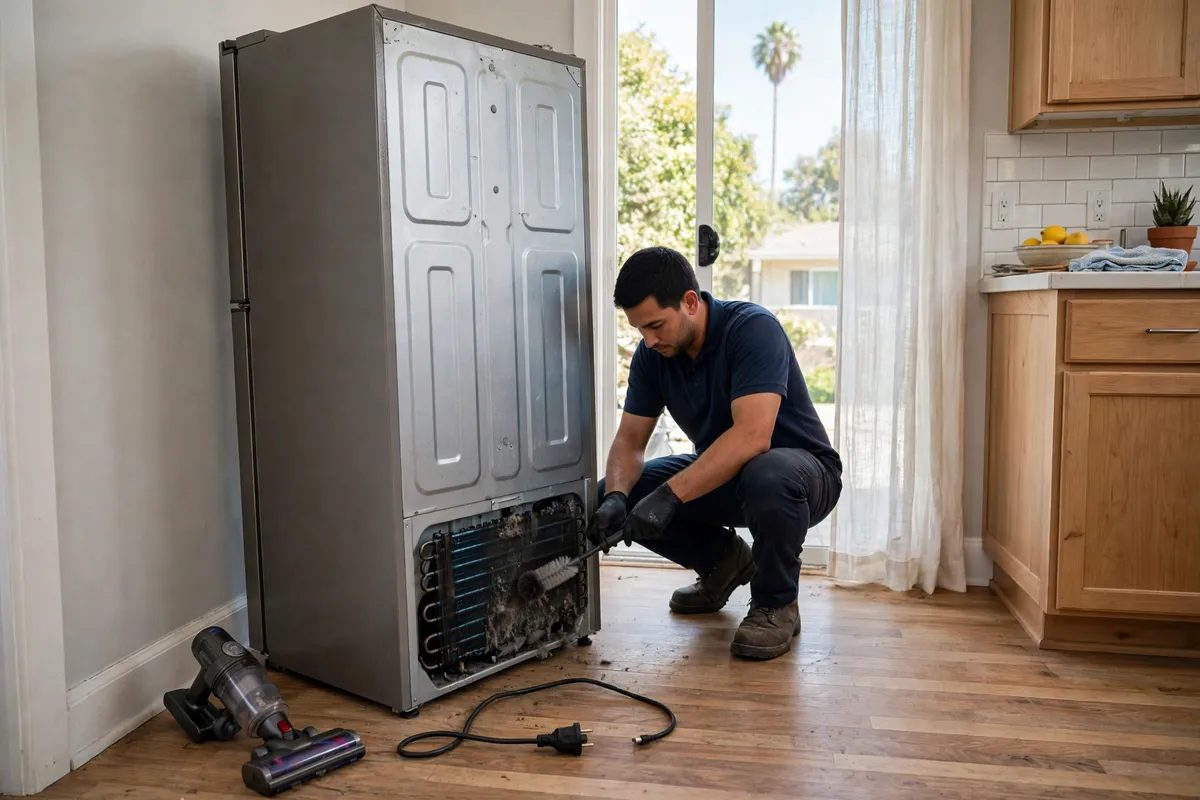
Coils behind the fridge collect grease in kitchens near the range. Shedding pets can blanket the coils in a matter of months. If you hear the compressor but no fan, or feel very hot air at the bottom, the fan may have failed. A condenser fan motor can slow down before it fails completely, which cuts cooling gradually. Cleaning the coils lowers the electric bill as well as the strain on parts.
Easy checks for Castaic homeowners: Leave a small gap behind the fridge so warm air has somewhere to go. Check that the condenser fan spins freely by hand once the power is off.
- The kick plate area is thick with dust
- Compressor hot to the touch
- The fridge runs almost constantly
Other refrigerator problems
Other issues local technicians see in Castaic, though less often: garage refrigerator problems; door gasket replacement.
What to Note Before Calling
- Note whether the freezer is also warm.
- Find the model number inside the fridge.
- Move perishables to a cooler.
- Check the temperature setting.
What to Expect From the Visit
- Describe the problem. Mention any noises, smells or error codes, plus the model number.
- Diagnosis. The technician checks the parts most likely to have failed.
- Estimate. Ask what the repair includes and how it compares with replacing the appliance.
- Repair and test. Once the repair is done, the appliance is tested under normal use.
Castaic Refrigerator Repair FAQ
What temperature should my refrigerator be in Castaic?
Aim for 37°F in the fresh-food section and 0°F in the freezer. An appliance thermometer in a glass of water gives a truer reading than the air. Scale from hard water builds up in the refrigerator's water valve and ice maker; changing the filter on schedule helps.
How long can food stay in a warm refrigerator?
Perishable food shouldn't be held above 40°F for more than two hours.
Why does my garage fridge stop working in winter?
Garage-ready models are built to handle a wider temperature range. A sunny garage wall can push the fridge past its design limits.