What Affects Refrigerator Repair in Boulevard
SDG&E has used power shutoffs frequently in the backcountry. Distances between towns are long.
Wells and propane are common.
What that means for your refrigerator: Outages and surges are a common reason refrigerators stop cooling here; the start relay and control board are the first things to test. Distances between towns are longer here, so describing the symptoms and model number clearly when you call helps a technician bring the right parts.
SDG&E supplies power to most of Boulevard. Power surges when service returns can damage a refrigerator's electronics, so tell the technician if the trouble began after an outage.
Protect water lines from freezing in winter.
The Refrigerator Repairs Most Often Needed in Boulevard
Not every problem needs a technician, so each section starts with what's going on and what you can rule out yourself.
Refrigerator Water Leak Repair in Boulevard
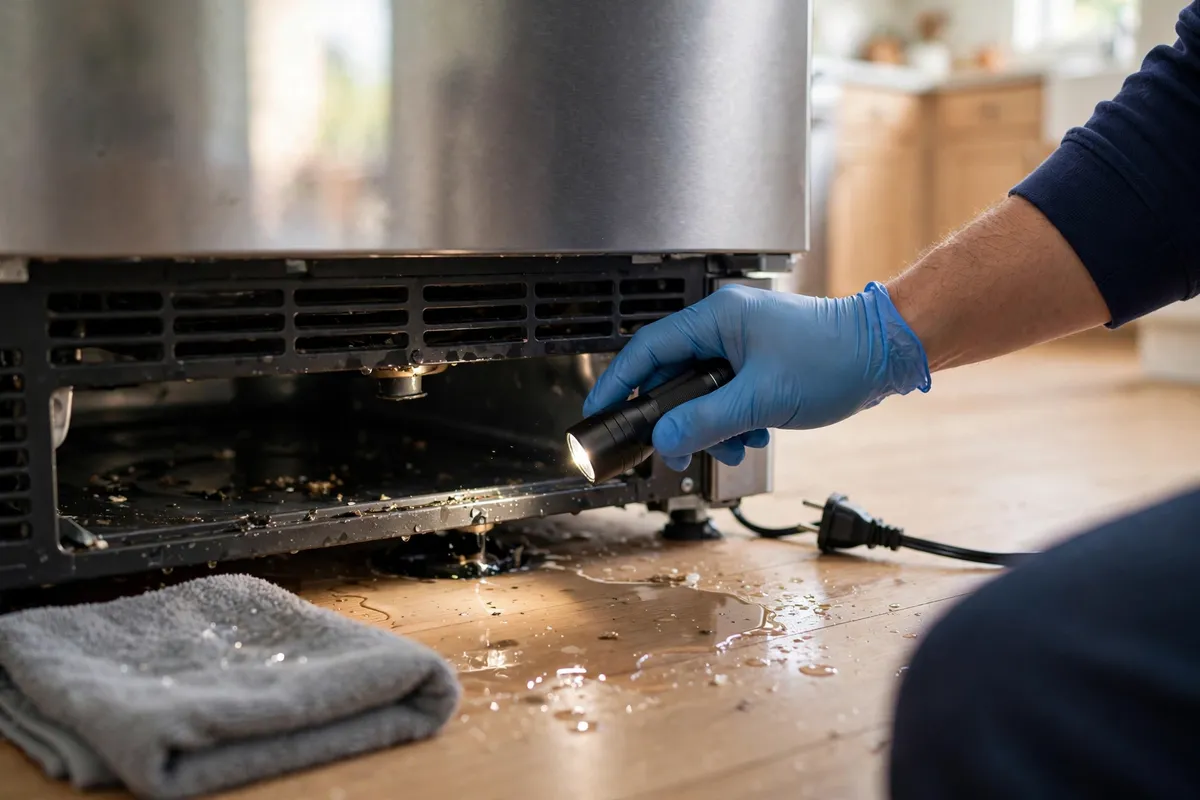
Food bits and slime build up in the defrost drain over time. Small leaks soak into wood and laminate floors quietly. A misplaced drain pan can spill water each time the fridge defrosts. Leaks behind the unit often come from the ice maker's water connection. If the puddle shows up right after getting water, suspect the dispenser plumbing.
In homes in the San Diego backcountry, this comes up often.
Quick things to rule out: Flush the freezer's drain opening gently with warm water. Look inside the freezer for ice at the bottom back wall, which signals a blocked drain.
- Water under the crisper drawers
- Ice sheet on the freezer floor
- Ice in the drain area
Refrigerator Not Cooling? Repair in Boulevard
A thermistor that reads the wrong temperature can make the control board think the box is already cold. Above 40°F, bacteria multiply quickly, so time matters once the fridge warms. Sealed-system leaks are less common than people fear and usually come after fan, relay and defrost checks. Cooling that fades as the day warms up usually means the condenser side can't keep up. Too much food against the vents chokes off circulation inside the box.
If you're in Boulevard, start your troubleshooting here.
Safe checks before you call: Unplug the fridge for five minutes and plug it back in to reset the control board. Put an appliance thermometer in a glass of water on the middle shelf; it gives a truer reading than the air.
- Water bottles sweat inside the fridge
- Compressor runs constantly
- Condensation on shelves
Ice Maker Repair in Boulevard
Ice makers fail for a handful of reasons: the water inlet valve behind the fridge stops opening, the fill tube freezes, the ice maker module's motor or thermostat fails, or the water filter is clogged. On French-door models, the ice compartment has its own seal and airflow that can fail. Clumped ice points to temperature swings in the freezer. A bad-tasting or cloudy batch usually points to an old filter or stale ice. A water inlet valve that's weak or clogged reduces the fill and leads to small cubes.
A few safe steps to try: Check that the shutoff valve behind the fridge is fully open and the line isn't kinked. Replace the water filter if it's more than six months old.
- The dispenser sputters
- Water dispenses slowly
- Water dispenser works but no ice
Second Refrigerator in the Garage: Repair in Boulevard
A garage kit adds a small heater near the thermostat so the fridge runs in winter. Adding water jugs helps an empty second fridge hold temperature. Rodents like the warm space around a garage compressor. Sunlight hitting the fridge raises its workload noticeably. Some models are rated for garages, and many aren't.
What you can check yourself: Test the garage GFCI outlet and press reset if it has tripped. Place jugs of water in a mostly empty fridge to stabilize temperatures.
- Compressor never stops running
- Dust coats the coils quickly
- The garage outlet trips
Refrigerator Condenser Fan Repair in Boulevard
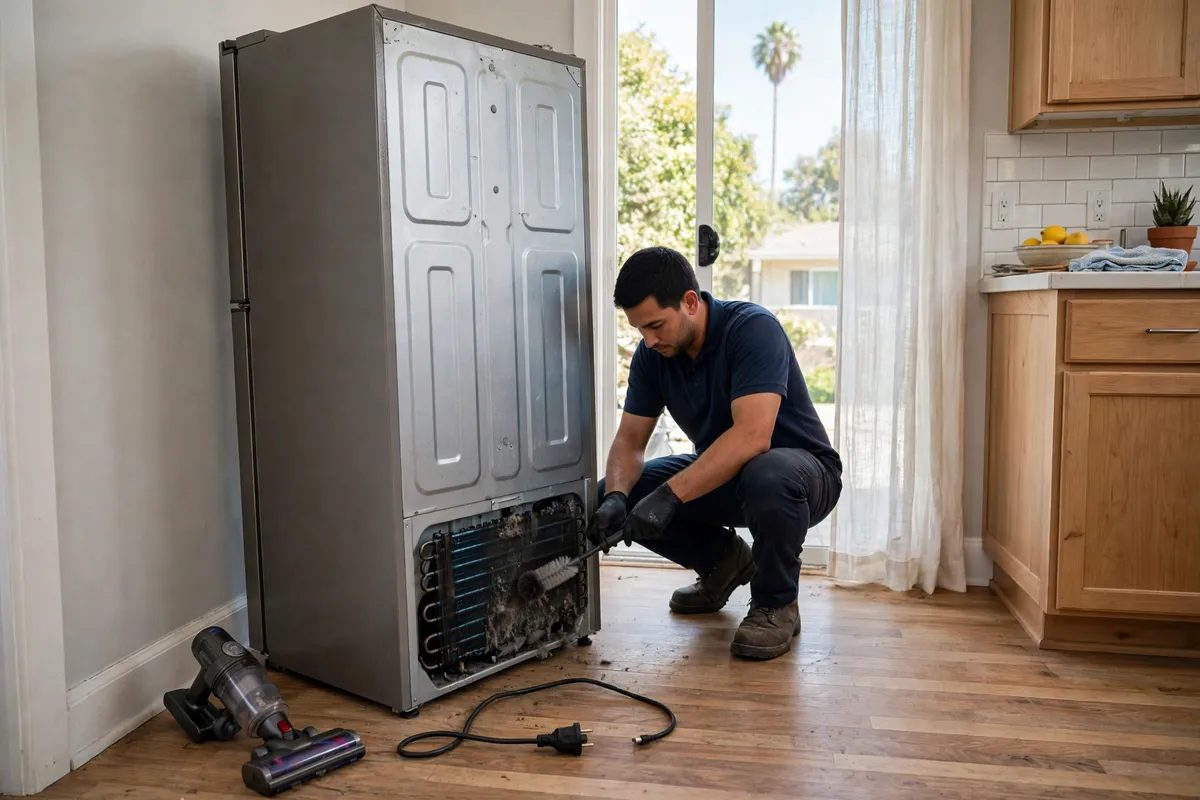
A slowing condenser fan reduces airflow long before it stops spinning. Cleaning the coils lowers the electric bill as well as the strain on parts. A seized fan makes the compressor overheat and shut off on its thermal protector, which can look like an intermittent cooling problem. Coils behind the fridge collect grease in kitchens near the range. A compressor that keeps tripping its overload is often a symptom of dirty coils.
Easy checks for Boulevard homeowners: Make sure the back of the fridge isn't pressed against the wall. Check that the condenser fan spins freely by hand once the power is off.
- The kick plate area is thick with dust
- Fridge cools at night but not in the afternoon
- Thick dust on the bottom grille
Refrigerator Start Relay Repair in Boulevard
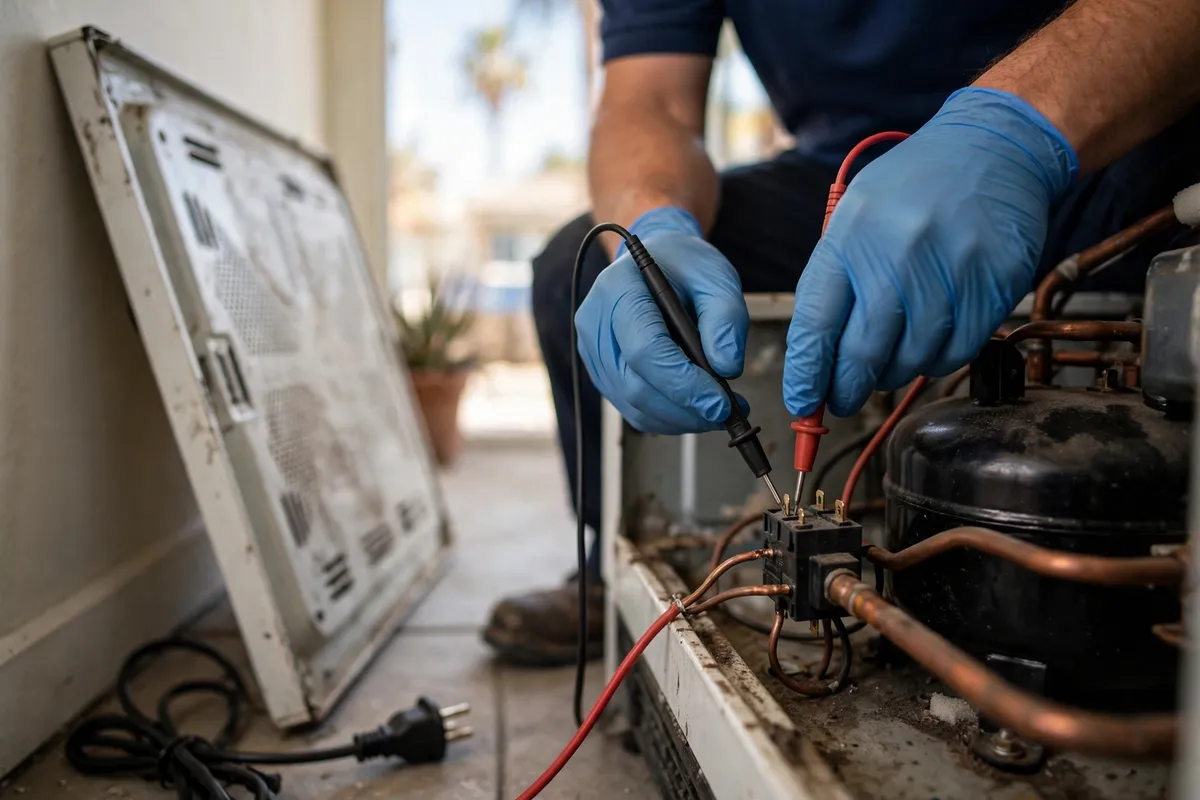
Power outages and surges can damage start relays and electronic control boards. A failed overload protector can mimic a dead compressor. Newer inverter fridges add a control board between power and the compressor. Long, hot run times usually trace back to heat rejection problems. A fridge that clicks but doesn't run is often one inexpensive part away from working again.
Easy checks for Boulevard homeowners: Rule out dirty coils, which can make a healthy compressor overheat. Note the interval between clicks from the back of the unit.
- Compressor hums but doesn't start
- A humming that never turns into steady running
- Breaker trips when the fridge starts
Other refrigerator problems
Pros serving Boulevard also handle these less common problems: door gasket replacement; evaporator fan and defrost repair.
Before You Call: What to Check
- Check whether the condenser fan near the compressor is spinning.
- Move perishables to a cooler.
- Check the temperature setting.
- Listen for the compressor and fans.
What to Expect From the Visit
- Describe the problem. Share what the appliance is doing, when it started and the model number.
- Diagnosis. A pro confirms the cause by testing parts rather than guessing.
- Estimate. Ask what the repair includes and how it compares with replacing the appliance.
- Repair and test. The part is replaced and the appliance is tested.
Boulevard Refrigerator Repair FAQ
What temperature should my refrigerator be in Boulevard?
Aim for 37°F in the fresh-food section and 0°F in the freezer. An appliance thermometer in a glass of water gives a truer reading than the air. Outages and surges are a common reason refrigerators stop cooling here; the start relay and control board are the first things to test.
How do I know if my fridge door seal is bad?
Replacing a gasket is usually a modest repair compared with the cost of a struggling fridge. Try the dollar-bill test: close the door on a bill and see whether it slides out easily. If it does, the gasket or the door alignment needs attention.
How long can food stay in a warm refrigerator?
Perishable food shouldn't be held above 40°F for more than two hours.