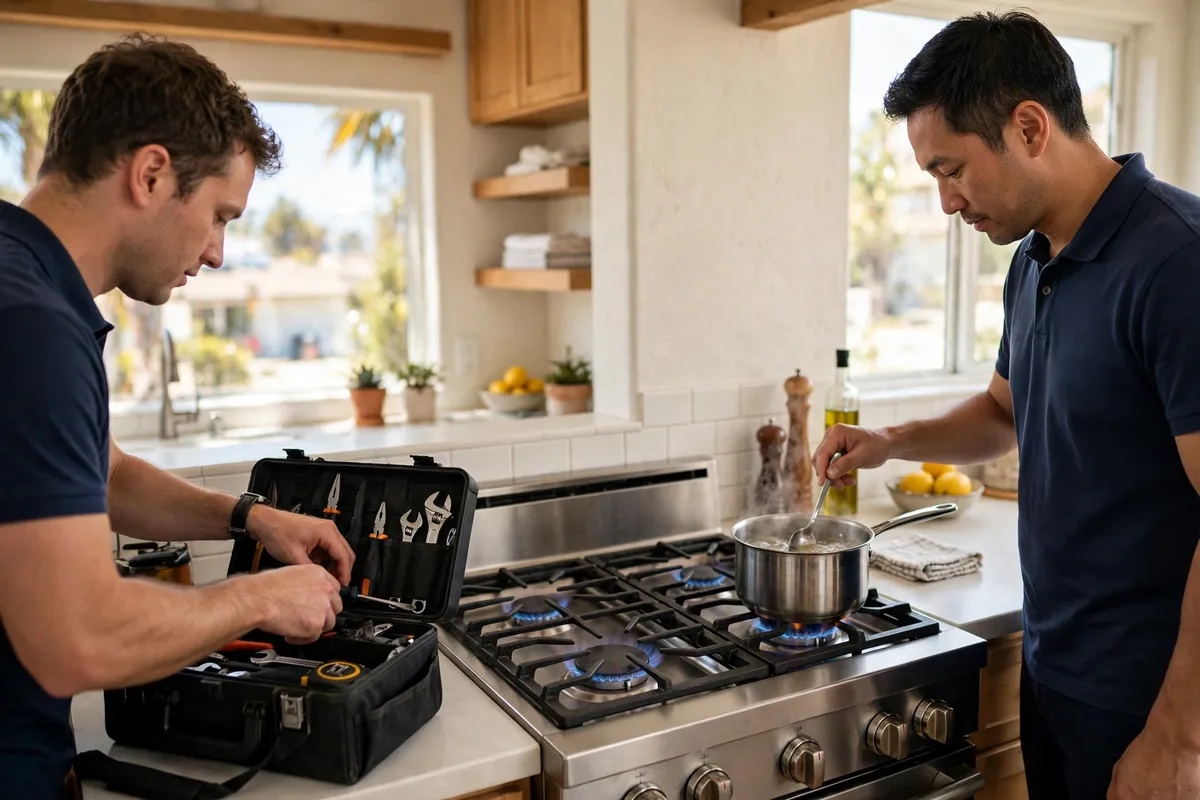
What Affects Stove Repair in Pine Valley
Distances between towns are long. Wells and propane are common.
Julian, Pine Valley, Descanso, Campo and Boulevard sit in the mountains and high desert east of San Diego, with occasional winter snow.
What that means for your stove: If your home uses propane, a gas appliance that burns yellow or leaves soot may have been set up for natural gas and should be checked by a qualified technician. Planned power shutoffs and restorations can stress electronics, so mention any recent outage when you describe the problem.
SDG&E serves most of Pine Valley. Tripped breakers and GFCI outlets are easy to overlook, so check both before deciding your stove has a failed part.
Protect water lines from freezing in winter.
Stove Problems Pros See in Pine Valley
Start with the first few sections; they cover the problems most often tied to conditions in the San Diego backcountry.
Gas Range Flame Problem Repair in Pine Valley
A healthy gas burner flame is mostly blue with a small inner cone. CO risk rises with poor burning. A healthy flame is blue. Never ignore a gas smell. A gas smell is a safety issue.
It's one of the first things worth ruling out in a Pine Valley home.
Easy checks for Pine Valley homeowners: If you smell gas, don't use switches; leave and call your gas utility. Clean ports to improve flame color.
- Weak flame
- Soot on pans
- Hissing
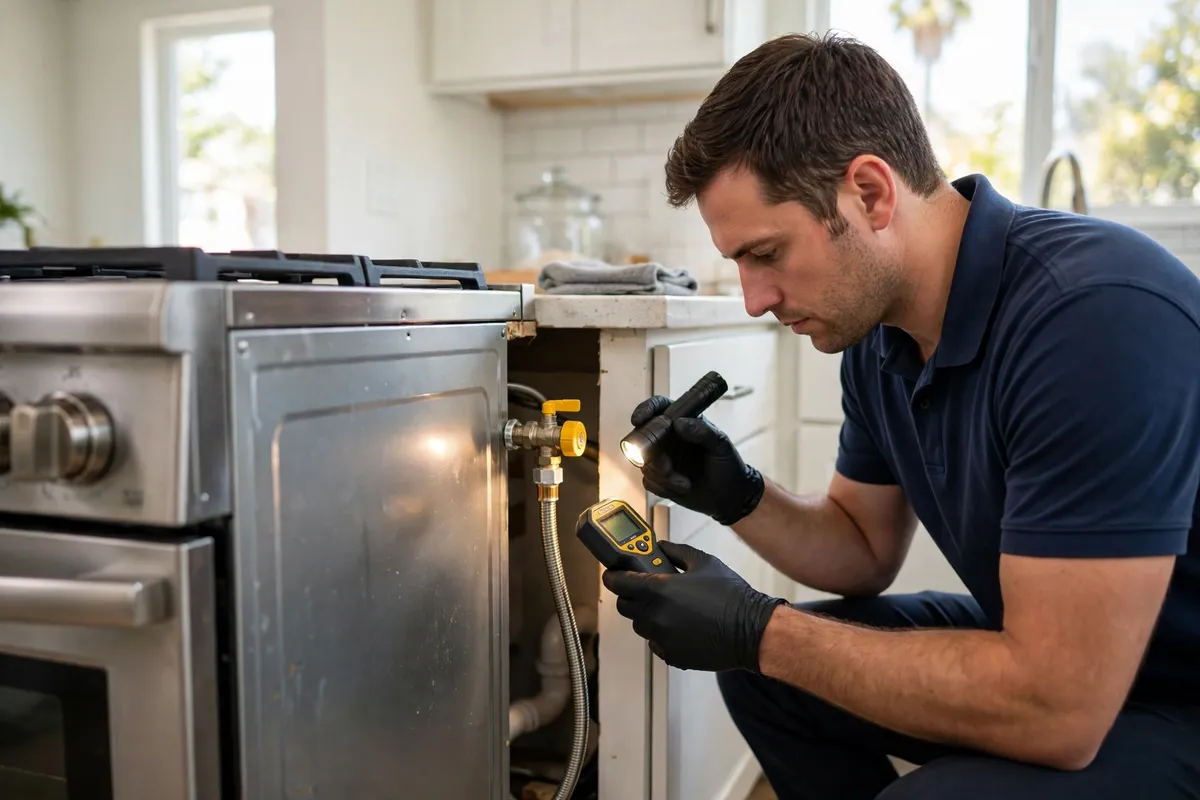
Stove Burner Won't Light: Repair in Pine Valley
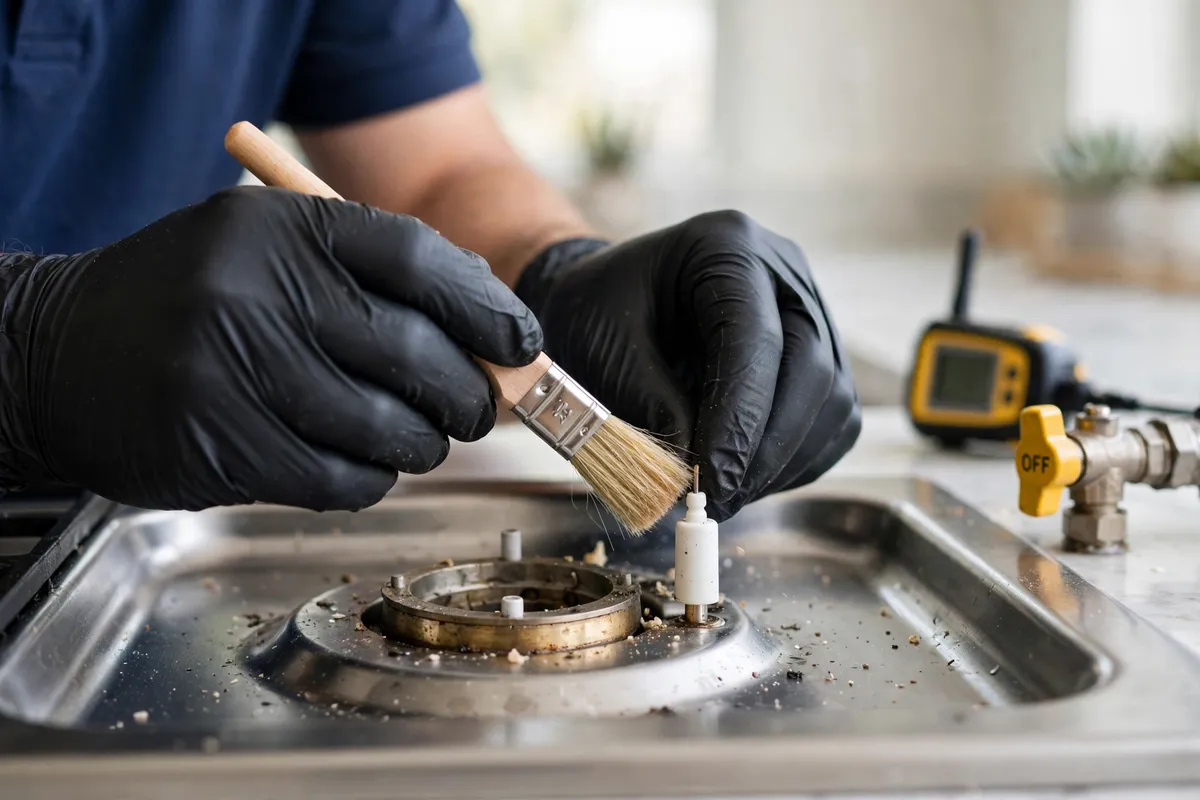
A dirty or wet igniter tip won't spark well. A burner cap that isn't seated properly can block the flame or make it uneven. Clicking that won't stop usually means moisture or a faulty spark switch. The igniter sparks like a lighter; if the gas can't reach it, nothing lights. A failed spark module affects every burner.
Given conditions in the San Diego backcountry, this is one of the more common calls in Pine Valley.
A few safe steps to try: Clean burner ports with a straight pin, not a toothpick. Clean burner ports with a pin.
- Burner lights slowly
- Constant clicking
- Uneven flame
Coil Burner and Receptacle Repair in Pine Valley
Burned receptacles cause poor contact. Trading coils is a simple test. Loose connections cause arcing. Loose connections cause arcing and heat damage. Burned or loose receptacles are common and inexpensive.
A few safe steps to try: Swap a working coil into the problem spot to test. Look for burn marks.
- Sparks at the receptacle
- Burner heats intermittently
- Burn marks
Induction Cooktop Repair in Pine Valley
Cracks can let liquids reach wiring. Non-magnetic pans won't heat. Burned-out elements stop heating. Stop using cracked glass. Induction cooktops need compatible pans.
Easy checks for Pine Valley homeowners: Check pans with a magnet. Test cookware.
- Error code
- Error codes
- Error code on induction
Propane Stove Repair in Pine Valley
Wrong orifices are dangerous. Propane runs at higher pressure than natural gas. Regulators also need adjustment during conversion. Conversion requires orifice changes. Wrong orifices cause dangerous flames.
Easy checks for Pine Valley homeowners: Keep the conversion kit. Use a qualified technician.
- Flame too large
- Recently changed gas type
- Tall yellow flames
Other stove problems
These come up less often around Pine Valley, and local pros handle them too: burner switch and control knob repair.
Quick Checks Before You Call
- Write down any error code.
- Note whether it's gas, electric, glass or induction.
- Note which burners are affected.
- Find the model number.
What to Expect From the Visit
- Describe the problem. Have the model number ready and explain what changed and when.
- Diagnosis. A technician tests the likely parts to find the cause.
- Estimate. You should get a clear estimate for the repair before approving it.
- Repair and test. Once the repair is done, the appliance is tested under normal use.
Pine Valley Stove Repair FAQ
What should I have ready when I call about stove repair in Pine Valley?
Whether it's gas, propane, electric or induction, and the model number.
Why won't my gas burner light in Pine Valley?
Clogged burner ports, a misaligned cap or a wet igniter are common causes. Propane ranges need propane orifices and a properly set regulator; flame problems often trace back to the setup.
What does a burner switch do?
Knobs can strip and fail to turn the switch. A stuck switch can be a fire hazard.