Local Conditions That Matter for Stove Repair in Palo Alto
Palo Alto has many 1950s Eichler homes, known for flat roofs, radiant floor heating and open kitchens, alongside older homes near downtown.
Los Gatos, Saratoga, Los Altos and Cupertino include many larger homes with built-in refrigeration, double wall ovens and professional-style ranges. Palo Alto runs its own electric utility, and Santa Clara is served by Silicon Valley Power, while most of the rest of the county is on PG&E.
Rental apartments and condos make up a large share of housing in San Jose, Santa Clara and Mountain View, where stacked washer-dryer units are common.
What that means for your stove: Built-in appliances are harder to access, so a clear description of the problem helps the technician prepare.
Palo Alto households are mostly served by City of Palo Alto Utilities. After an outage, give the stove a few minutes to restart on its own; if it doesn't, a tripped breaker or a damaged board are the usual suspects.
Common Stove Repairs in Palo Alto Homes
The problems below are ranked for Palo Alto homes, with the most likely ones first and troubleshooting tips for each.
Gas Burner Igniter Repair in Palo Alto
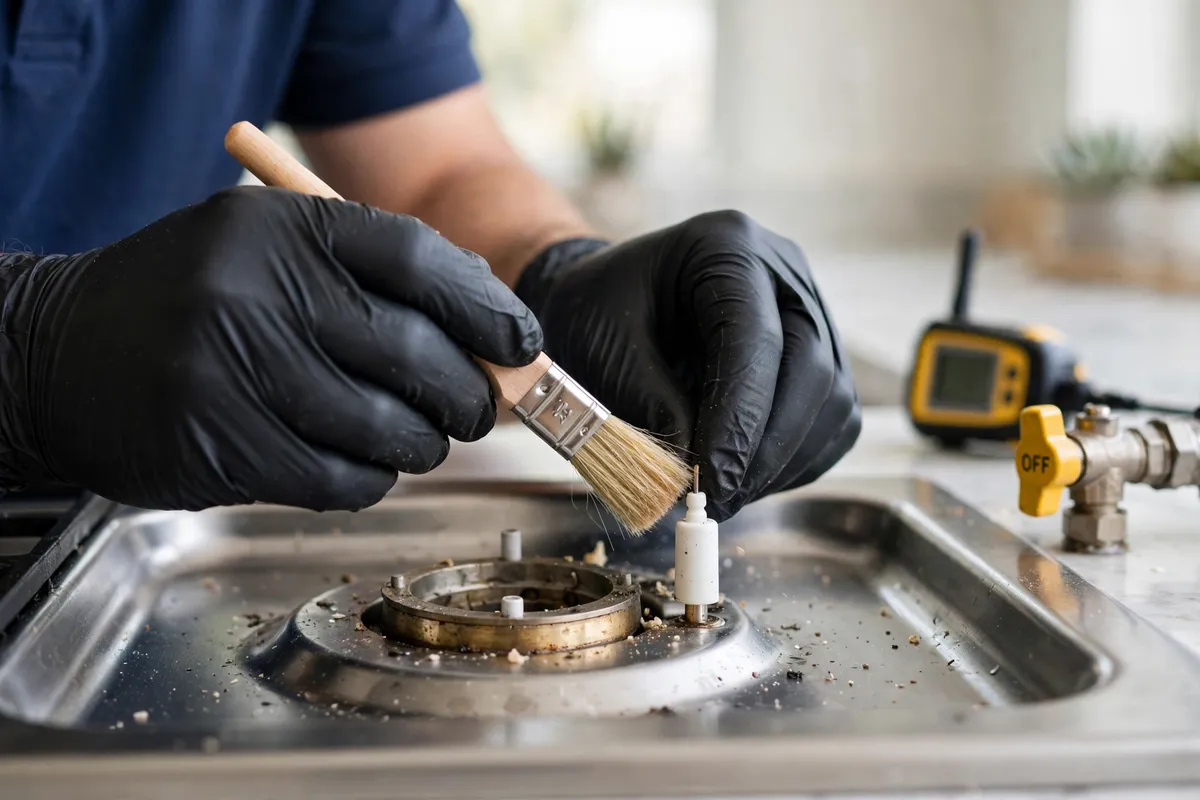
Clean, dry igniters spark reliably. Misaligned caps cause uneven flames. Moisture can make igniters click continuously. A failed spark module affects every burner. Burner caps must be seated correctly to light.
Pros serving Palo Alto see this one regularly.
Try this first: Reseat the burner cap. Let the burner dry fully after cleaning.
- Burner won't light
- Burner lights only sometimes
- Burner lights slowly
Gas Stove Repair and Leak Checks in Palo Alto
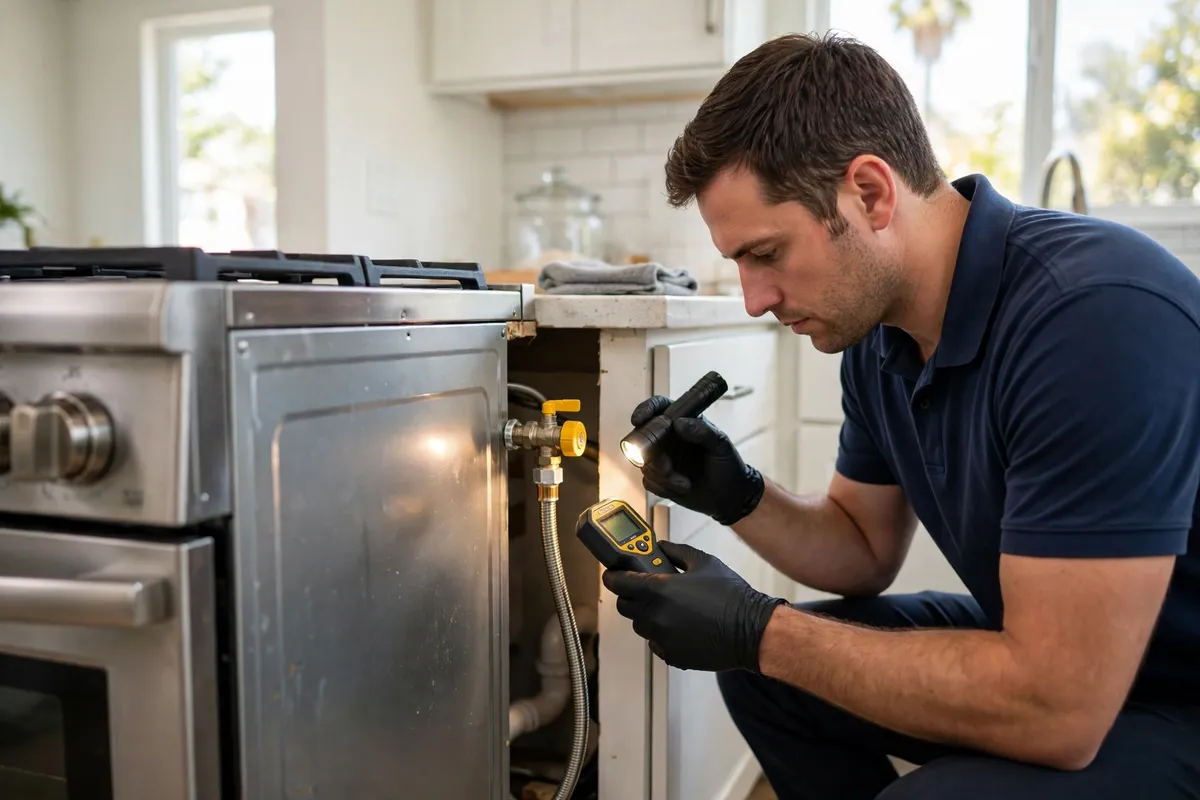
A healthy flame is blue. Never ignore a gas smell. Incomplete combustion can produce carbon monoxide. A gas smell is a safety issue. A leak can come from fittings or the supply line.
In homes in Silicon Valley, this comes up often.
Safe checks before you call: Leave the home and call the gas utility if you smell gas. Clean ports to improve flame color.
- Yellow or orange flame
- Soot on pans
- Gas smell
Induction Cooktop Repair in Palo Alto
Elements may fail. Only magnetic cookware works on induction. Stop using cracked glass. Induction cooktops need compatible pans. Cracked glass is a safety issue.
Easy checks for Palo Alto homeowners: Test cookware. Wipe spills quickly.
- Element doesn't heat
- Burner doesn't heat
- No heat
Coil Burner and Receptacle Repair in Palo Alto
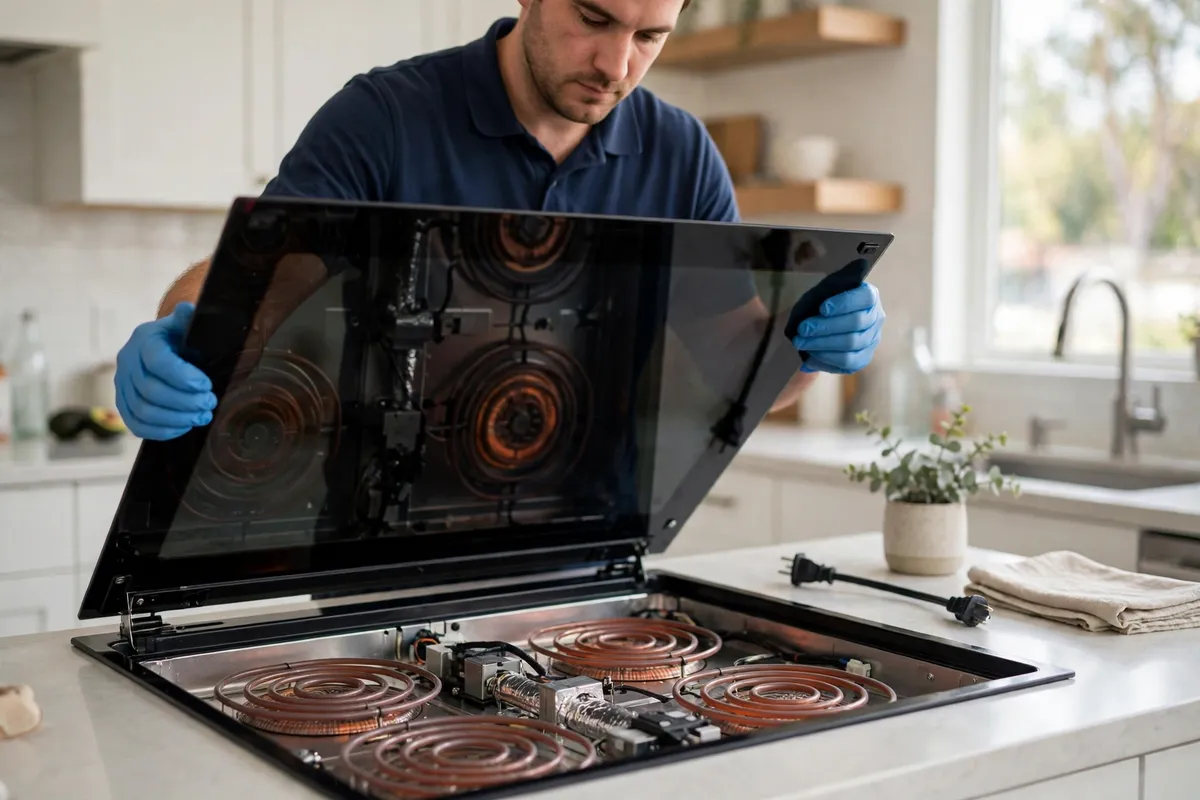
Loose connections cause arcing. Swap coils to test. Burned receptacles cause poor contact. Burned or loose receptacles are common and inexpensive. Swapping elements between burners helps find the fault.
Safe checks before you call: Push coils fully in. Test by trading coils.
- Element loose
- Sparking at receptacle
- Coil doesn't heat
Range Control Knob Repair in Palo Alto
A stuck switch can leave a burner on high. Knob failure stops control. Switches control heat levels. Switches and knobs control burner heat. A technician will test and replace switches.
Try this first: Test the knob. Check whether the knob turns the shaft.
- Burner stays on high
- Knob spins freely
- Clicking switch
Other stove problems
Other issues local technicians see in Palo Alto, though less often: propane and natural gas conversions.
Quick Checks Before You Call
- If you smell gas, leave and call your gas utility first.
- Find the model number.
- Note which burners are affected.
- Check whether burner caps are seated.
How the Repair Usually Goes
- Describe the problem. Explain the symptoms, any error codes and the model number when you call.
- Diagnosis. The technician checks the parts most likely to have failed.
- Estimate. You get an estimate for parts and labor before work begins.
- Repair and test. The part is replaced and the appliance is tested.
Palo Alto Stove Repair FAQ
Why are my flames tall and yellow after a conversion?
A qualified technician should handle conversions. Wrong orifices are dangerous.
What should I do if I smell gas?
Leave the home and call your gas utility or 911 from outside.
Why does my stove burner keep clicking in Palo Alto?
Moisture, a misaligned cap or a faulty igniter or switch. Dual-fuel and induction ranges have their own control boards and sensors; have the model number ready.