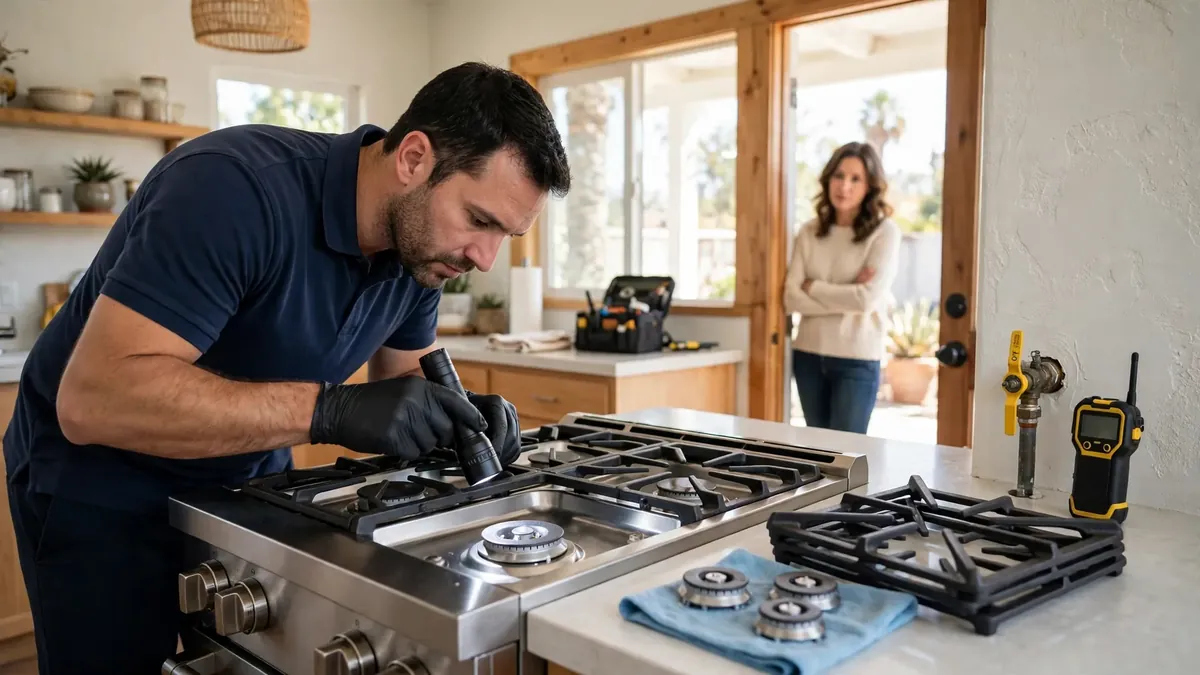
What Affects Stove Repair in Julian
Julian sits at about 4,200 feet and gets winter snow.
Distances between towns are long. Wells and propane are common.
Julian, Pine Valley, Descanso, Campo and Boulevard sit in the mountains and high desert east of San Diego, with occasional winter snow.
What that means for your stove: On propane, low tank pressure in cold weather can cause weak flames or slow ignition. Repeated outages are hard on control boards and start relays; a surge protector adds a layer of protection.
Because SDG&E is the usual electric provider in Julian, any planned outage notice is worth keeping in mind; a stove that fails right after one points to an electrical cause.
Protect water lines from freezing in winter.
Stove Problems Pros See in Julian
Symptoms overlap, so it's worth skimming two or three sections before deciding which one matches your stove.
Gas Burner Igniter Repair in Julian
Clean, dry igniters spark reliably. Misaligned caps cause uneven flames. Moisture can make igniters click continuously. A failed spark module affects every burner. Burner caps must be seated correctly to light.
In Julian, this ranks among the most frequent stove problems.
What you can check yourself: Reseat the burner cap. Make sure the cap sits flat.
- Constant clicking
- No spark
- Uneven flame
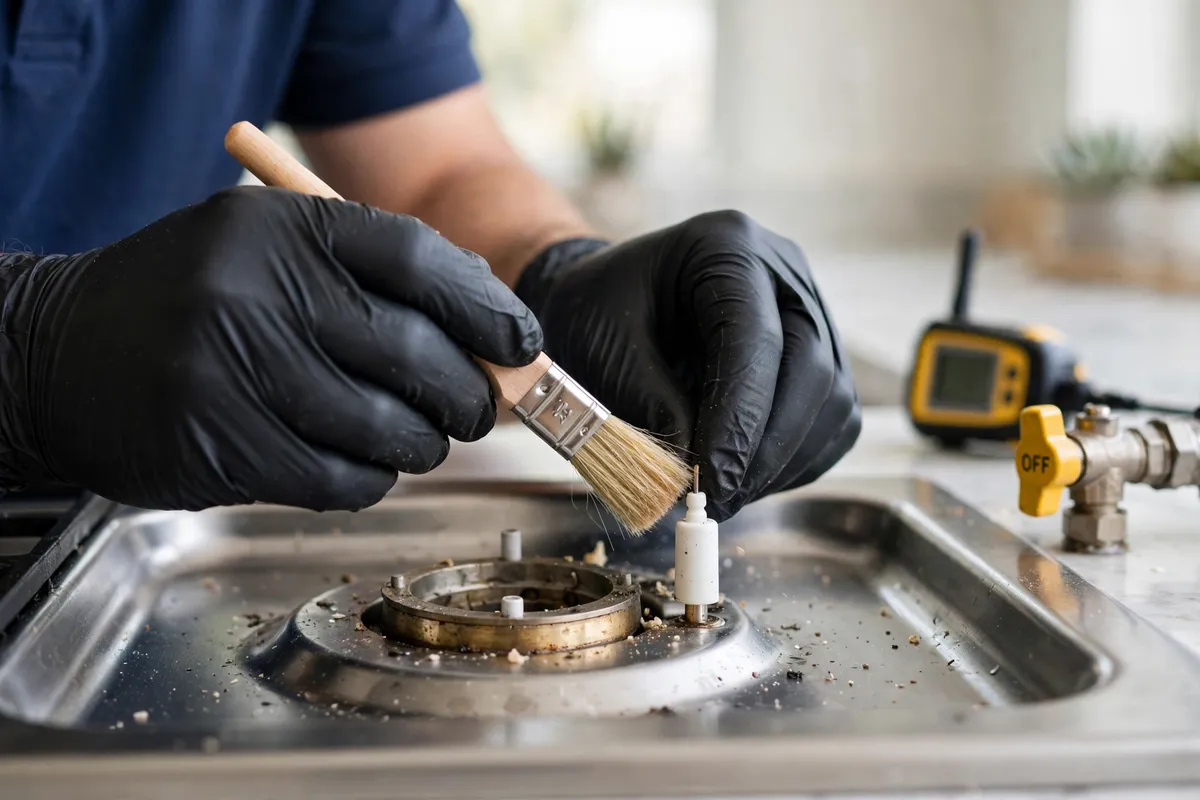
Gas Range Flame Problem Repair in Julian
Blue flames indicate proper combustion; yellow flames suggest a problem. Never ignore a gas smell. Incomplete combustion can produce carbon monoxide. A leak can come from fittings or the supply line. A blue flame means clean burning; yellow means something's off.
In homes in the San Diego backcountry, this comes up often.
Quick things to rule out: Keep a CO alarm in the home. Don't use switches if you smell gas.
- Gas smell
- Weak flame
- Soot on pans
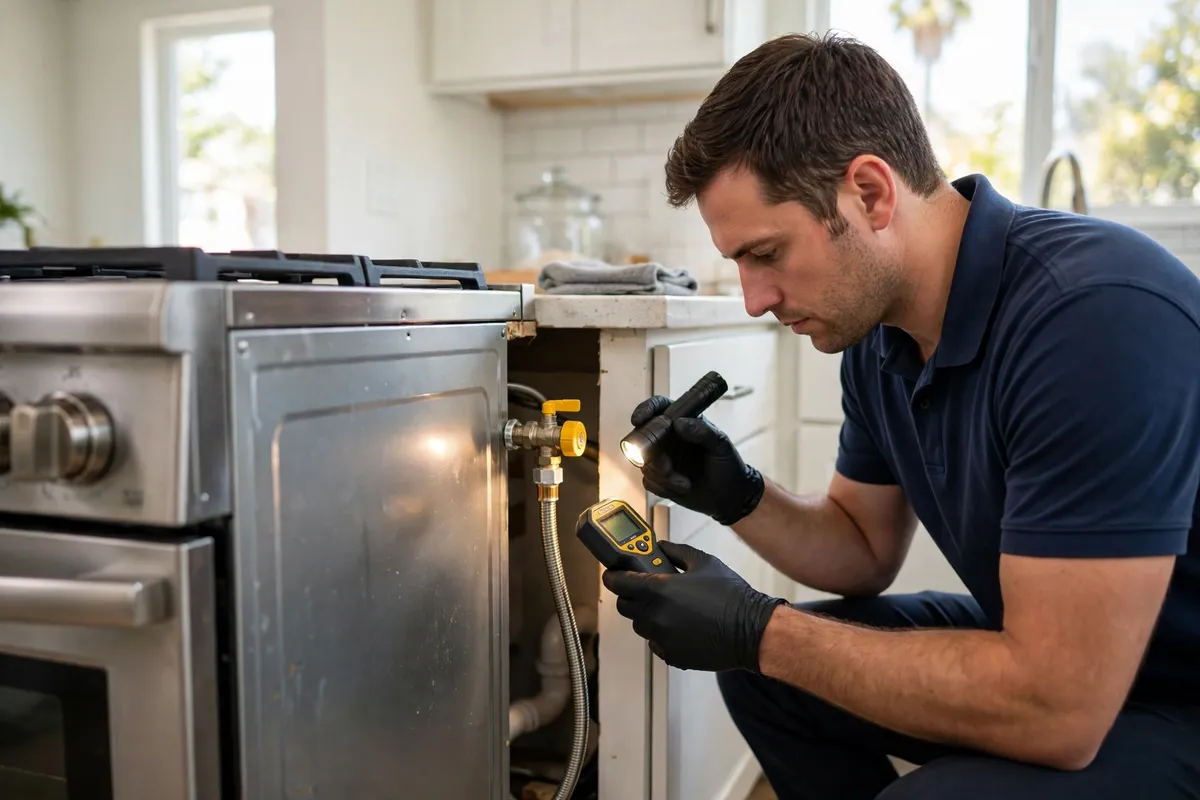
Propane Stove Repair in Julian
Mismatched orifices cause soot. Conversion requires orifice changes. Conversion includes regulator changes. A qualified technician should handle conversions. Propane and natural gas need different burner orifices and regulator settings.
What you can check yourself: Confirm the gas type at your home. Have conversions done by a pro.
- Flame too large
- Recently changed gas type
- Soot
Coil Burner and Receptacle Repair in Julian
Loose connections cause arcing. Burned receptacles cause poor contact. Swap coils to test. Swapping elements between burners helps find the fault. Coil elements can burn out or lose contact with their receptacle.
Quick things to rule out: Check for scorched receptacle terminals. Test by trading coils.
- Coil doesn't heat
- Burner heats only on high
- Element loose
Induction Cooktop Repair in Julian
Burned-out elements stop heating. Induction needs magnetic pans. Stop using cracked glass. Induction cooktops need compatible pans. A crack can let liquid reach electrical parts.
Try this first: Stop using a cracked cooktop. Clean spills promptly.
- Burner stays on
- Element doesn't heat
- Error codes
Other stove problems
Less common in Julian, but local pros fix these as well: burner switch and control knob repair.
What to Note Before Calling
- Write down any error code.
- Find the model number.
- If you smell gas, leave and call from outside.
- Note whether it's gas, electric, glass or induction.
How the Repair Usually Goes
- Describe the problem. Mention any noises, smells or error codes, plus the model number.
- Diagnosis. The technician checks the parts most likely to have failed.
- Estimate. Get the cost of parts and labor before saying yes to the repair.
- Repair and test. After the repair, the appliance is run to confirm it works.
Julian Stove Repair FAQ
Why won't my gas burner light in Julian?
Clogged burner ports, a misaligned cap or a wet igniter are common causes. Power shutoffs and outages here put appliances through hard shutdowns and restarts, and surges when power returns can damage relays and electronic controls.
What should I do if I smell gas?
Leave the home and call your gas utility or 911 from outside.
Why is my burner stuck on high?
Stripped knobs spin freely. Switches control heat levels.