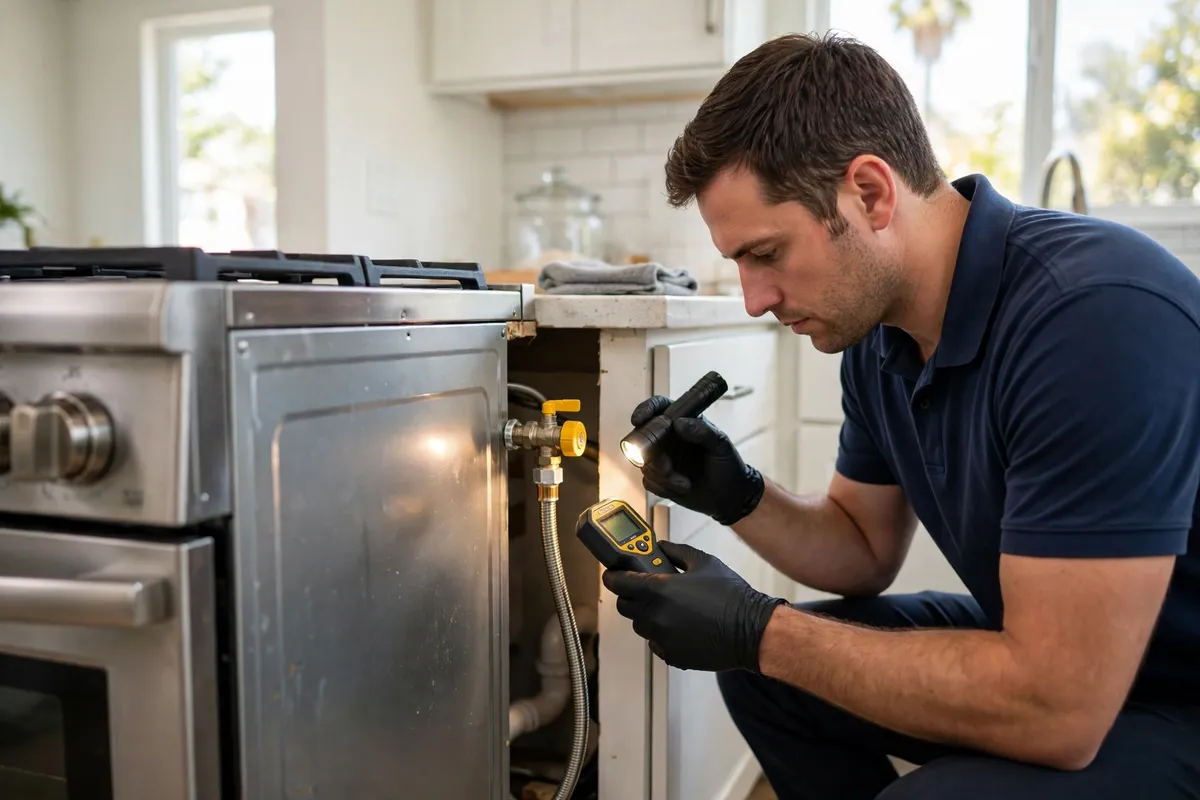
What Affects Stove Repair in Cardiff By The Sea
Salt air speeds corrosion on dryer vents and appliance exteriors near the ocean. San Diego's water comes largely from the Colorado River and Northern California and is among the hardest in the state.
San Diego, La Jolla, Del Mar, Encinitas, Carlsbad and Oceanside sit along the coast, with mild weather and 'May Gray' and 'June Gloom' fog.
What that means for your stove: Salt air and marine humidity corrode metal parts and connectors over time, which is why rust on hinges, screws and terminals shows up earlier near the coast.
Electricity in Cardiff By The Sea typically comes through SDG&E. When a stove acts strangely after a storm or a planned shutoff, the timing is a useful clue for whoever diagnoses it.
Stove Problems Pros See in Cardiff By The Sea
Start with the first few sections; they cover the problems most often tied to conditions in coastal San Diego County.
Stove Burner Won't Light: Repair in Cardiff By The Sea
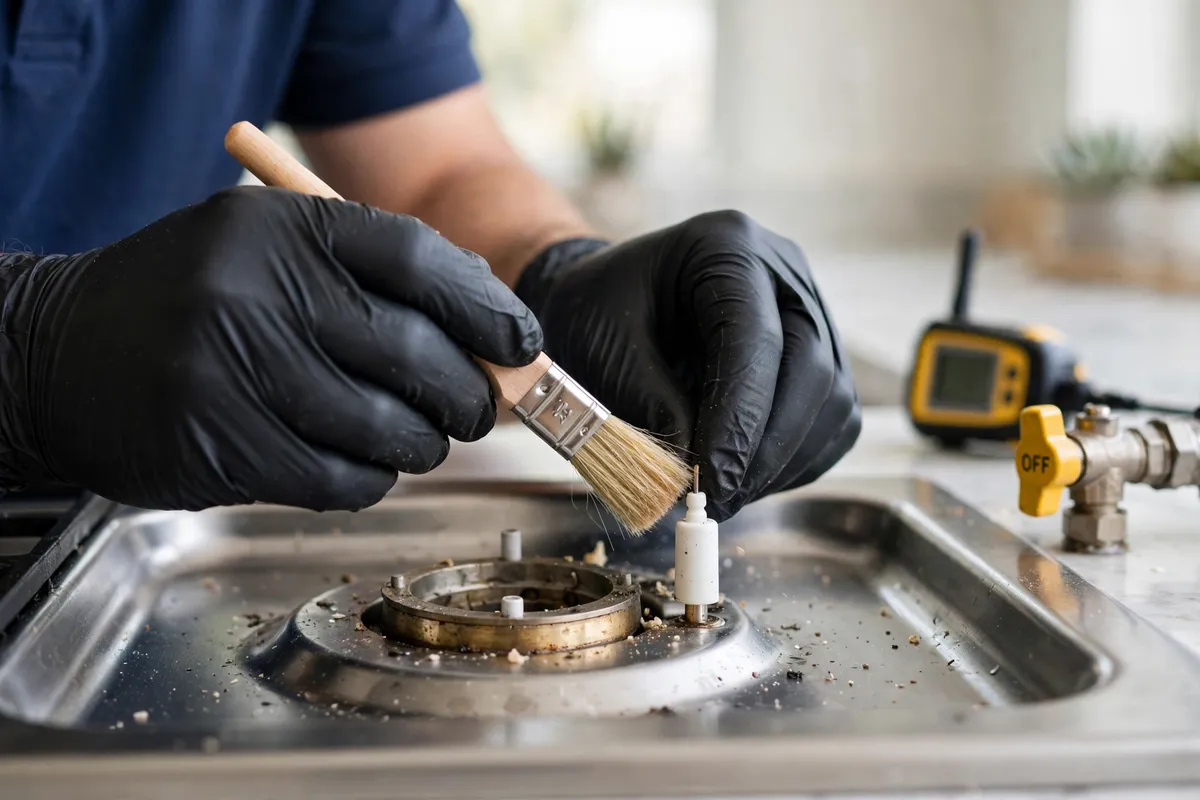
Boil-overs can block the tiny ports in a sealed burner. Let the burner dry for a day before assuming a part has failed. Clean, dry igniters spark reliably. Misaligned caps cause uneven flames. Moisture can make igniters click continuously.
In Cardiff By The Sea, this ranks among the most frequent stove problems.
Try this first: Make sure burner caps are seated properly. Reseat the burner cap.
- No spark
- Burner lights only sometimes
- Constant clicking
Coil Burner and Receptacle Repair in Cardiff By The Sea
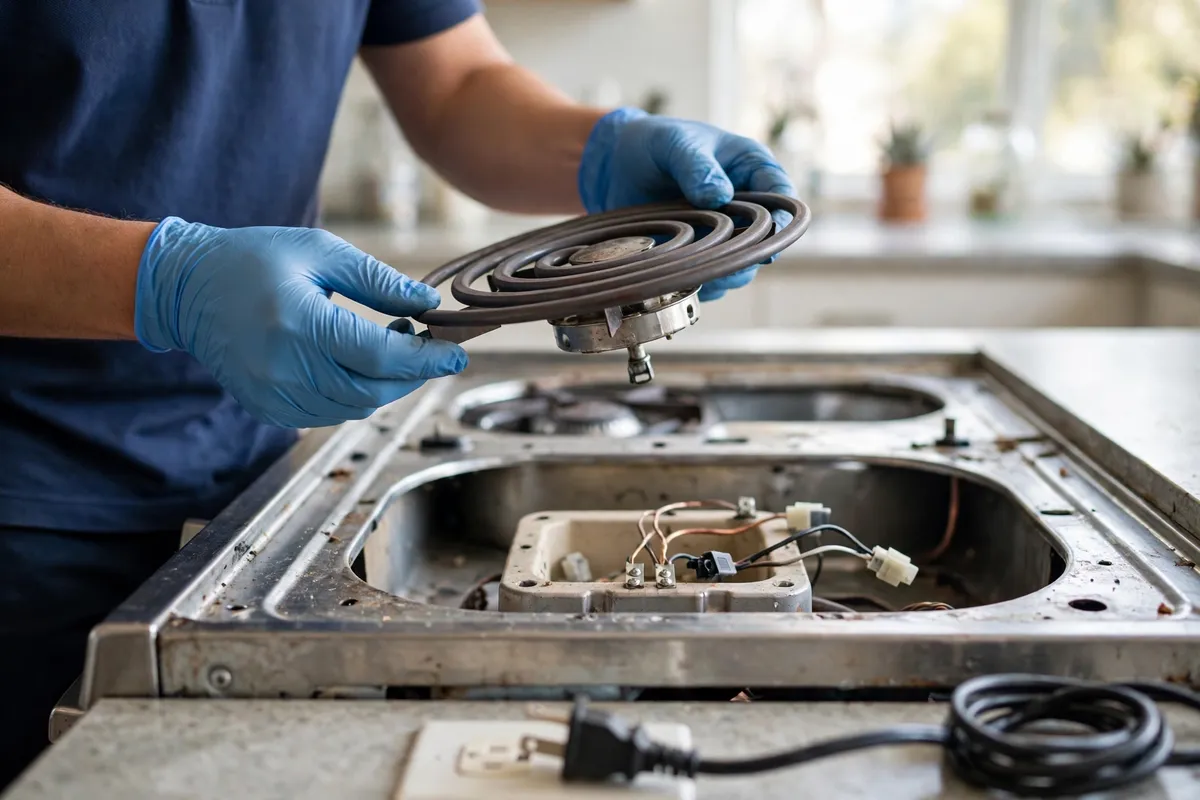
On coil-top ranges, each element plugs into a receptacle under the drip pan. Trading coils is a simple test. Loose connections cause arcing. Receptacles can burn out. Replacing the receptacle and the element together usually solves it; an infinite switch that no longer cycles is the other common failure.
It's one of the first things worth ruling out in a Cardiff By The Sea home.
Quick things to rule out: Test by trading coils. Look for burn marks.
- Burned receptacle
- Coil doesn't heat
- Sparking at receptacle
Gas Stove Repair and Leak Checks in Cardiff By The Sea
If you smell gas, don't use the stove, don't flip switches, leave the home and call your gas utility or 911 from outside. Blue flames indicate proper combustion; yellow flames suggest a problem. Incomplete combustion can produce carbon monoxide. Never ignore a gas smell. A yellow or orange flame can signal incomplete combustion.
Worth checking in a few minutes: Clean ports to improve flame color. Install a carbon monoxide detector nearby.
- Soot on pans
- Flame too high or low
- Yellow flame
Glass Cooktop Repair in Cardiff By The Sea
Cracked glass is a safety issue. Burned-out elements stop heating. Induction needs magnetic pans. Stop using cracked glass. Induction cooktops need compatible pans.
Quick things to rule out: Clean spills promptly. Check pans with a magnet.
- Burner stays on
- Induction doesn't detect pan
- Element doesn't heat
Range Control Knob Repair in Cardiff By The Sea
Stuck switches cause overheating. Stripped knobs spin freely. Switches control heat levels. When the switch's contacts wear out, the burner may stay on high, never get hot, or not turn off. A stuck switch can be a fire hazard.
Safe checks before you call: Note heat levels. Turn off power before inspecting.
- Knob loose
- Burner stuck on high
- Clicking switch
Other stove problems
Pros serving Cardiff By The Sea also handle these less common problems: propane and natural gas conversions.
What to Note Before Calling
- Note which burners are affected.
- Write down any error code.
- Clean and dry the burners.
- Find the model number.
What to Expect From the Visit
- Describe the problem. Explain the symptoms, any error codes and the model number when you call.
- Diagnosis. A pro confirms the cause by testing parts rather than guessing.
- Estimate. You get an estimate for parts and labor before work begins.
- Repair and test. The repair is finished with a test cycle to make sure the symptom is gone.
Cardiff By The Sea Stove Repair FAQ
Why does my stove burner keep clicking in Cardiff By The Sea?
Moisture, a misaligned cap or a faulty igniter or switch. Salt air and marine humidity corrode metal parts and connectors over time, which is why rust on hinges, screws and terminals shows up earlier near the coast.
Why does my igniter keep clicking?
Moisture from a spill or a faulty spark switch is the usual cause. Let spills dry fully before using the burner.
Can my range be converted to propane?
Incorrect orifices cause tall yellow flames. Orifices control gas flow like nozzle sizes on a hose.